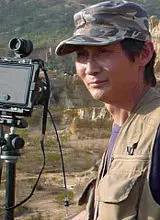
Chen Jin (1955—)
Every city has its own personality. But photographers who can record the city’s personality are still scarce in China. Chen Jin, with his unique personality and way, spent more than 30 years recording the urban character of life, thus completing two works of literature style, Tea Shop and Market. Today, let’s take a look at the conversation between Chen Jin and Chen Xiaobo.
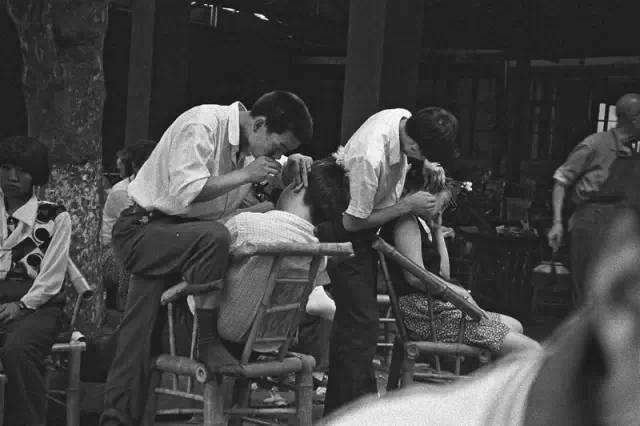
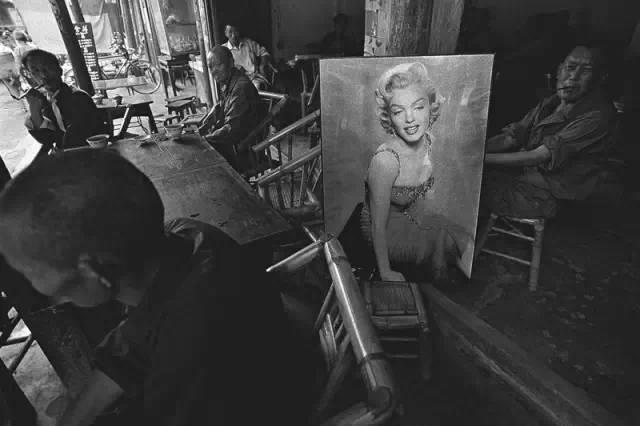
Drinking tea is an attitude of Sichuan people towards life.
Chen Xiaobo: Let’s start with two of your most important works-Tea Shop and Market. In my impression, when I talk about Chen Jin, I will think of the cloudy weather in Chengdu and even think of you as a lazy tea drinker in a teahouse. When did you decide to shoot the teahouse?
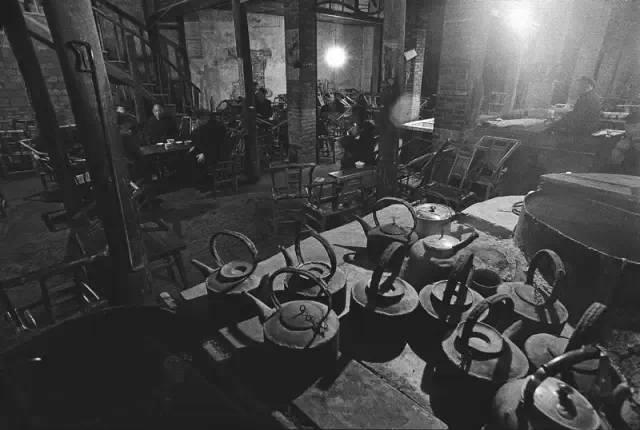
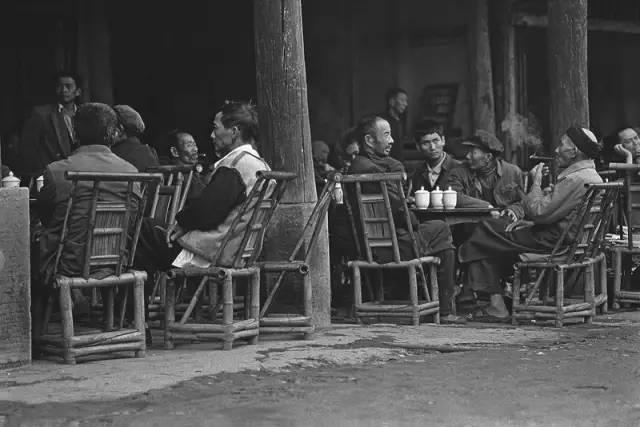
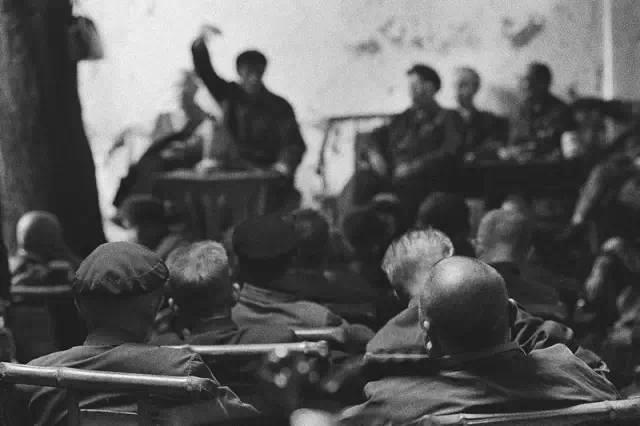
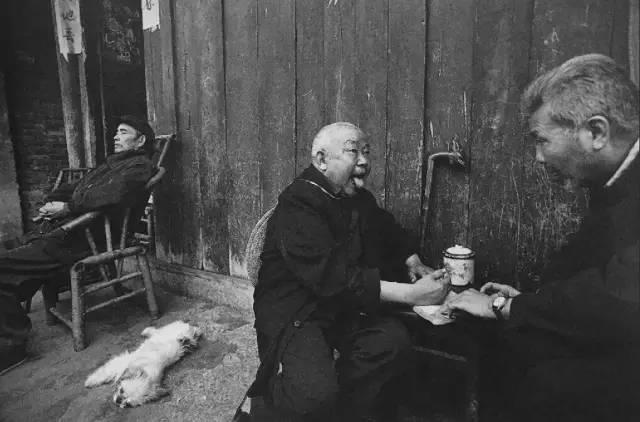
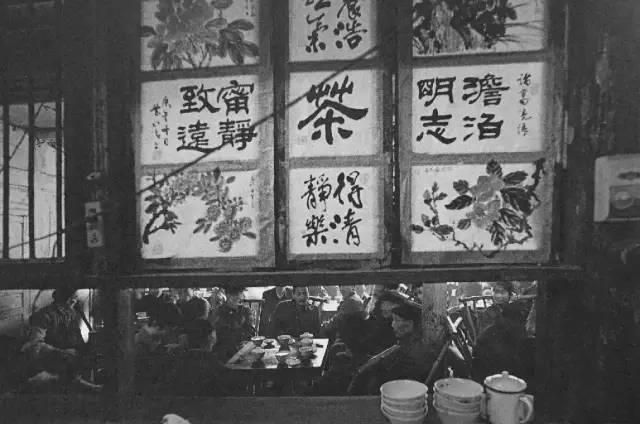
Chen Jin: It should be said that I started shooting in the mid-1980s, and I took it as a living condition. At that time, the city had not been demolished on a large scale. At the end of 1980s, Hong Kong’s China Tourism held a 24-hour filming activity in Chengdu. What do I want to shoot myself? Be sure to shoot something that can represent the characteristic culture of Sichuan, and naturally think of the teahouse. From the late Qing Dynasty to the Republic of China, tea shops in Sichuan gradually took shape, and the number was by no means comparable to that in other provinces. According to the "Chengdu Overview" compiled in the first year of Qing Xuantong, people who go to tea shops every day account for one-fifth of the total population of Chengdu, and the so-called "one city resident and half tea customers" is a portrayal of this situation. Therefore, to understand the customs of Sichuan, we must first sit up from the tea shop.
From that day on, I began to observe and photograph teahouses purposefully. There are Sichuan people’s lives and thoughts in the teahouse, and there are many things worthy of my attention. Once it is filmed as a cultural phenomenon, it is different from the past. I must leave history and my feelings about it by doing something. Although people have been filming teahouses in the past, most of them are scattered and have not been excavated in depth. In other words, most photographers pay attention to the teahouse from the perspective of so-called "artistic creation", which is too superficial and lacks systematic social, historical and humanistic cut-in.
Chen Xiaobo: When was the earliest photo of the teahouse we can see now?
Chen Jin: It was taken by foreigners in the 1920s and 1930s. When foreigners come to Sichuan, they will definitely photograph the teahouse, but it is impossible to go deep into it. Even so, those photos still look very interesting now-clothes, eyes and feelings between people are so valuable.
Chen Xiaobo: What does the teahouse mean to Sichuan people?
Chen Jin: Drinking tea is an attitude of Sichuan people towards life. Shooting a teahouse is not to shoot how Sichuan people drink tea, but to shoot how Sichuan people live.
Chen Xiaobo: Before shooting the teahouse, you were also … taking photos in the salon.
Chen Jin: Yes. I shoot Jiuzhaigou and Emei Mountain, including campus life, all by salon method. But now looking at my photos at that time, there is still some flavor of "conceptual photography". My landscape photography is also a bit weird. At that time, I had been in contact with Hu Wugong in Shaanxi, Hou Dengke and Yu Deshui in Henan. When they were doing the "arduous journey" contest, they saw my photos and wanted to use them, but they didn’t know where to put them, because these works were just an alternative "affair". In the early 1990s, they saw the teahouse I photographed.
Chen Xiaobo: The scenes in the teahouse are so similar, and so are the people who drink tea. How can you film it?
Chen Jin: I took pictures when I became a person sitting in a teahouse. In the process of shooting, I completed the transformation from a "photographer" to an authentic "tea guest", really walked into the life and heart of the "tea guest", and of course I understood the truth.
Chen Xiaobo: I think many people want to know your work status as much as I do. I really want to follow you to the small village and town in Sichuan to see how a photographer with your personality shoots. /How to communicate with the subject?
Chen Jin: OK! Let’s go together sometime When I first filmed Tea Shop, I took a wide angle of 20, a telephoto of 80-200 and a tripod, and stood there looking for a lens. The light in the teahouse is too dim. I went in as a photographer at that time. For a period of time, I feel that I can’t shoot, because I can’t get into the teahouse.
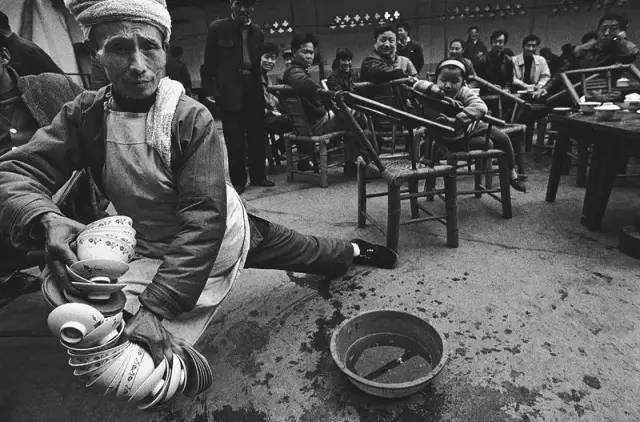
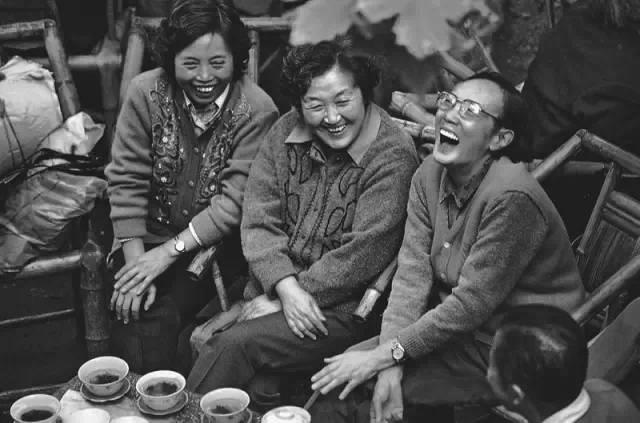
Chen Xiaobo: In 1988, during the Beijing International Photography Week, Raininger of the United States suggested that photographers in China lock up their telephoto and wide-angle lenses and don’t take them out.
Chen Jin: I understand that he is not limiting the use of lenses, but he wants to truly and richly express what he sees.
Chen Xiaobo: It’s just another way of observing.
Chen Jin: Later, I didn’t use the lens very deliberately.
Chen Xiaobo: Your identity as a tea drinker? Observer? Recorder?
Chen Jin: I try to hide myself. I don’t want people to feel that there is a photographer here. My identity is just an ordinary tea drinker, sitting there drinking tea, watching and posing in a dragon gate array. I am completely integrated into life itself. I’m not just a bystander, but really approaching a culture. I accepted each other with the other people sitting in the teahouse. It was very comfortable, and there was no sense of oppression or tension. Photography became a very casual thing, so it was natural to take one or two photos. Sometimes you don’t have to shoot it.
Chen Xiaobo: What’s the radius of your shooting Teahouse?
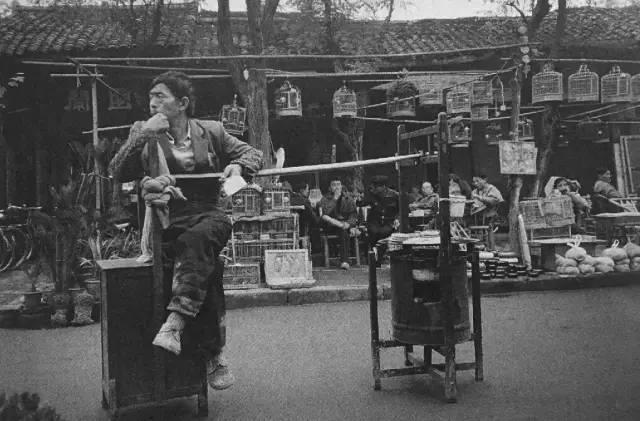
Chen Jin: The whole Sichuan! I have been to hundreds of teahouses in hundreds of cities, counties and towns all over southern Sichuan, eastern Sichuan, western Sichuan and northern Sichuan. The southeast and northwest are completely different, and the way of drinking tea is also different. Why is it different? It’s very simple. The pier culture in eastern Sichuan, on the docks along Jialing River and Chuanjiang River, merchants and porters come and go, and it’s not required to sit in the tea shop for long. High square table and bench are uncomfortable after sitting for a long time. I don’t have time, and tea sellers want more people to come and go. Western Sichuan culture, lying on a bamboo chair leisurely. Don’t worry, no one drives a bowl of tea for a day. Bamboo chairs in southern Sichuan are different from those in Chengdu. The former has no handrails.
Chen Xiaobo: What about the tea set? What’s the difference?
Chen Jin, of course. Chengdu people like to cover their cups with "three heads" when drinking tea, which looks very leisurely. In Chongqing, large bowls (such as tea stalls full of old eagle tea to cool off the heat) and uncovered cups are mostly used, which is related to the living environment and the straightforward character of Chongqing people.
Teahouse is an important place for Sichuan people’s way of life, through which they express their attitude towards life. Sichuanese drink civilian tea and market tea. In traditional teahouses, most tea drinkers are not so particular about drinking tea itself, and tea and tea sets are not as particular about it as in current teahouses. Tea drinkers care about the whole process, and drinking tea is the second.
Chen Xiaobo: You have been studying this culture during the filming?
Chen Jin: Yes. I read a lot of texts. There are no writers in Sichuan who don’t write about teahouses: Sha Ting and Li Jieren. I won’t talk about images. Sichuanese can’t live without tea, and there is a continuation of culture among them. Just as we watch the Japanese tea ceremony, we see not only tea, but Japanese culture and people.
The French is very interested in Sichuan Teahouse, because French coffee shop culture is also developed, which is similar to Sichuan Teahouse. But the French’s life is exquisite and tasteful. Sichuanese are casual, simple and even a little vulgar. Sichuanese just need to make me comfortable. Look at the rickshaw driver. He drinks tea first. When he has guests, there’s no hurry. Let’s make the tea comfortable first. This rickshaw puller shows his attitude towards money and life. It is more important to have a bowl of poor tea than to earn money hard. Isn’t the ultimate goal of people just for their own comfort? Li Bai and Su Dongpo were as brilliant as that, and there were times when they were low. The frankness and elegance in their bones helped them tide over the difficulties. Deng Xiaoping’s spirit of "I’m not afraid of anything, I’ll do it" is also typical of Sichuanese.
Chen Xiaobo: Today, we have seen the destructive effect of large-scale urban reconstruction on teahouse culture.
Chen Jin: Teahouses are combined with folk houses, and the way of living is different. The change of tea culture is obvious.
Chen Xiaobo: Will the country be better?
Chen Jin: The so-called villages, including those small towns, are also changing. After the change, many things have been lost. For example, there is a typical teahouse ten miles away from the center of Chengdu, which maintains the structure of an old teahouse. I used to go there a lot. I didn’t go there for half a year. CCTV’s "Thousands of Lights" column filmed a film about the teahouse. I took them to that teahouse and was turned away. On the gate was written in chalk: How many chairs and tables are left? Please buy them as soon as possible. I looked in from the outside, and the teahouse was divided into small rooms where people lived. It turns out that the property right here belongs to the government. When the government does real estate, it moves in the people who will be demolished. I suddenly felt that the change was too fast, and the traditional things disappeared like this.
Chen Xiaobo: How do you feel in the face of the disappearance of teahouse culture?
Chen Jin: On the one hand, it’s sad. Such a good environment really represents the good things of our cultural phenomenon, and thus it has disappeared. At the same time, I’m glad I left some traces with images. The meaning of the image is highlighted at this time. The image is intuitive, and I am more determined to seize the opportunity to do my image work. So, I said to others: It is more accurate and practical to regard me as an "image cultural worker" than to call me a so-called "photography artist".
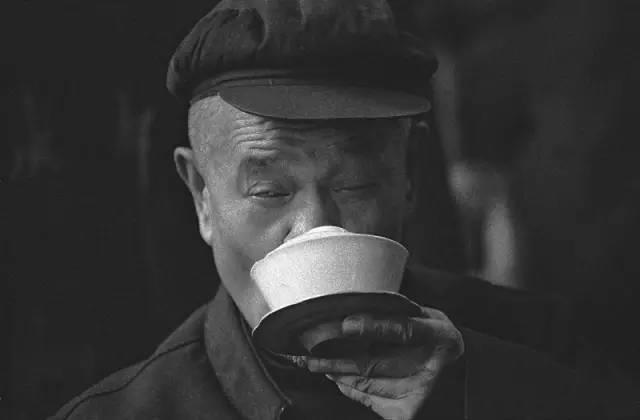
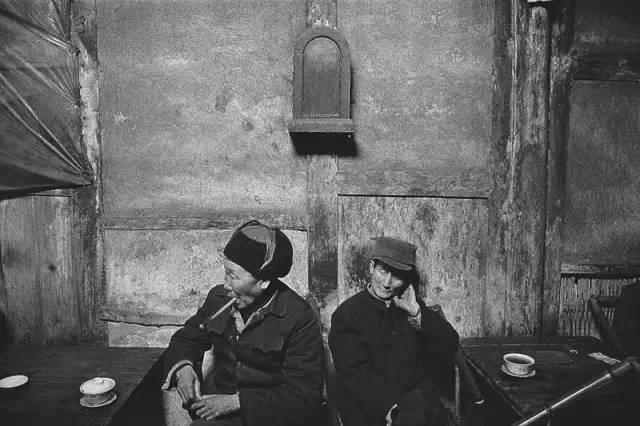
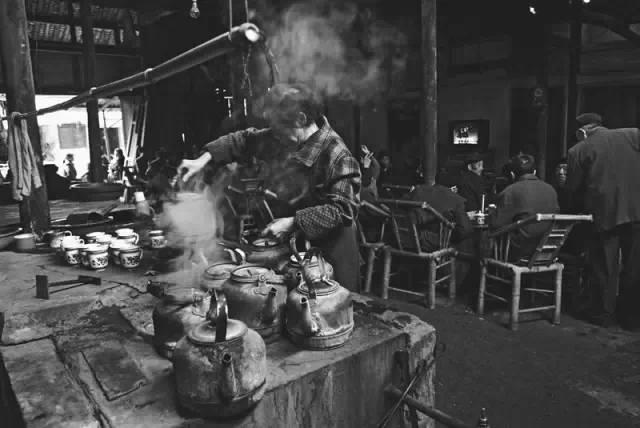
Tea Shop is not only for the photography circle,
It is meaningful and valuable.
Chen Xiaobo: Did the appearance of the book Tea Shop come out at the time of shooting? You have a clear goal from the beginning of shooting the teahouse, that is, to make it "the most representative work concerned with regional culture"?
Chen Jin: Yes. To make this thing, I have a strong purpose, that is, to publish a systematic book that shows Sichuan teahouse culture through pictures and texts. The advantages of each generation. Our generation has the responsibility to record what is around us. It is not enough to just record him and stay, but also to express my views, so I must express my views through books.
Chen Xiaobo: Just now, we had tea with Zhong Ming, a Sichuan poet. He gave me a book. I saw the words: "A thing should be kept silent before it is finished. Let a secret stimulate you until you finish it in a full mood … You must finish that amazing event in a silent way." This line reminds me of your attitude.
Chen Jin: When I started filming the teahouse, I didn’t do it in the circle at that time. Until it was published in 1992, no one paid attention to it, or people who knew what I was doing didn’t think much …
Chen Xiaobo: But Tea Shop got a high evaluation immediately after it came out. Because of its own cultural information and content, the photographer’s attitude is clear at a glance.
Chen Jin: It seems that the cultural circle realized this earlier than the photography circle. At that time, many topics were Xu Yong’s Hutong and my Tea Shop. Beijing Hutong has always been photographed, but no one has been photographed like Xu Yong. We all do it with the attitude of outsiders Or when I did it, I didn’t think it was only for people in the circle.
Chen Xiaobo: After you successfully filmed the teahouse, did anyone continue to shoot the teahouse theme?
Chen Jin: I have also seen many people take good photos of teahouses, but they have different purposes from mine. My teahouse can’t just talk from the perspective of images. The success of Tea Shop is not only a success in image, but also a success in photography. It shows not only my image ability, but also my excavation of the cultural phenomenon of teahouse, which is overall. From the image form alone, there are many people who are better than me, but I observe and express in my own way, taking my own way, which others can’t compare.
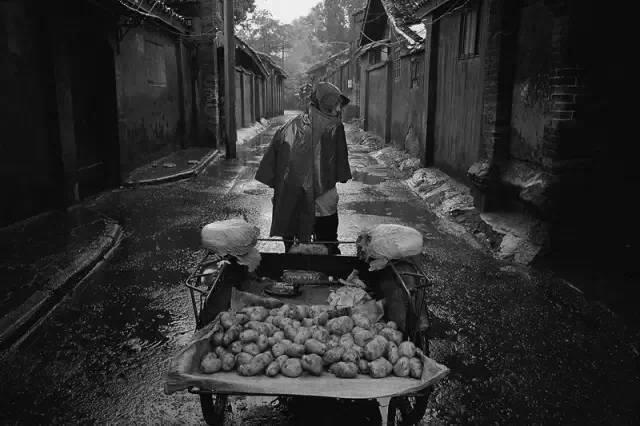
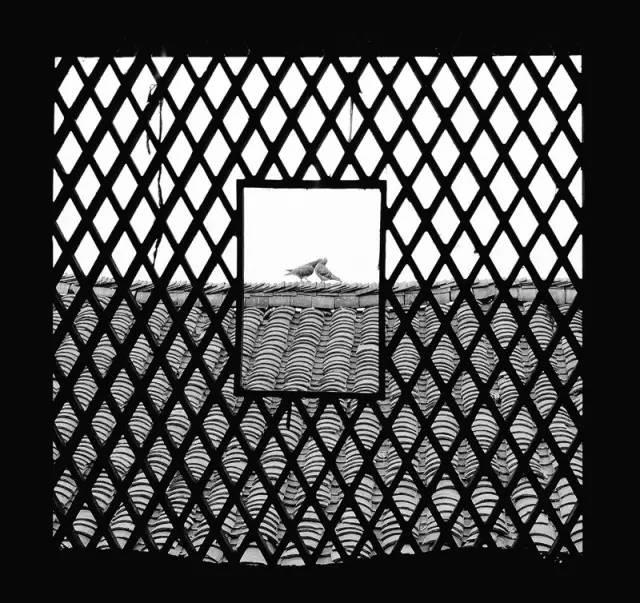
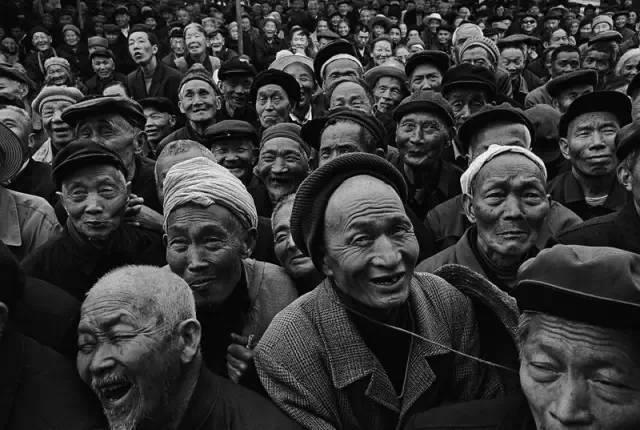
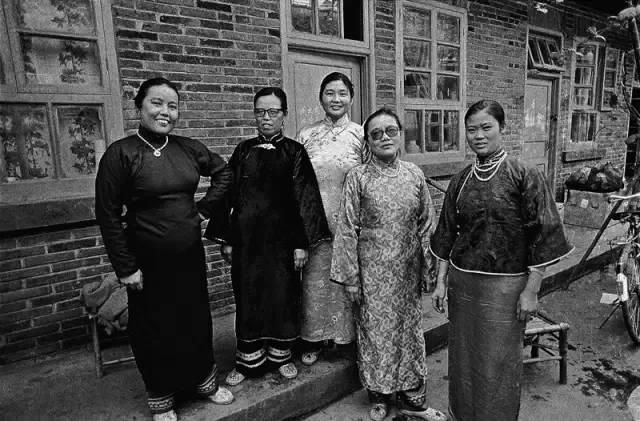
I have a point: for documentary photography, what matters is not the "image" but the "object". Photographers express objects by means of images, and they can’t do it backwards. Therefore, a good documentary work can’t make people’s eyes stay on the image form for a long time, but attract people to the content it expresses. The simpler and more simple the image, the more they can achieve their goals. On the road of documentary photography, I express ordinary people’s lives with an ordinary mentality and an ordinary perspective, no matter "Tea Shop" or "Market", that’s all.
I hope that younger photographers will look at the teahouse with modern eyes and express new ideas. They should even do it by conceptual photography. The way they observe and act must be different from ours. But unfortunately, it seems that no one has thought and done so far.
Chen Xiaobo: After more than ten years, what would you do if you were asked to re-shoot the teahouse theme and re-edit the book Tea Shop?
Chen Jin: In the past, when shooting, I broke through the mode of shooting photography as a work-I broke away from the traditional aesthetic standards of photography, put the object in a specific background, I photographed the behavior of people in the environment, and I looked for the cultural meaning of a tea bowl. Beauty is secondary, and conveying cultural information is important.
However, the choice of layout design images in 1992 did not escape the shadow of tradition. When choosing a film, I still didn’t escape the limitation of photography, and I chose it according to my work. At that time, the printing quality was also a little rough.
Chen Xiaobo: So you are editing Tea Shop again recently?
Chen Jin: After more than ten years of precipitation, I went through those photos again and found that many good photos I didn’t choose at that time. Now the newly edited Tea Shop has broken through photography itself. It is meaningful and valuable not only to show it to the photography circle. Nowadays, Tea Shop has more reading elements and finer text. More than 300 photos were selected.
Chen Xiaobo: How many photos were there in the original one?
Chen Jin: Less than 100.
Chen Xiaobo: How do you evaluate Tea Shop yourself?
Chen Jin: I know that I did something that contributed to human image culture, so it will last forever.
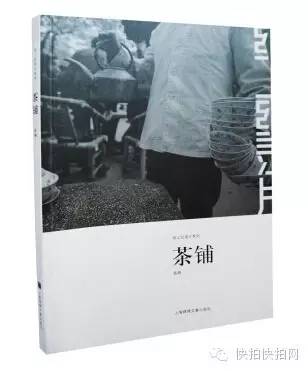
"Market", I want the most honest image.
Chen Xiaobo: After Tea Shop, you continue to look for traces of the culture of the old Chengdu people. When did the idea of "Market" come into being?
Chen Jin: It should have been produced in the early 1990s. Although I didn’t know what it would be when I started shooting. But after Tea Shop, I have established my own behavior and observation. I want to continue the traditional folk life through images. "Market" continues the road of "Tea Shop". I am very clear. I must be different in order to reflect the value of my existence.
Chen Xiaobo: We stayed in Chengdu these two days, and we were relaxed and carefree everywhere, feeling that our life in Beijing was hasty and rough and we didn’t enjoy life itself.
Chen Jin: The urban life in Chengdu is really very folk, very common and very civilian.
Chen Xiaobo: What is the most local flavor of Sichuan culture?
Chen Jin: It’s hard to understand without being in it, and it’s hard to sum it up in words. I don’t think any words are enough. This kind of culture is related to region, personality and a series of things. From Sanxingdui, the Eastern Han Dynasty to the Tang Dynasty, Sichuan’s rich culture and cultural heritage are manifested in the gestures of Sichuan people and in secular life.
Chen Xiaobo: You talked about the influence of The Riverside Scene at Qingming Festival on you.
Chen Jin: In 1983, I saw the Riverside Scene at Qingming Festival for the first time in the Forbidden City, and the image describing the life of the folk street was deeply impressed on me. In the past, when the natural economy was dominant, the climate in Sichuan Basin was warm and fertile, and it benefited from Dujiangyan irrigation. The industriousness of the working people was accompanied by eternal leisure. Decentralized and individual small-scale peasant production mode is marked by the narrowest forest discs under the lead-gray sky in the western Sichuan plain, which is a kind of market culture with great regional color, and has promoted a fairly developed farming civilization from this dark place; However, due to the relatively closed geographical environment, abundant products can only be loosely "circulated" on the basis of self-sufficiency, just as the tradition of Sichuanese breeds on raw and wet land-I am the "product" that has been assimilated by this cultural atmosphere. Although The Riverside Scene at Qingming Festival depicts the common people in Bianliang, the ancient capital of the Northern Song Dynasty, it is not surprising that it is similar to what I experienced in my hometown in western Sichuan, and I feel cordial when I read the painting. Later, I combed my own life and felt that some of the life scenes described in the painting were very familiar and close. There were a lot of things in the fifties and sixties that still had vague impressions. Later, things I like to shoot, such as drinking tea and posing in a dragon gate array, are things that are very close to my life experience.
Chen Xiaobo: What is the concept and scope of marketplace?
Chen Jin: With the evolution of history and the development of society, the original meaning of the word "street" has expanded from a single and narrow place for doing business to a living space for ordinary people. The daily life of ordinary people in towns has gradually been included in the category of "street" and even become synonymous with ordinary people. "Marketplace" has evolved from a concept of pure space to a broader and deeper cultural concept. The market has become a unique phenomenon of urban culture, which is different from rural culture, palace culture and scholar culture.
Chen Xiaobo: With such complicated details of life, do you have any choice when shooting?
Chen Jin: I always have a choice. I am familiar with this kind of life. I choose the scenes that can express the life state I want, all kinds of information composed by people and environment, and those that suddenly reproduce the fragments of my childhood and adolescence. I will shoot a detail that can constitute my work, and the detail that can inspire me to lift the camera must also touch me, which is something I am afraid of disappearing.
I shot a wide range, just a bigger concept. I hope to put my attention on a higher level. Although the region is very Sichuan, we can’t understand it in the small circle of regional culture, but we should put the lifestyle representing the national life form on a higher platform and let more people know about it. Not only for Sichuanese and Chinese, but also for foreigners. Show it to people with cultural background. If foreigners look at it, it must be something from China, not just from Sichuan. Through the observation of cultural phenomena in different regions, we can grasp the common things of human beings.
Chen Xiaobo: Is there a difference between light and heavy?
Chen Jin: I didn’t particularly think about this. Some photos are not so important when they are taken, but they become important when they are used at the end.
Chen Xiaobo: How can you find something hidden in the depths?
Chen Jin: I’m different from many photographers. Some people have a picture as a work. And to me, it’s just material. What I will keep thinking about is my whole work, a big "work". When you are not clear, you will stop when you don’t know where to work harder.
Chen Xiaobo: The image of "The Market" seems calmer and more simple, and the author’s shadow is hidden deeper. Thus, it has also entered a higher realm of the image.
Chen Jin: The image is even lighter. The author’s main body seems to be gone. In doing so, I was influenced by the working style of anthropologists. On the one hand, I respected life itself, respected the subject itself, and put it into my own observation.
At one time, I also wanted to try a breakthrough in image. What is on the image is just a kind of stimulation, which will soon disappear. Some things will be shocked and new when you look at them for the first time, but they will be tasteless when you look at them again. And those photos that are a little light at first glance have a longer and longer taste.
Chen Xiaobo: Actually, looking back now, the most classic and enduring photos in the world are those that are gentle and shot with the most standard lens.
Chen Jin: So what I want is the most honest and realistic image. Take photos honestly, honestly express what you want to express from an honest perspective, and express your real life.
After all, shooting is related to the photographer’s personality. My personality determines that I always withdraw from myself on the surface. Even if everyone chats, I would like to stay in the corner and be a bystander.
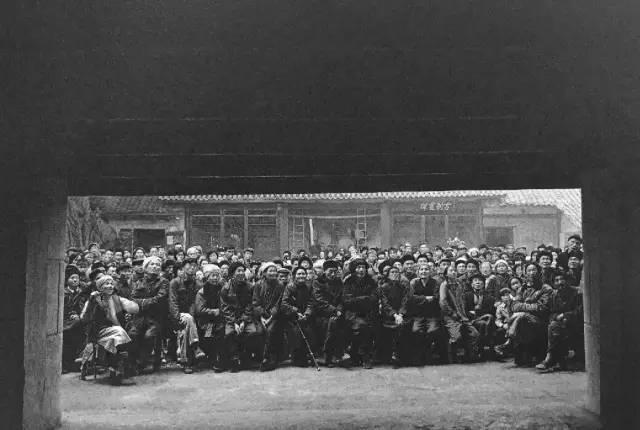
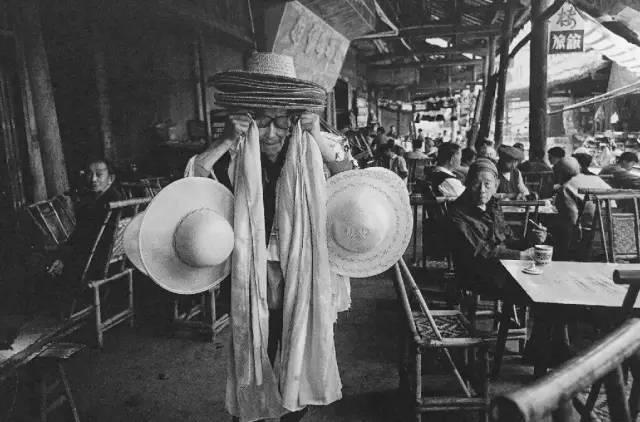
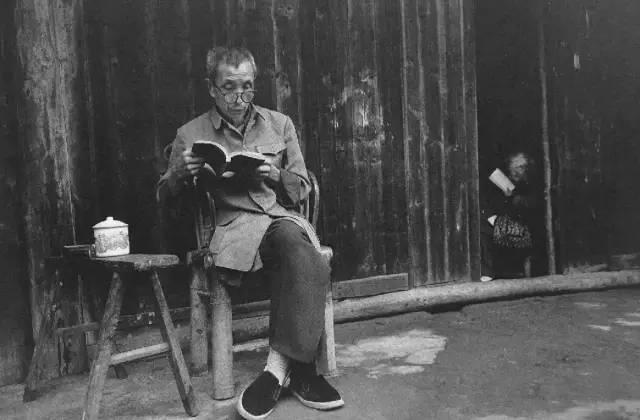
"Market" is a collection of pictures, words and
A complete cultural product of all kinds of humanistic materials
Chen Xiaobo: The overall editor of The Market is even more commendable.
Chen Jin: I hope "Market Street" will become a classic, and I spent a long time editing it.
Chen Xiaobo: What do you mean by a long time?
Chen Jin: It took six years before and after. I was silent for a while before editing into a book. In 1999, I gave up all my work and traveled to Europe and America for two months. On the way to travel, I watched and thought: I just want to think about the position of my own culture in other cultures; The world culture is so rich, how can China culture have a place in the world culture? How can you make others think that your things are good? How can something very regional be placed under the big cultural background of my country? How can people of different nationalities and regions care about the living conditions of ordinary people in Sichuan? I also did a lot of reading, reading literature, Tang and Song poetry and local culture.
Chen Xiaobo: Are you doing this to distance yourself from the photography circle?
Chen Jin: Yes. I don’t want to be limited by photography. At that time, I began to think about how to structure my "Market" like an architect. How to integrate so many photos, words and materials is what I think most.
Chen Xiaobo: Your status as an editor of the fine arts publishing house for more than 20 years began to play a role.
Chen Jin: My professional characteristics are really useful at this time. I have no reason not to do it well. I am a professional book editor and a professional photographer. I have professional strengths and am familiar with design and printing. I can write, I have been studying culture, and I have mastered a lot of information.
Chen Xiaobo: Many photographers can’t be the owners of their own photos because of their lack of editing training. I have seen many good photographers, and I can’t do anything about putting a lot of good photos in my hands.
Chen Jin: Yes, photographers around us have a lot of things in their hands. They look very good one by one, but they don’t become a complete thing in the end.
Chen Xiaobo: You are a scholar. Your knowledge structure also plays a role here.
Chen Jin: In the mid-1990s, I read books on anthropology at home and abroad, and the research methods of this subject fit my ideas very well. So I try to frame it anthropologically.
Chen Xiaobo: Will you continue to take photos while editing?
Chen Jin: There are some. Because there are new ideas, I found new images, and later I found that what I added was taken at random.
Chen Xiaobo: The way the book is edited looks very special.
Chen Jin: The layout of "Market Street" is different, with a horizontal format, a large number of photos and small words. The print run is small, and the spread is really limited. But I have to do this. Make it big first, then small, then fine. Not everyone can make their own things bigger, and one of them is the ability to control the theme. In fact, there are still friends in the circle who have a lot of complaints about the editing method of "Market Street". They always think that there are too many pictures, so many good images are lost. It’s normal for people to have different opinions, but it’s just a different interpretation. Due to the limitations of their own abilities, shortcomings are inevitable. But I still want to emphasize one point: The Market is not a simple collection of photographs, but a complete cultural product with pictures, characters and various historical and cultural materials.
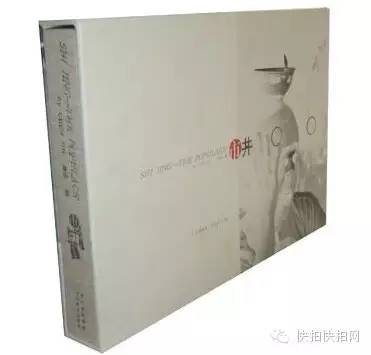
Chen Xiaobo: Is this editing method your choice?
Chen Jin: In the process of writing a book, I will not listen to other people’s ideas first, nor consider the market, and I will not be led by external things. I must do it in my own way first. People around me know what I’m doing, but they don’t know what it’s like to come out. Of course, now it seems to be extreme, the good aspects are highlighted, and the weaknesses are obvious.
Chen Xiaobo: At least it’s not so convenient to browse. (Laughter)
Chen Jin: The Market is not a photo album. It is a complete work. It uses so many materials (data) to express what I want to express. It is the best expression of Sichuan people’s lifestyle that I can sort out and summarize in this era.
Chen Xiaobo: Different from many photo albums, "The Market" needs to be read slowly, and it can’t be finished at one time, and every time you watch it, you can see the deeper meaning.
Chen Jin: "Market Street" really needs a period of time, and both I and readers need time to get to know it better. Different understandings will have different ways of interpretation.
Here, the image is just a way, a material, and it is an essential element to construct my thoughts.
Chen Xiaobo: What’s the difference between "The Market" and your original idea?
Chen Jin: There is no difference. "Market" for me, there is no regret that I wanted to do but didn’t do it. I have devoted my whole life to this matter, which can be described as painstaking. There are gains and losses in everything, and I have lost a lot in doing such a thing. In the process of doing it, I also asked myself: What’s the point? What’s the value? "Who cares!" Let me stick to the end. I try my best to be the best and the highest.
Chen Xiaobo: The best and highest performance is in the details. The "Market Street" we see uses many elements to form a joint force in design.
Chen Jin: When I do "The Market", the civilian consciousness in my bones is based on the historical inheritance with roots, not a casual feeling. I want to show the traces of tradition and form the history of street culture.
Chen Xiaobo: Apart from 60,000 words and 800 photos, the precious materials you selected are eye-catching. It can be seen that it is not accidental, but has been accumulating. The criteria you choose are all related to street life.
Chen Jin: Those stone carvings, bronzes, line drawings, brick paintings and New Year pictures are scattered in different documents and books. I started collecting these documents very early. I have been purposefully collecting things that can echo the street culture I photographed and create an atmosphere.
Chen Xiaobo: And the text. I have been immersed in your words for a long time. Those words have profound documentary value in a very personal description. I think many readers have the same experience as me.
Chen Jin: Writing is an important part of Market. Words convey the author’s thoughts from another angle, making up for the places that images can’t do and the information that can’t be conveyed. Words play the role of concatenation. Text paper is different from image paper, and the feeling of browsing is different.
I can write something. I still have such confidence. What I write is not dry, for one thing, I have been trained by words, and for another, those words are my true feelings. Sometimes I can’t go on writing. In the process of writing, I recall my childhood, past years and dramatic life, and sometimes I think: I am the only one to write this book!
Some photographers have no choice but to publish their own books and ask others to write them. I won’t do that.
Chen Xiaobo: It’s hard to write by putting yourself into it, but "The Market" has done it.
Chen Jin: I use the first person and have myself. The way I write is not a formula or a document, and quoting classics becomes my own thing. My words try to blend in with the pictures.
Chen Xiaobo: The Market cannot be viewed as a photo album, because it is a real document. Pay attention to the life of a region or a certain theme for such a long time, engage in work from a historical perspective, and show and spread it in such a form. It may be more valuable in decades and hundreds of years.
Photographers should work hard behind the images.
Chen Xiaobo: What are your cultural heritages?
Chen Jin: I still love China’s traditional culture and classical things. Music, I used to like listening to symphonies, and for a while, I was addicted to soothing music. Generally speaking, it is classical. Modern music is listened to for understanding, not appreciation. Classical things are precipitation and essence.
Chen Xiaobo: What about vision?
Chen Jin: The world is big, and everyone has his own advantages. I like to express myself with images. I am not superior to others in terms of light, shadow and composition. I just do what I have to do honestly.
Chen Xiaobo: What do you think a good image looks like?
Chen Jin: The image is too strong, but something imaginary appears. I like photos that reflect real life. But it doesn’t rule out the delicate things we contacted in the past, such as Adams and Weston. After all, it represents the highest level of image.
Chen Xiaobo: A friend said your image: "I think his whole tone is gray. I always said, Chen Jin, can you shoot something brighter? It’s so hard to watch. That is to say, don’t be so cold, be more kind and warm. " How do you answer such a question?
Chen Jin: This is a question of understanding, and it does not rule out individual personality problems. My life is not bright enough, and my living environment is not brilliant enough, which will inevitably give people a feeling of "gray" in my works.
Chen Xiaobo: What about the camera? What camera have you been using?
Chen Jin: It’s miscellaneous. Apart from having special feelings for Leica, nothing else is too much. In the mid-1980s, I was assigned to a publishing house. At that time, there was no Japanese SLR camera representing professional image, so I had to send me two old Leica. I used it to take a lot of photos with good layering. In 85, Wang Miao and Wang Zhiping and I also used Leica when we entered Tibet. And my colleague plateau. In the same way, when we come back and develop the film together, we are blindsided, and we can tell the pros and cons of the technical level just by looking at the quality and color of the image. Later, Lycra broke down and could not be used, so I used Nikon. In the mid-1990s, I bought a Leica myself. Leica is comfortable, feels and sounds so simple that ordinary people will not feel exaggerated. Leica let me express myself very relaxed. I don’t reject new things, digital and computer, and I also realize the advantages brought by digital. There is no point in simply pursuing technology, and there is no point in completely indulging in the camera. Maybe someday I’ll just use a small camera. Li Yuan spent his whole life shooting scenery with 135.
Photographers should not set their identity as photographers, their identity should be transferred at any time, and they should work hard behind the images.
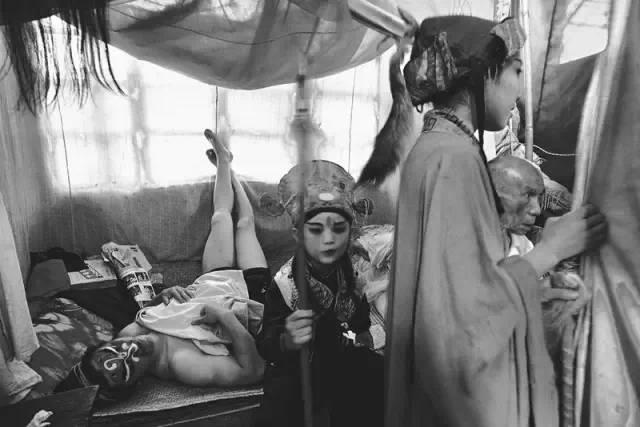
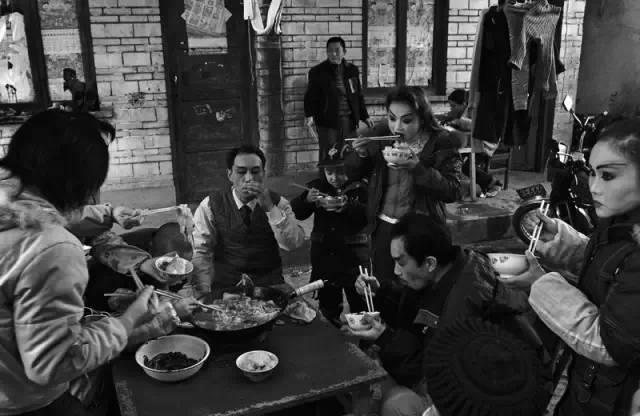
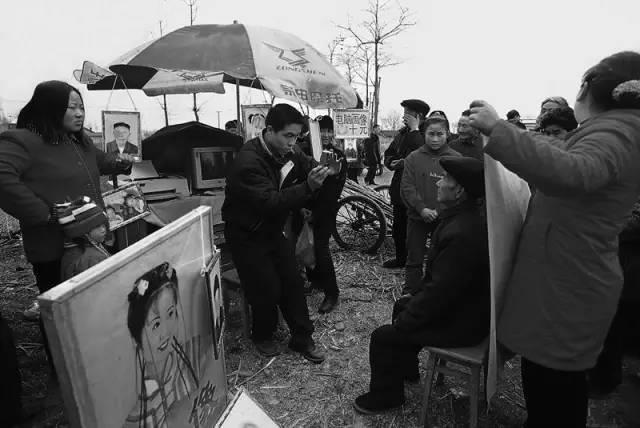
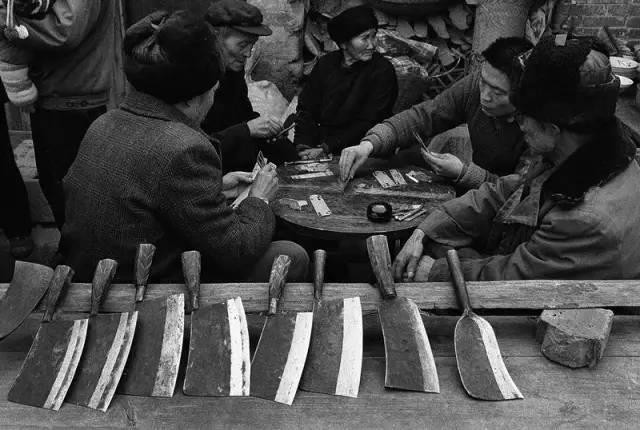
The morality of the older generation of photographers has a great influence on me.
Chen Jin: In 1980, when I was a sophomore, I started taking photos, and I was influenced by the April Film Festival. In the 1980s, there was something similar to today’s conceptual photography in terms of photographic language expression.
Chen Xiaobo: When you were in Yunnan University, you were most influenced by Xiao Jingzhi?
Chen Jin: My photography path at first was influenced by Mr. Xiao. At that time, Mr. Xiao brought the exhibition of the April Film Festival to Kunming. In 1980, Yunnan Academy of Social Sciences and Chinese Department of Yunnan University jointly conducted a survey of folk literature. I also took on the task of shooting the whole process, and bought a camera for more than one hundred yuan. Now that I think about it, it is actually the way of field trip. I went deep into the village in Jinggu county, Yunnan Dai area. At that time, I took a lot of photos, handed in photos of similar documents, left some so-called beautiful photos, and came back to hold a film festival. Mr. Xiao was working in the Cultural Department at that time. After seeing the exhibition, he sent a message to let us young people take photos to him. I have been in Yunnan for several years, and I have had a lot of contact with Mr. Xiao. Several students go to him almost every week.
So far, I’m glad to associate with Mr. Xiao. His influence on me is not just a photographic influence. His character, values and attitude towards life have a great influence. He is honest and does not rub sand in his eyes. When he sees something he doesn’t like, he will definitely point it out, which is not sophisticated at all. His failure in life is related to his honest conduct. In any era, it will suffer. We respect him, but we know that he is not suitable. His attitude towards photography and his attitude towards life have influenced me subtly.
My graduation thesis is a photographic article "Aesthetics of News Photography", which is unprecedented in Yunnan University. The Chinese Department stresses basic news and aesthetics, but there is no photography. A teacher came into contact with photography and wrote similar articles. He became my mentor. I participated in the first annual meeting of photojournalism theory held in Tianjin in 1983 because of this paper. Later, I wrote papers in successive sessions. At that time, articles always liked to get some profound theoretical words that they didn’t understand. But Sun Zhongjing, an old photographer from Sichuan Branch of Xinhua News Agency, shared a room with me. I showed the article to Mr. Sun. After reading it, he said, "Your stuff is very theoretical." Such an old photographer who has been engaged in news photography all his life didn’t understand what I wrote, which really gave me a sap.
And Jiang Qisheng. At that time, against liberalization, Shaanxi Ge Xinde wrote "On the Alienation of News Photography". He didn’t understand what the word "alienation" was. He just followed the fashion and used a new term. As a result, he ran into a "mine" and was criticized and screwed up. During the meeting, Jiang Lao called Huimin and me and asked us what "alienation" was. In fact, we may not really understand it, but I am moved by Jiang Lao’s rigorous and humble attitude. The older generation of photographers have many qualities that have a great influence on me. It had a great influence on my future path.
Chen Xiaobo: In the early 1980s, you had an important photographic experience in Danba, a Tibetan area.
Chen Jin: In August, 1982, I graduated from university, and I was assigned to the provincial public security department at the earliest. After going there for a month or two, I felt I couldn’t do it. I have decided to take the artistic road in the future and offered to leave. I can change within three months. We are educated youths in Chengdu, and we can put them back unconditionally if we want. Back at school, I continued to wait for the distribution, and the waiting time was very uncomfortable. I had the opportunity to go to Danba in the middle of this year.
Danba is a county in Ganzi Prefecture. My friend and I borrowed a camera, printed a camera and brought photo paper. Prepare to take pictures while making money. When I went to Kangding, the state capital, I had to climb over Zheduo Mountain. My friends who traveled with me said that it was too wild there and I came back with difficulties in life. I must go, but I don’t know where to go I went to Kangding bus station, bought a ticket and arrived in Danba by accident. In May, I entered the Danba mica mine, next to the forest farm and the cottage. I carry a photo box to take photos during the day and develop photos at night. Earned more than 200 yuan a month. There are dozens of films in the luggage, most of which are used for creation. I have lived in many places, including Tibetan homes, primary schools and miners’ houses. I am deeply impressed, but I have taken very few pictures of people’s living conditions, and almost all of them have taken pictures of natural scenery, cattle and sheep landscapes. It’s a pity to see it now I revisited my old place three years ago, and the changes have been great. There used to be small trains in the forest area, but now there are none.
Danba is a complex of mine, and I have learned a lot.
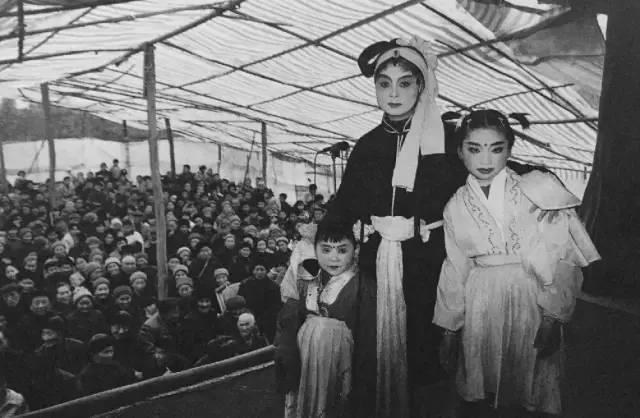
The life of paper and ink will last forever.
Chen Xiaobo: What do you want your image to spread?
Chen Jin: Books. It’s still a book that can be held in your hand and played with. A book is put there, and it is constantly appreciated and constantly obtained. The ancients said, "The life of paper and ink will last forever." Reading the text must be an important way.
If my book is to be a classic, it will be a good thing after many years. Of course, what kind of book is made and whether it is valuable or not is very important. Of course, I don’t rule out spreading it through TV topics and the Internet.
Chen Xiaobo: What about the people who arrived?
Chen Jin: I have a special feeling for photography. I certainly hope photographers can see it, but I want to break through the circle of photography. The treasure of scholars is more important and meaningful than that of photographers. But I can’t expect more people to read it because of the number of my "Market" at present. I want to make it popular on this basis so that everyone who likes it can get it. Recently, Shanghai Literature and Art Publishing House’s "Disappearing Style" series published my "Feeling for Chengdu", with 50,000 words and more than 100 photos. It’s a simple reader of "Market Life Edition".
Chen Xiaobo: Have your pictures entered the auction market in the past two years?
Chen Jin: I have some works in the auction. I just want to know about the market in this way. The picture market has a process in China, and it is not the best time. I pay attention to its progress. Observe it and understand it. The photographer has something good in his hand. There’s no hurry. Fortunately, I am slowly wandering in an environment like Chengdu, and I can advance and retreat.
Chen Xiaobo: Do you want your images to enter the collection?
Chen Jin: I hope so. Entering the collection is no longer an economic significance, but an affirmation of the value of my things. Then it is my own contribution to society, and I have achieved the purpose of doing this at first.
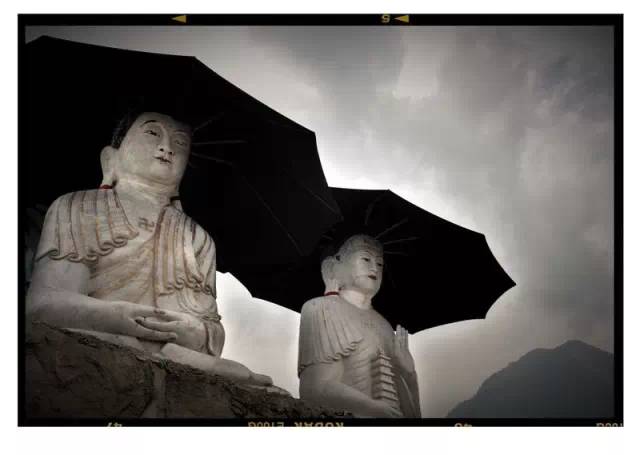
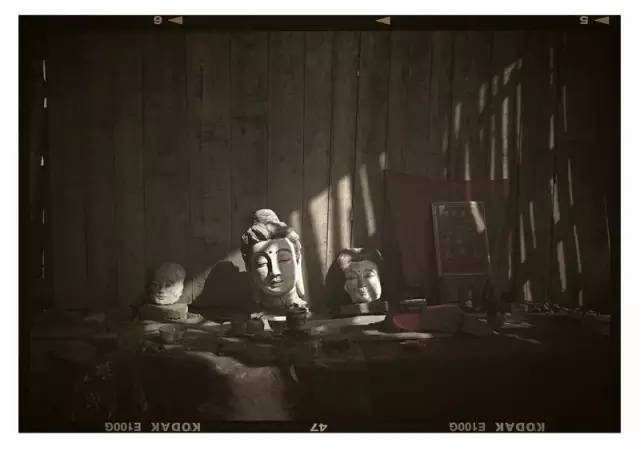
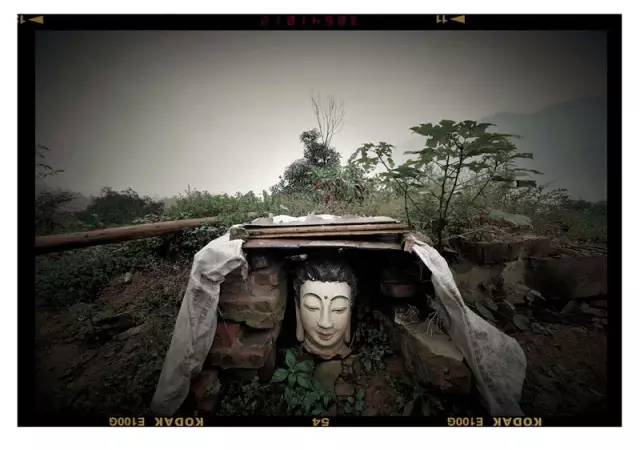
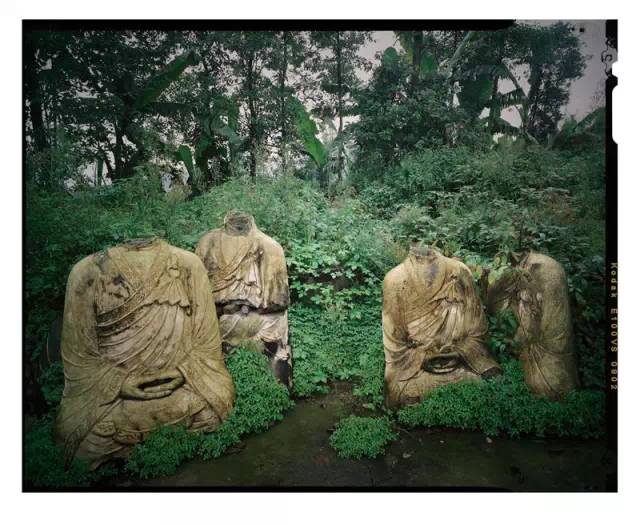
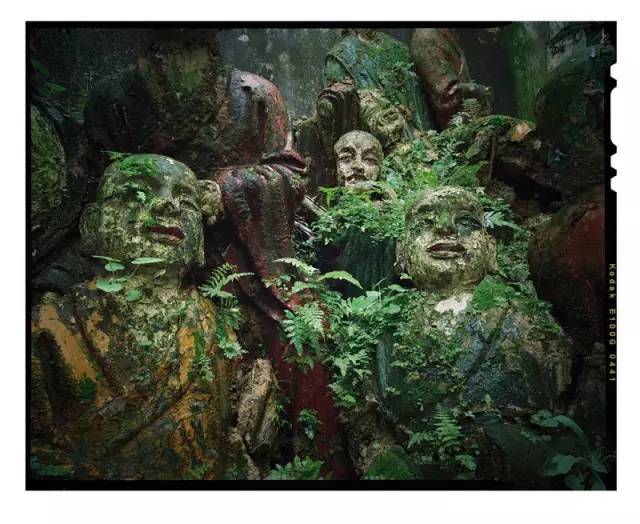
Maybe I will really go to the countryside in the second half of my life.
Chen Xiaobo: The photographer’s personality determines the depth of what he does. Your Tea Shop and Market are the reflection of your personality.
Chen Jin: Independent and as marginal as possible. I have been like this since I was a child. I am indifferent to people and things, and I don’t want to get too involved. Maybe it has something to do with the environment I live in. Our generation is flawed in personality, and over time, there is a kind of depression. At home, my father is very strict and uses old-fashioned education on us. Mental pressure, natural things are naturally suppressed. Keep a low profile and don’t express your thoughts easily. On many occasions, I would rather be a bystander and an observer. The usual way of dealing with people is unobtrusive and objective on the surface, but there are their own ideas and opinions in the depths.
Chen Xiaobo: Many people who don’t know the truth think that photographers are exposed people. In fact, there are many quiet people around us who do photography. On the contrary, it is very deep and distinctive.
Chen Jin: Taking pictures is just an expression. Why did literature students take the road of photography? It was because I would rather use a shutter than a pen later. Although writing is my strong point, once I go to photography, I find that photography is more suitable for expressing my thoughts. Express yourself through images-not ostentatious expression, but try to hide behind the images.
Chen Xiaobo: What else do you usually do?
Chen Jin; I live a regular life. I like sports and swim at noon every day. Seemingly calm, in fact, he is still an active person. I worked as a PE teacher for four years when I was an educated youth. I also like driving cross-country. A group of people drive to extreme roads, fall asleep on the expressway, and get excited once they get to the gravel road. I hope my life is healthier.
Sometimes I have tea with my friends.
Chen Xiaobo: Do you study much?
Chen Jin: Not much. The state is wrong. Times are sick, and there are always endless things to do. Concentrated reading is when I was writing "The Market" in 2000. I wanted to pull myself back from the secular world, and I selectively read China’s essays in the 1920s and 1930s. Yu Dafu and Shen Congwen entered a reading state.
Chen Xiaobo: Where will your photography go in the end?
Chen Jin: Life is short. It is enough to do one or two meaningful things in your life. With Tea Shop and Market, it takes a process whether there can be a trilogy. I have some ideas about how to take my photography path. My future state may be related to my attitude towards life and depends on how I understand life for the rest of my life. I still hope that I can relax myself, don’t put myself up, and continue my behavior. It’s more prosaic and idyllic, but there will still be an explanation.
Maybe persistence is a good thing, maybe I will be tired of reality and have an empty thing. Maybe I will be more traditional and go into more classic traditions. If you can’t keep up with it, just go back. Independent, detached and independent. Including "Market", it already has such a taste. Try to return the image to the original and essential state. Good things must be something that can stand to see.
Chen Xiaobo: It seems that you have never been proud of being paid attention to, and you have never given up because you are not paid attention to. Is this detachment born or cultivated?
Chen Jin: I can’t say detachment. Not so high, temperament, try to be yourself. In essence, it is the Confucian "golden mean".
I won’t be carried forward by anything. Finally, I will let nature take its course. I don’t care whether I encounter unfair treatment or anything else, and it won’t affect my state of mind. Self-cultivation, maybe I will really go to the countryside in the second half of my life. Maybe "pastoral" is the end of my trilogy.
Interview time: January 13th, 2008
Interview location: a teahouse in Chengdu
The above content comes from Chen Xiaobo’s why they want to photograph, which was released with the authorization of Chen Xiaobo, and the picture comes from the Internet.