Can’t bear to look straight: those heavy-mouthed pigments are simply painting with life.

Horse urine color, bovine blood red, lethal green … … Artists are really painting with their lives!

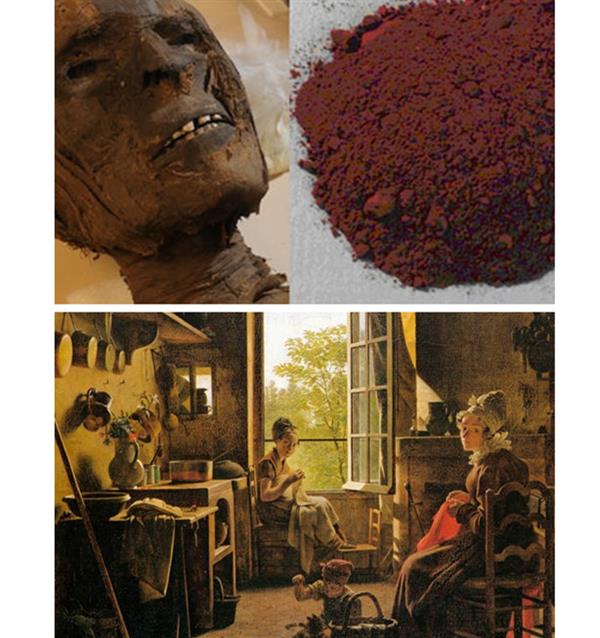
Mummy Brown: Pigment extracted from dismembered bodies.

Did you know that mummies were used to make paints? The name of this color is ""Mummy brown”,Made of crushed mummy flesh, white asphalt and myrrh.

Mummy is one of the symbols of mysterious ancient Egypt, but there was a time in history when mummies were regarded as commodities rather than precious cultural relics, and the business of buying and selling mummies was very prosperous.

They are cut into small pieces and imported into Europe, where they are used as fuel, fertilizer and even a panacea for all diseases. With the rising price, the huge profits even prompted some profiteers to fake mummies with tramps or animal carcasses.

Painters from the Middle Ages to the Renaissance often bought medicinal materials from pharmacies as pigments, and mummy brown was discovered by painters under such circumstances. Mummy brown is rich in color, high in transparency and more expressive than ordinary brown pigments, so it is very popular.

Micheál Martin Radling’s "Inside the Kitchen" uses this kind of pigment extensively.

Don’t worry that these works will smell rotten, and spices such as frankincense and myrrh will be used when making mummies, so the smell of mummified brown may be quite good.

In 1964, due to the sharp decrease in the number of raw mummies, the genuine mummy brown disappeared from the market.

Now you can still buy the pigment called "Mummy Brown", but there is no mummy in the raw material.It is made by mixing kaolin, Shi Ying, goethite and iron ore powder.Compared with authentic mummy brown, it is usually yellow or red in color.  
Can't bear to look straight: those heavy-mouthed pigments are simply painting with life.

Carmine: parasites become food pigments.

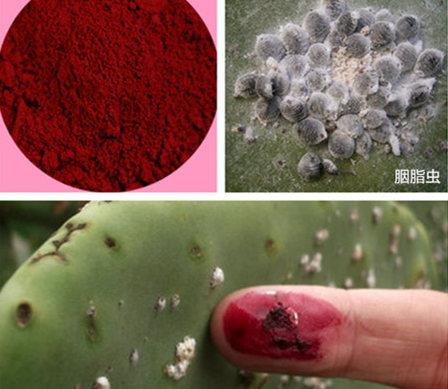
Carmine is not the same thing as the rouge used by ancient women in China. Most of the rouge used for makeup is made of petals, while carmine is made of a crushed cactus parasite.

This bug is called cochineal bug, which originated in America. It was once used by Indians to make up, and was later brought back to Europe by the Spanish.

The color of carmine is stronger than the traditional red dye originally used by Europeans, so it immediately became popular among nobles. It was not only used by painters to paint, but also used to make cardinals’ robes.

At that time, the identity of cochineal insects was always a trade secret. It was not until the end of the 16th century that everyone knew that this beautiful red color actually came from the blood of insects.

Now, the red dye made by cochineal insects is still often used, and the scope of use is much wider than expected. Although carmine is made of insects, it is a natural edible pigment recognized by the US Food and Drug Administration and is often used to color food.

However, everyone seems to find it hard to accept indirect "eating insects". Starbucks in the United States once caused an uproar because it used carmine in its drinks.

Besides being "hidden" in food, carmine also appears in cosmetics, especially in high-grade lipsticks.

In short, it’s really not easy to get this bug out of your mouth!  
Can't bear to look straight: those heavy-mouthed pigments are simply painting with life.

Indian yellow: the color of cow urine that caused protests

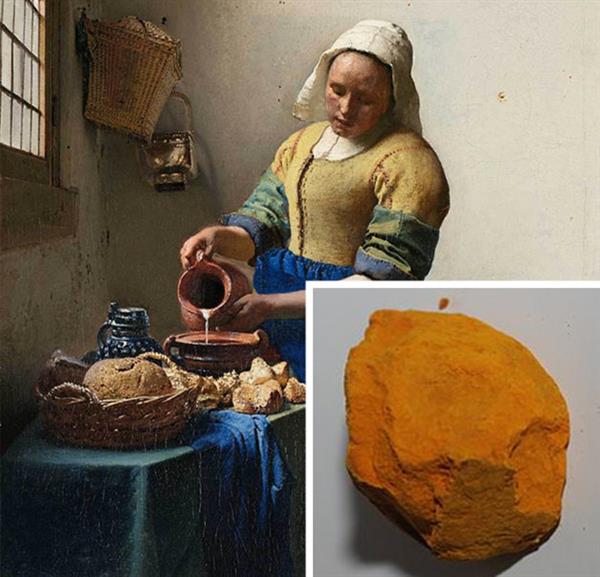
Do you know that?/You know what? The elegant and quiet women in Vermeer’s works and the hazy light and shadow in Turner’s works are actually painted with cow urine!

The color of Indian yellow is clear and reddish, which is the heart of many famous painters. Because of its high transparency, it is very suitable for expressing beautiful things in the sun.

Indian yellow originated in India, and its shape is a lump of balls with a slight odor. It has been widely used by painters after being exported to Europe, but the production process is really strange: if cows only eat mango leaves for a long time, their urine will turn orange-yellow, and the urine will be collected in buckets and evaporated to extract yellow particles, which is Indian yellow.

Now we can see that Indian Huang Dou is artificially synthesized from other materials, but this is not because the raw materials are disgusting, but because the production process is inhuman.

In the hundreds of years when Huang Dawei was popular in India, it remained mysterious, and people made various speculations about its raw materials. It was not until someone went to India for a field investigation that the mystery was unveiled, and this revelation triggered a fierce protest movement, because most cows fed in this way were malnourished and would eventually weaken and die.

So in 1908, this production method was stopped on suspicion of cruelty to animals. 
Can't bear to look straight: those heavy-mouthed pigments are simply painting with life.

Chrome yellow: It makes Van Gogh crazy.

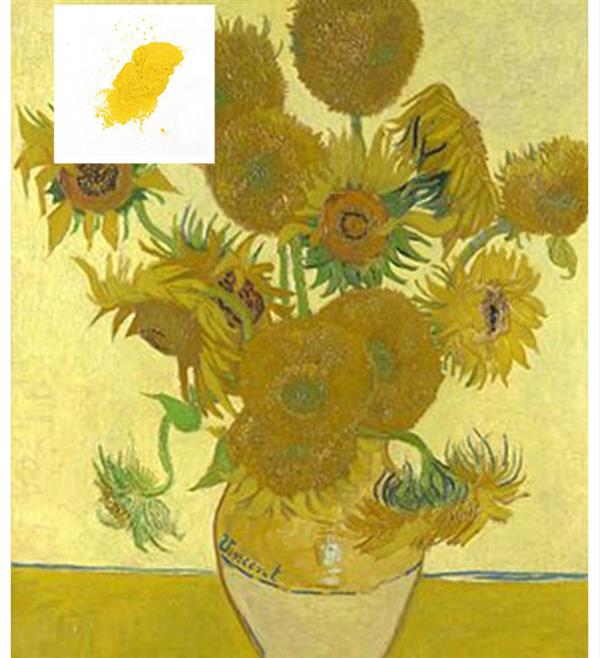
When it comes to chrome yellow, you have to mention Van Gogh. Chrome yellow is Van Gogh’s favorite color.

It is cheap, opaque and high in color rendering, and the works drawn with it are full and bright, with great tension. The famous Sunflower uses chrome yellow extensively.

The raw material of chrome yellow is lead chromate, which will lead to lead poisoning when exposed in large quantities.

One of the characteristics of Van Gogh’s works is that the pigments are particularly thick, which leads him to coexist with a large number of toxic pigments for a long time. He also has the habit of licking his brush while meditating, which further aggravates his symptoms of lead poisoning.

Some people suspect that Van Gogh’s insanity is caused by this beautiful and deadly yellow pigment, while others think that chrome yellow pigment has even influenced Van Gogh’s painting style in turn, because some images in his works are very similar to the hallucinations that lead poisoning patients will have.

Coincidentally, Goya, a Spanish painter, also loves to use chrome yellow. When he is in a good mood, he will dip his fingers directly into the paint and paint. As a result, he is also suffering from lead poisoning.

In fact, chrome yellow pigment is not a high-quality pigment. It is not only toxic, but also becomes dull due to the chemical reaction caused by ultraviolet radiation after sun exposure. Its heat resistance and acid resistance are relatively general, and few people use it now. 
Can't bear to look straight: those heavy-mouthed pigments are simply painting with life.

Bone snail purple: a malodorous liquid specially designed by the royal family

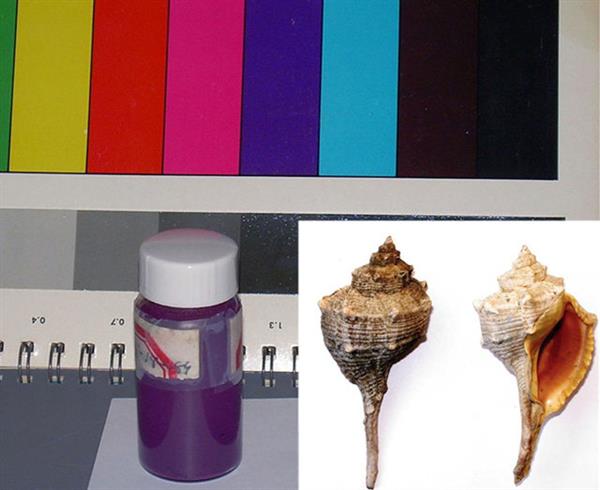
Bone snail purple, also known as royal purple, is the royal color of the Roman royal family, but the production process is disgusting. Not only do dyes stink, but even dyed clothes smell fishy.

Bone snail purple is made from the mucus of dye bone snail. The appearance of the dyed bone snail is different from that of the common conch, with many sharp spines all over it. The submaxillary gland secretes colorless milky mucus, which was originally used for predation, defense and immunity, and will turn purple after contact with light and oxygen. In addition to the dye Oncomelania, many other animals of Oncomelania can secrete this color-changing mucus.

When extracting purple dye from bone snail, people will take out the meat of bone snail, add salt to soak it, heat it with steam, and add human urine to adjust the color depth.

Although it stinks, the color of bone snail purple is bright and lasting, and it will not fade over the years. The value of bone snail purple is also reflected in its rarity, which requires tens of thousands of bone snails to produce one gram of dye, so it is expensive, and it is suitable as a symbol of power and status.

In the past, the production and use of bone snail purple were strictly restricted, and it could only be used for emperor’s clothing, clergy’s robes and military orders. It was not until 1856 that a chemist accidentally discovered the world’s first synthetic chemical dye, aniline purple, and purple gradually faded from the aristocratic color. 
Can't bear to look straight: those heavy-mouthed pigments are simply painting with life.

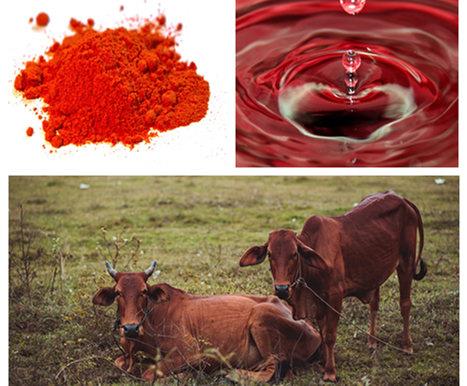
Cattle blood red: the result of thinking "red" and thinking crazy

Red is a color that fascinates nobles in history. The brighter it is, the more it symbolizes wealth and status. In Europe at that time, the dyeing process was almost equivalent to magic, and the dye formula was a secret that craftsmen would not tell anyone.

For a long time, the red dyes on the European market were all "Turkish red" imported from the Ottoman Empire. Western craftsmen were eager to replicate this mysterious oriental red, so they made all kinds of strange attempts.

In addition to the main ingredient, madder, they also tried to add cow dung, cow blood and deteriorated olive oil in the complicated processing process, or Brazil sappan, lac and lichen, but the dyeing effect was not ideal, often brown and orange, which was easy to fade and smelled bad.

Later, a kind of red pigment from Central America entered Europe. This kind of red is so bright that craftsmen are no longer obsessed with copying the oriental red. This kind of red is the carmine made by cochineal insects mentioned above. 
Can't bear to look straight: those heavy-mouthed pigments are simply painting with life.

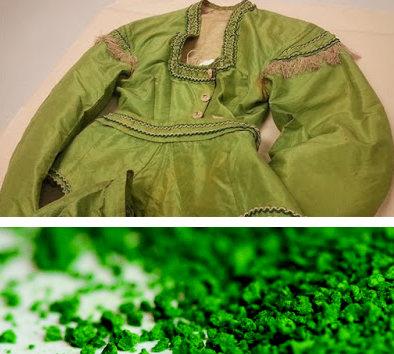
Scheler green: the fatal discovery of chemists

Green is the hardest hit area of toxic pigments. At first, people used copper carbonate to dye, and then Scheler green was discovered, and then Paris green and cobalt green appeared. Each green is beautiful, but each green is toxic.

Scheler green is copper arsenite, which is bright but unstable, not only toxic, but also carcinogenic. Scheler green has poisoned many people in history, and Napoleon may be one of them.

Napoleon died in St. Helena in 1821. There are different opinions on the cause of death. Many scholars have determined that the arsenic content in Napoleon’s hair is much higher than that of normal people. Some people speculate that Napoleon was poisoned and killed. Others point out that the abnormal arsenic content may be related to the Scheler green wallpaper in Napoleon’s room. St. Helena has a humid climate, and Napoleon may die of chronic poisoning due to long-term inhalation of arsenic-containing gas released from wallpaper.

Scheler Green is named after Scheler, the chemist who discovered it. During his life, he made many discoveries that are very important to human beings, such as oxygen and chlorine. After he discovered that copper arsenite can be used as a green dye, this color became popular in the clothing and construction industries. Later, people became sick and even died because of "toxic skirts" and "toxic rooms", and the toxicity of Scheler green began to be recognized. However, people have not completely abandoned it and turned to use it as an insecticide.
Can't bear to look straight: those heavy-mouthed pigments are simply painting with life.

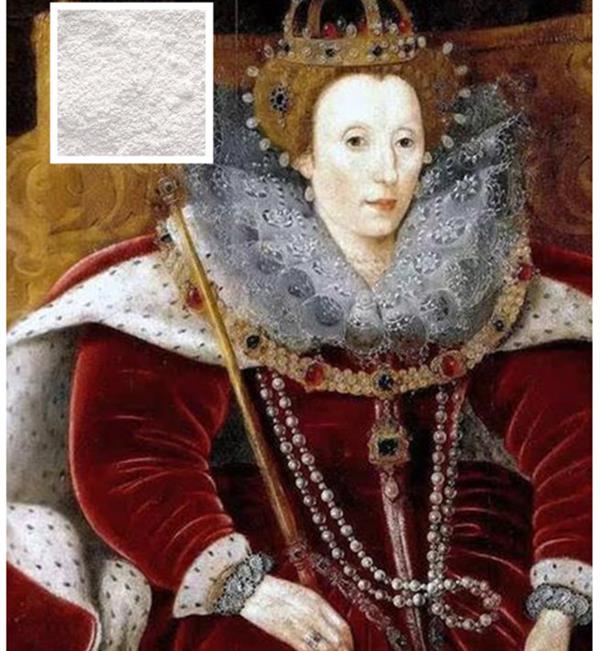
Lead white: Did the Queen die of her beauty?

Many people want to have snow-white skin, and there have been various whitening products in history, and lead white is one of them.

Cosmetics containing lead and white have been popular in eastern and western countries, and painters who often depict women’s portraits, such as Renault-Argentina, also use lead and white pigments to show women’s white and beautiful skin after makeup. Even today, whitening products are exposed because of excessive lead content.

In fact, lead white is not the best choice for whitening.

Lead white is the basic lead carbonate, which makes the skin look "dead white" through its strong hiding power. When lead enters the skin, it will not only make the skin dull, but also lead poisoning.

The cause of death of Queen Elizabeth I of England may be lead white powder poisoning, and painters who often use lead white paint also suffer greatly. Because of its remarkable whitening effect, although it has been banned repeatedly in the past, people who insist on using it are still emerging one after another.

There is also a kind of lead white, which is not only toxic, but also a little disgusting.

Its figure appeared in the murals of Egyptian tombs and the icons of Christ in the Renaissance, and it was made by mixing lead ingots, vinegar and cow dung. Although the material is quite blasphemous, the finished product is extremely white and beautiful.
Can't bear to look straight: those heavy-mouthed pigments are simply painting with life.

International observation | The "reconciliation tide" in the Middle East brings new opportunities for solving the Syrian issue.

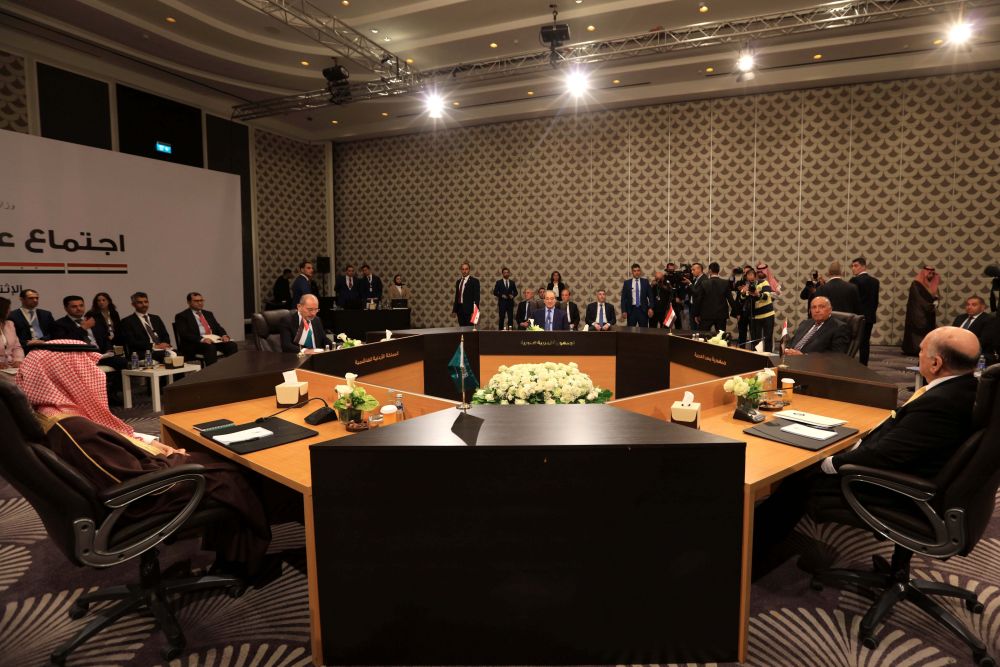
  Xinhua News Agency, Damascus, May 4 (Reporter Wang Jian) The Syrian issue has recently ushered in positive changes. The diplomatic interaction between the Syrian government and several major countries in the Middle East has increased, and their mutual relations have tended to ease. On May 1, the foreign ministers of Syria, Jordan, Saudi Arabia, Iraq and Egypt held talks in Amman, Jordan, to discuss a political solution to the Syrian issue. According to reports, the foreign ministers also discussed measures to normalize relations between Arab countries and Syria.

  Analysts pointed out that the warming of relations between Syria and Arab countries is not only due to their respective needs, but also due to the changes in the overall environment in the Middle East.Saudi Arabia and Iran, the Middle East powers, resumed diplomatic relations under the mediation of China, which set off a "wave of reconciliation" in the region. China’s Middle East policy and China’s concept have been widely recognized by regional countries.

  Relations between Syria and the Arab world are getting warmer.

  After the Syrian crisis broke out in 2011, the Arab League suspended Syria’s membership, Saudi Arabia and many other Arab countries closed their embassies in Syria, and Syria’s diplomacy entered a relatively isolated state. With the evolution of the domestic and regional situation in Syria in recent years, the relationship between the Syrian government and the Arab world has gradually thawed. Many Arab countries have called on the Arab League to restore Syria’s membership, and many countries have reopened their embassies in Syria or border ports bordering Syria.

International observation | The "reconciliation tide" in the Middle East brings new opportunities for solving the Syrian issue.

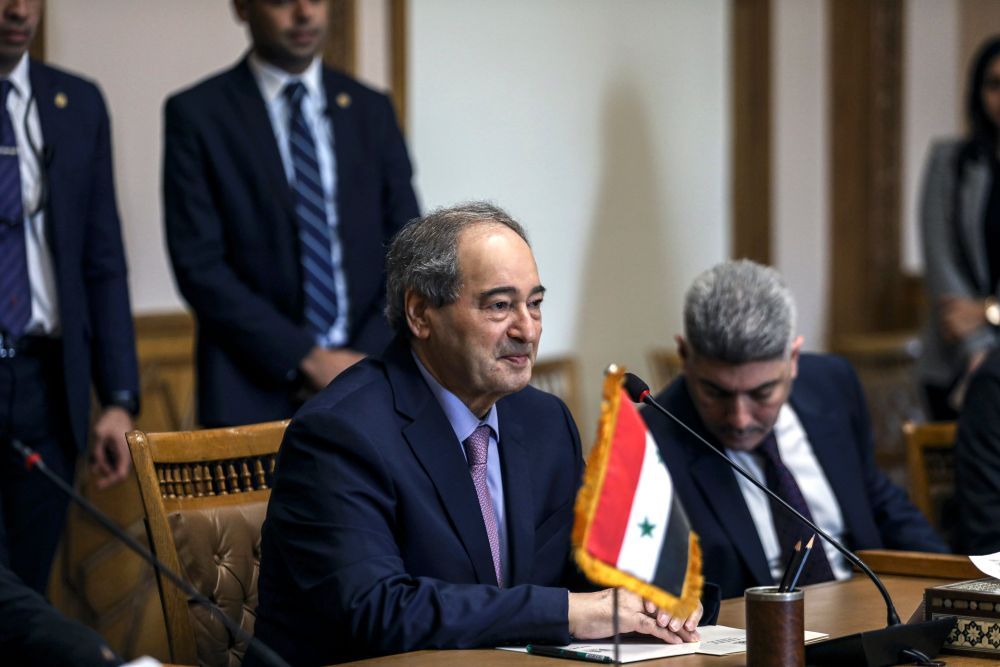
  On April 1st, Syrian Foreign Minister Mekdad (centre) held talks with Egyptian Foreign Minister Choucairy (not pictured) in Cairo, Egypt. This is the first time that the Syrian Foreign Minister has visited Egypt after more than ten years. Xinhua News Agency (photo by Ahmed Goma)

  Last March, Syrian President Bashar al-Assad visited the United Arab Emirates, which was his first visit to an Arab country since the outbreak of the Syrian crisis. Since the beginning of this year, the interaction between Syria and Arab countries has become more frequent. After a strong earthquake struck the border areas of Syria and Turkey in early February, several Arab countries quickly launched humanitarian assistance to Syria. Recently, Bashar has visited Oman and the United Arab Emirates successively, and foreign ministers of Syria, Saudi Arabia and Egypt have also exchanged visits.

  On April 14th, the foreign ministers of the six members of the Cooperation Council for the Arab States of the Gulf and Egypt, Iraq and Jordan met in Jeddah, a port city in western Saudi Arabia, calling on Syria to achieve internal unity and return to the "Arab embrace" as soon as possible. Half a month later, foreign ministers of Syria and four other Arab countries will meet in Amman.

  Analysts believe that Arab countries and Syria have their own interests to consider in improving relations. Syrian political expert Husam Chouaib said,The Syrian government urgently needs to improve the economy and promote national reconstruction. In the face of Western sanctions, strengthening regional economic cooperation has become one of the options..At the same time, strengthening interaction with Arab countries can further gain political support and get rid of diplomatic difficulties that have lasted for many years..

  Syrian political analyst imad Salim pointed out that the Syrian government has taken the initiative in the domestic battlefield, and other Arab countries need to adjust their policies according to the reality. At the same time, for Lebanon, Jordan and other Arab countries with close geographical relations with Syria, cooperation with Syria will help improve their economies.

  Syria’s return to the Arab League ushers in new opportunities

  In addition to their respective interests and demands, changes in the regional situation have also brought opportunities for Syria to improve relations with Arab countries, the most important of which is the resumption of diplomatic relations between Saudi Arabia and Iran. Assistant Foreign Minister Ayman Susan of Syria pointed out in an interview with Xinhua News Agency that,Saudi Arabia and Iran are two active countries in the Middle East, and the improvement of relations between Saudi Arabia and Iran will be reflected in most issues in the region, including the Syrian issue.

International observation | The "reconciliation tide" in the Middle East brings new opportunities for solving the Syrian issue.

  On May 1, the foreign ministers of Jordan, Saudi Arabia, Iraq, Egypt and Syria held talks in Amman, the capital of Jordan, to discuss a political solution to the Syrian issue, and stressed that resolving the Syrian crisis was a priority. Xinhua News Agency (photo by mohammed abu Gushi)

  At the beginning of the Syrian crisis, Saudi Arabia was once considered as one of the main supporters of the Syrian opposition armed forces, so the "breaking the ice" between Saudi Arabia and Syria is particularly critical. On April 12th, Syrian Foreign Minister Mekdad visited Saudi Arabia and met with Saudi Foreign Minister Faisal. On April 18th, Faisal visited Syria. During the meeting between Bashar and Faisal, both sides expressed positive views on the normalization of future relations.

  Maher ihsan, a Syrian political analyst, believes that Saudi Arabia, as one of the major Arab countries, will make a formal turn in its relations with Syria, which will push other Arab countries to evaluate their policies, reduce their worries and temptations on improving relations with Syria, and further promote the normalization of relations with Syria, thus making Syria’s return to the Arab League promising.

  According to reports, Saudi Arabia plans to invite Bashar to attend the Arab League summit hosted by Saudi Arabia in May. Ahmed ali abul gheit, Secretary-General of the Arab League, previously revealed that,Most members of the Arab League hope to confirm the restoration of Syria’s membership at the summit.

  Vivid practice of global security initiative

  The Middle East is one of the most complex geopolitical regions in the world. All along, China has always supported the people in the Middle East to explore the development path independently, and supported the countries in the Middle East to unite and cooperate to solve regional security problems. Middle East countries and the international community generally appreciate China’s success in promoting the resumption of diplomatic relations between Saudi Arabia and Iran.That "this fully demonstrates China’s important position and positive influence as a global power" is "a vivid practice of global security initiatives".

International observation | The "reconciliation tide" in the Middle East brings new opportunities for solving the Syrian issue.

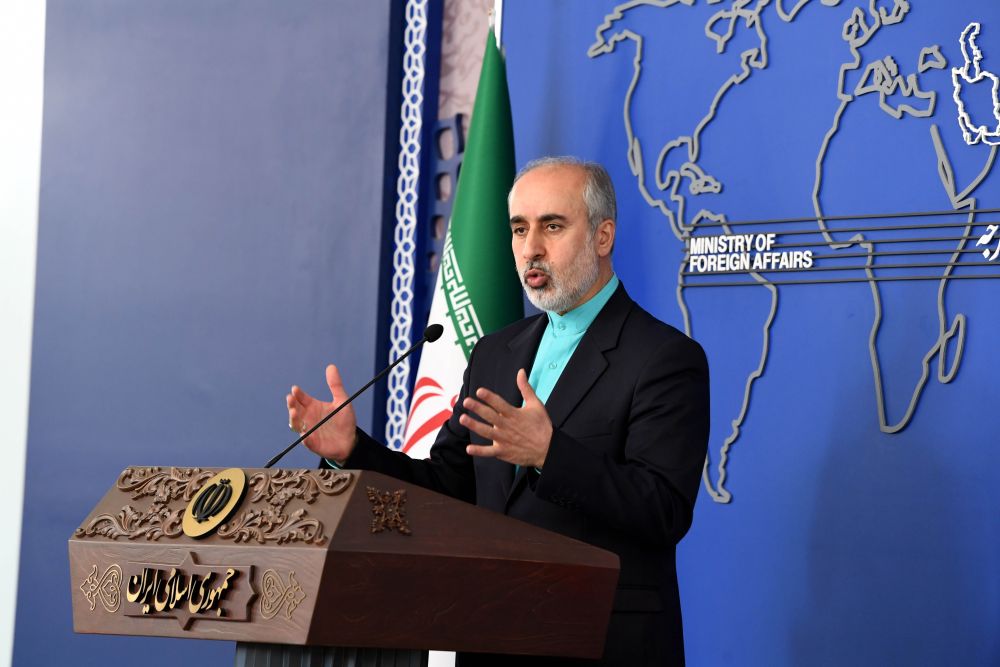
  On April 17th, in Tehran, Iranian Foreign Ministry spokeswoman Canani said at a regular press conference that Iranian President Leahy and Saudi King Salman had invited each other to visit their respective countries. Xinhua News Agency reporter Shadati photo

  Susan said,China respects international law and national sovereignty, opposes hegemonism and hopes that all countries will share security and prosperity.China’s mediation to promote the resumption of diplomatic relations between Shay is to achieve regional peace and stability.

  Analysts believe that China’s successful mediation promoted the reconciliation between Saudi Arabia and Syria, and then Saudi Arabia and Syria achieved "breaking the ice", indicating that China’s international role in persuading peace and promoting talks is highly recognized by all parties. China advocates the establishment of a common, comprehensive, cooperative and sustainable security architecture in the Middle East from the height of building a community of human destiny, which conforms to the strong desire of Middle East countries to pursue peace, stability and development, and provides China wisdom and China plan for maintaining peace, reducing conflicts and achieving long-term stability in the region.

  Liu Xin Lu, dean of the School of Arabic Studies at Beijing Foreign Studies University, said that at present, people from all walks of life in the Middle East are deeply thinking about whether the Middle East countries can turn their enemies into friends and jump out of the conflict trap that has been circulating in modern times. And the solution is becoming increasingly clear, and it has increasingly become the consensus of the Middle East countries, that is — — Change the traditional concept of order and security based on western geopolitical logic, abandon zero-sum thinking, and resolve differences and disputes between countries peacefully through dialogue and consultation.China’s concept of security, order, development and civilization has been widely recognized by the Middle East countries, which is conducive to achieving peace and focusing on development in the Middle East.

Idiom reading | "Be a great teacher for students to learn, do things and be human"

In China, the word "Mr." is a respectful name for highly respected and knowledgeable people, emphasizing a kind of cultivation, a kind of spirit and a kind of reverence. In the Book of Rites, the teacher was called "Mr.": "From Yu Xiansheng, talk to people without crossing the road. Being taught by the teacher, advancing with the trend, and standing upright and handing over "fully embodies the respect and worship of the ancients to the teacher." And "big" means that a person opens his hands and feet and stands tall. "Mr." is crowned with "big", which highlights the realm and style needed by a teacher.

The General Secretary of the Supreme Leader has repeatedly emphasized the standard of "Mr. Big", which is "a model for students to learn, do things and be human" and "a person who promotes students to grow into all-round development", and wants to "become a model respected by society and become an example for the world to follow".

The "greatness" of a gentleman lies not in the size of the school, nor in the high professional title, but in the depth of knowledge, high moral character and large pattern. Confucius, Zhu Xi, Han Yu in ancient times, Liang Qichao, Cai Yuanpei, Tao Xingzhi, etc. all have profound insights and enthusiasm for the future of society, country, nation and mankind, and have become "big gentlemen" admired by the world.

The "greatness" of a gentleman lies in learning. Profound knowledge is the basis of becoming a "great gentleman", just as "the product of water is not thick, it is powerless to bear a big boat". Without solid knowledge, it is difficult to be a teacher.

How to achieve great learning? Only by knowing "small" can we become "big". Nowadays, in the era of "information explosion", teachers should not only have rich general knowledge and profound professional knowledge, but also aim at the forefront of academic development and social development and constantly update their knowledge reserves. Only by truly realizing one’s narrow vision and shallow knowledge, rather than being self-righteous and conceited, can one make continuous progress and breakthrough in learning and make one’s classroom deep, broad, thick and warm.

The "greatness" of a gentleman lies in his moral character. Without virtue, it is difficult to be a capitalized person without moral integrity. For education, moral education is the fundamental task.

General Secretary of the Supreme Leader stressed during his inspection tour of Renmin University of China that "for teachers, what kind of person they want to train their students to be, what kind of person they should be first". In the eyes of students, the teacher’s words and deeds have a great influence on students. Moral education is the foundation of education. Teachers should establish themselves, study and teach by virtue, and take the lead in setting an example in right and wrong, merits, good and evil, righteousness and interests, gains and losses, and lead students to form good moral quality.

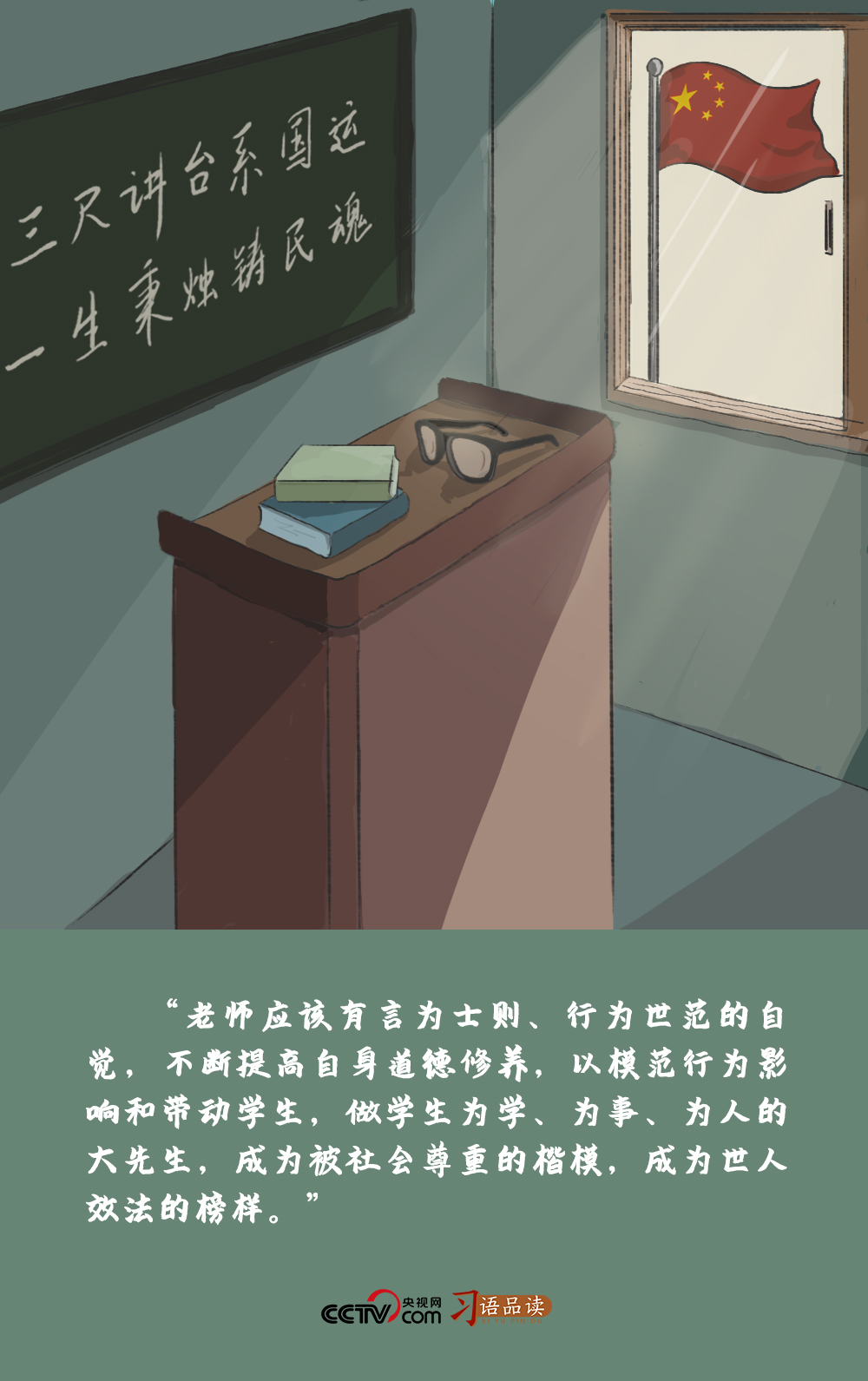
The "big" of Mr. Wang lies in the pattern. As the saying goes, "Three-foot podium is the national luck, and the people’s souls are cast by candles all their lives." Teachers are responsible for cultivating new people of the times, and they must be mindful of the "country’s greatest" and have a good idea of it.

What is the "big country"? That is, "the country and the nation are in my heart", and I know exactly what to train, how to train people, and for whom. Today, there are more than 290 million students in all kinds of schools across the country, which are the main force to realize the Chinese dream of great rejuvenation, and more than 18 million teachers are the dream builders who build this "dream team". In the Northern Song Dynasty, Zhang Zai said, "Make a heart for heaven and earth, make a life for the people, learn from the past, and create peace for all generations." Teachers should not only have such a state of mind, but also train students to undertake such historical and national responsibilities.

In recent years, a large number of outstanding teachers’ representatives have practiced what is "Mr. Big" and explained what is "learning to be a teacher and behaving in the world". From Zhang Guimei, who let "students have lights in the distance, roads under their feet and light in front of them", to Huang Danian, who spent his life practicing the oath of "revitalizing China is the responsibility of our generation"; From Li Baoguo, who took root in the mountains and wrote his papers on the land of the motherland, to Zhang Yugun &hellip, who carried hundreds of kilograms of textbooks over the mountains with a pole; … With persistence and dedication, they showed the noble quality and responsibility of "Mr. Da" in the new era, and gained numerous fruits and fragrant peaches and plums.

"It is lucky for a person to meet a good teacher in life. It is the glory of a school to have a good teacher. It is the hope of a nation to have a batch of good teachers." Teachers should always motivate themselves and spur themselves with the requirements of "Mr. Big" and be the "Mr. Big" for students to learn, do things and be human.

On the occasion of the 39th Teacher’s Day, let’s pay tribute to the teachers!