Starting from the e of the two sessions: improving the ability of prevention and treatment of chronic diseases and health management at the grassroots level
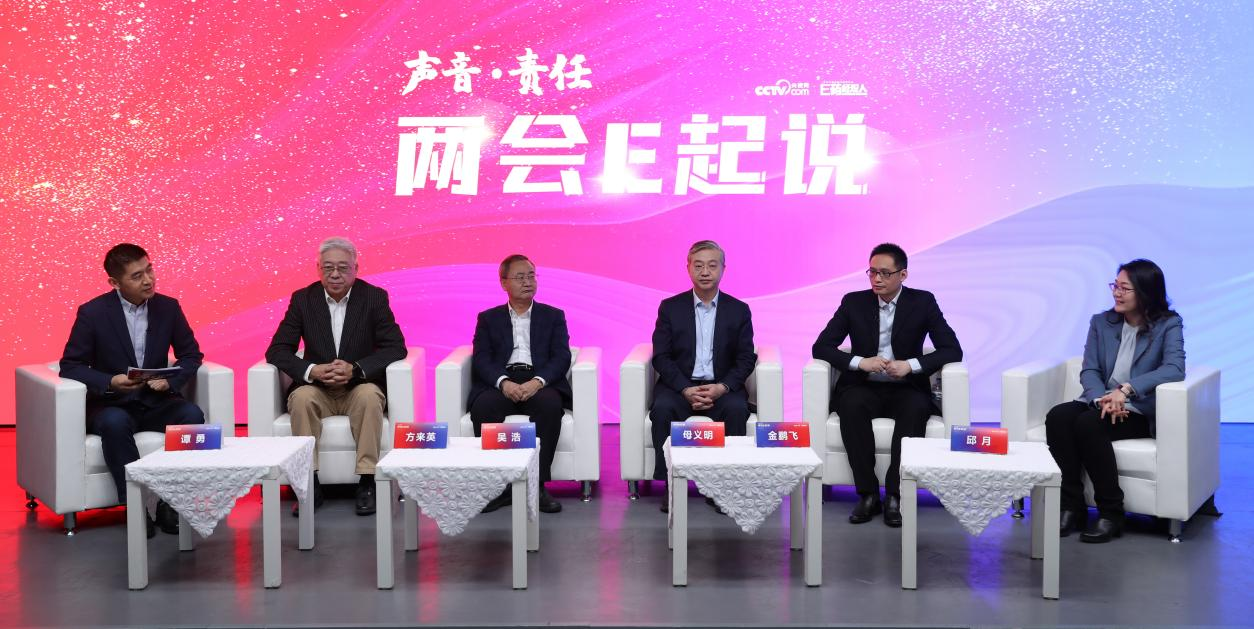
Recently, the "two sessions of voice and responsibility" jointly planned by CCTV and e-drug managers was launched to further improve the prevention and health management capabilities of chronic diseases at the grassroots level. What role does the grassroots play in the prevention and treatment system of chronic diseases? From what aspects can we effectively enhance the ability of prevention and treatment of chronic diseases at the grassroots level? How to ensure the use of drugs for chronic diseases at the grassroots level? This programme revolves around these topics.
The current situation of chronic diseases in China is not optimistic, showing the phenomenon of high incidence, high disability rate, high mortality rate, high health expenditure rate and low control rate. Chronic diseases have gradually become the main "killer" threatening public health, the biggest disease burden in China, and the top priority of building a healthy China. The Outline of "Healthy China 2030" points out that in 2030, the whole population and the whole life cycle of chronic diseases should be managed.
It is the key to improve the grass-roots capacity building of chronic disease prevention and control system

Under the graded diagnosis and treatment system, the prevention and treatment of chronic diseases and health management mainly rely on the grassroots. Fang Laiying, vice president of China Hospital Association, said that chronic diseases are an important factor affecting national health at present. With the continuous deepening of medical and health system reform in China, grassroots health construction and chronic disease management are highly valued. The management of chronic diseases focuses on the grassroots, and the key to prevention and treatment is to have a strong grassroots team. The key to the grassroots team lies in the construction of institutions and talents. Fang Laiying pointed out that in terms of institutional construction, the construction of graded diagnosis and treatment system is very critical. In recent years, the total number of primary health institutions has changed greatly, and the ability of primary diagnosis and treatment has been greatly improved. In terms of talent construction, the ranks of grassroots medical and health talents have grown, and the total number of general practitioners in China has shown a steady upward trend. At the same time, the internal structure of grassroots medical staff has changed, and more and more young medical practitioners are active at the grassroots level.

Mother Yiming, chief physician of endocrinology department of the First Medical Center of PLA General Hospital, said that chronic diseases are characterized by a large number of patients and a low cure rate, which is harmful to people’s health. At the same time, the treatment of chronic diseases takes a long time, which is a great burden for both the country and individuals. The management of chronic diseases such as diabetes and hypertension mostly depends on the grass-roots level. Improving the quality and breadth of grass-roots management can effectively control chronic diseases. In recent years, with the strong support of national policies, grassroots professional teams have become more and more powerful. The application of diagnosis and treatment guidelines and expert consensus has enabled grassroots doctors to carry out medical services according to the actual situation, and grassroots communities have made great contributions to the prevention and treatment of chronic diseases.

Qiu Yue, an associate professor at Tsinghua University Hospital Management Research Institute, pointed out that according to the current population structure, China may face an aging age structure that tends to be older in ten years. Compared with people aged 60-70, people aged 70-80 and above are more common to live with diseases, and the demand for services is stronger. With the passage of time, when the aging of the elderly strikes, the number of the elderly has risen sharply, and the management of chronic diseases will face a new situation. Therefore, we must seize the current time window to upgrade the management of chronic diseases.
Qiu Yue said that China has made remarkable progress in the prevention and treatment of chronic diseases in terms of management rate, control rate and treatment rate. On the other hand, we also need to see that although the talent team is constantly strengthening, it still faces a series of challenges such as the low level of primary medical personnel and the low efficiency of providing medical services.
Qiu Yue suggested that in the context of the rapid development of digital technology, we should pay attention to promoting advanced technology to empower primary health care and solve the above problems better, more efficiently and more temperature. Qiu Yue said that the management of chronic diseases at the grass-roots level emphasizes continuity, accuracy and individualized treatment, and digital technology has natural advantages in these aspects. From early screening and prevention to later management, and timely detection of complications, digital technology can play a very good role. Digital technology can improve the ability of diagnosis and treatment at the grassroots level, help doctors keep patients with chronic diseases at the grassroots level, and provide patients with better quality and temperature services. Digital technology can not only realize the whole process management at the service level, but also be more standardized in operation and management.
How to make the appropriate digital technology sink to the grassroots level? Qiu Yue believes that, first of all, technology should be adapted to the needs of grassroots, and second, technology should be safe, easy to use and useful, so that grassroots doctors can really use technology. Through system innovation, more support measures can be introduced to help grassroots doctors apply appropriate technologies better and faster.
Strengthening the ability of chronic disease prevention and treatment, special disease outpatient service is the direction

Primary medical care is a key area for the prevention and treatment of chronic diseases in China. From what aspects can we effectively enhance the prevention and treatment ability of primary medical care?
Wu Hao, member of Chinese People’s Political Consultative Conference and dean of the School of General Practice and Continuing Education of Capital Medical University, said that from the perspective of system construction and personnel training, China has basically achieved comprehensive coverage, and the next thing to be solved is the transformation from quantity to quality. High-quality prevention and treatment of chronic diseases at the grass-roots level is very important to improve the healthy life span of the whole people. Among them, it is very important to set up special disease clinics and strengthen the construction of general practitioners at the grass-roots level to improve the ability of special disease prevention and health management of chronic diseases at the grass-roots level.
Wu Hao introduced that in 2022, more than 400 community diabetes clinics were certified. It is suggested to build a community chronic disease quality control center first, explore the construction standards of special disease clinics, and further promote the popularization of special disease clinics. Through the construction of special disease clinics and the provision of general practitioners, the ability and quality of health management of chronic diseases at the grassroots level will be improved, so that ordinary people can have real dependence at home. At the same time, in the mechanism, we will promote the linkage between primary specialized disease clinics and higher-level hospitals, and provide efficient and high-quality diagnosis and treatment services for patients with chronic diseases.
In the prevention and control of all chronic diseases, the management of diabetes is the most complicated. China is one of the countries with the fastest growth rate of diabetes in the world, and the situation of diabetes prevention and control is very severe, which has become a major public health problem in China. Mother Yiming said that diabetes is divided into four categories, including type 1 diabetes, type 2 diabetes, gestational diabetes and special types of diabetes, of which type 2 diabetes accounts for more than 95%. About 140 million adults in China suffer from diabetes, and about 160 million to 180 million people are in pre-diabetes. That is to say, three out of every ten people in China have elevated blood sugar. Diabetes is easy to cause a variety of complications, causing damage to human respiratory system, cardiovascular system and other systemic organs.
Mother Yiming said that the current management concept of diabetes has changed from focusing on reducing blood sugar in the past to focusing on controlling complications, which requires individualized treatment and all-round health management for patients. For type 2 diabetes, in addition to drug treatment, lifestyle intervention can also be carried out, focusing on the effects of diet, exercise and psychological state on health. Among them, general practitioners play an important role in the screening, diagnosis, treatment, follow-up, education and management of patients with chronic diseases.
Wu Hao pointed out that the greatest advantage of general practitioners lies in continuity. General practitioners are familiar with the patient’s situation and can formulate personalized prevention and treatment strategies according to the patient’s family and life background, and provide targeted, comprehensive and continuous diagnosis and treatment services. It is suggested that special training should be given to grass-roots general practitioners for chronic diseases with a large incidence, so that general practitioners can solve most common and frequently-occurring diseases. Taking diabetes as an example, we will carry out standardized training on diabetes management for general practitioners and train a group of primary diabetes doctors to meet the medical needs of the masses.
Improving the effectiveness of chronic disease prevention and treatment: drug guarantee is the foundation.

Primary medical problems are closely related to drug policy. Jin Pengfei, the chief pharmacist of Beijing Hospital, pointed out that we can understand the problem of drug security at the grass-roots level from three angles: demand, ability and policy. On the demand side, patients with chronic diseases will be treated intensively at the grassroots level for a long time after being diagnosed in higher hospitals and their condition is stable, and medication guarantee is the key. Ensuring the provision of primary drugs can not only meet the treatment needs of patients, but also avoid a run on medical resources. In terms of ability, it is necessary to consider whether the drug equipment at the grass-roots level, the service ability of the grass-roots pharmacy personnel and related hardware facilities can meet the demand.
In 2021, China issued the Management Guide for Comprehensive Clinical Evaluation of Drugs, which clarified the direction of drug evaluation in the future, that is, taking the clinical value of drugs as the guide and using real-world data to carry out actual evaluation. Jin Pengfei said that in recent years, China has attached importance to the comprehensive clinical evaluation of drugs, and comprehensively evaluated drugs from the six dimensions of safety, effectiveness, economy, innovation, suitability and accessibility, providing a good reference for the revision of the list of essential drugs. Through scientific comprehensive evaluation, compare and screen more valuable drugs, and gradually put these drugs into the catalogue. It is suggested that the policy system should be strengthened to ensure the provision of drugs at the grass-roots level, so as to narrow the gap between regions and urban and rural areas, so that chronic drugs can not be used out of the community, so that ordinary people can obtain high-quality pharmaceutical services in the grass-roots community. This series of policies is of great significance to strengthen drug use security, and also helps to optimize the allocation of resources and dynamically screen drugs in China’s medical insurance catalogue and national essential drugs catalogue.
Jin Pengfei said that the World Health Organization updated the list of essential drugs (22nd edition) in 2021, and the list of essential drugs in China was last adjusted in 2018. In recent years, the creation of new drugs has developed rapidly. With the continuous updating of the first-line clinical medication guidelines, taking diabetes drugs as an example, when the last edition of the basic drugs was adjusted, only one kind of insulin analogues like the third generation was in the catalogue, and now some weekly preparations that are convenient for patients are also widely used in clinic, which are not included in the basic drug catalogue at present. Therefore, it is hoped that more drugs commonly used in clinic and suitable for chronic diseases at the grassroots level will enter the list of essential drugs, and the accessibility of relevant drugs at the grassroots level will be promoted from the policy level, which will really benefit the people.
How to control chronic diseases at the grassroots level? How to achieve high-quality prevention and treatment of chronic diseases at the grassroots level? Fang Laiying answered questions from medical care, medicine and medical insurance. Fang Laiying pointed out that, first, we should attach importance to the role of general practice in the prevention and treatment of chronic diseases at the grassroots level, emphasizing that the general practice system is a professional field and specialist field that keeps pace with other clinical disciplines; Second, we should correctly understand the role of general practitioners, scientifically evaluate primary medical institutions and mobilize the enthusiasm of primary medical institutions; Thirdly, it is necessary to strengthen the general practitioners’ awareness of personalized and all-round treatment of chronic diseases, implement health management and improve patients’ compliance; Fourth, it is necessary to improve the accessibility and technical popularization of drugs at the grassroots level, so that drugs not only appear in the catalogue, but also really reach the grassroots community, and at the same time, the latest and best technological achievements can be popularized and used at the grassroots level as soon as possible.
The prevention and treatment of chronic diseases is the most important task in the construction of a healthy China. Taking diabetes as an example, China has established a relatively complete primary health management system through measures such as graded diagnosis and treatment, special disease outpatient service, comprehensive treatment and drug guarantee. In the future, we should continue to comprehensively promote the construction of chronic disease prevention and control system from the aspects of medical care, medicine and medical insurance. At the same time, the prevention and treatment of chronic diseases should not only pay attention to the improvement of medical security, but also strengthen the education of the grassroots, so that the general public can understand, pay attention to and pay attention to chronic diseases, scientifically prevent and treat chronic diseases in daily life, and achieve the combination of prevention and treatment, early diagnosis and early treatment, and comprehensive treatment. (Reporter/Zhao Yanling Intern reporter Meng-Di Zhang Proofreading/Fan Lijun)