Interview: Negative Effect Spillover of Fed’s Interest Rate Raising —— Interview with Ray Dalio, a famous American investor
Xinhua News Agency, Geneva, November 20th Interview: Negative Effect Spillover of Fed’s Interest Rate Raising — — Interview with Ray Dalio, a famous American investor
Xinhua News Agency reporter Chen Junxia Chi Xu
Rui Dalio, the founder of Bridgewater, the world’s largest hedge fund, said in a written interview with Xinhua News Agency a few days ago that the negative effects of the Fed’s aggressive interest rate hike have caused Europe to face a dilemma in economic choices, and the economies of some developing countries have also been affected, and the attractiveness of the US dollar as an important reserve currency has declined.
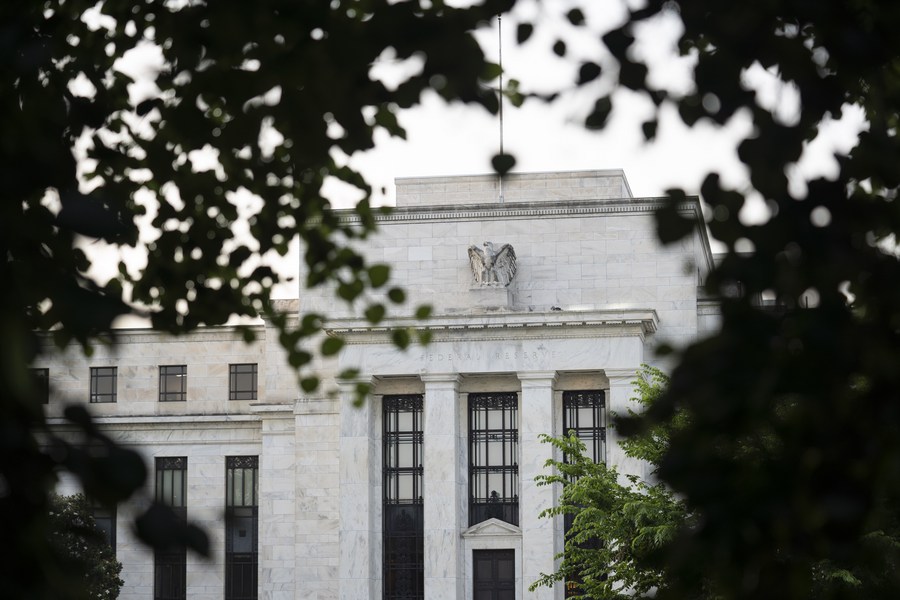
This is the Federal Reserve Building filmed in Washington, USA on June 1st. (Photo by Xinhua News Agency reporter Liu Jie)
After the outbreak of the COVID-19 epidemic, in response to the impact of the epidemic on the US economy, the Federal Reserve implemented an ultra-loose monetary policy, and the broad money supply in the United States increased by about 40% in the two years after February 2020. Excessive currency issuance is considered to be one of the main reasons for the serious inflation in the United States.
In response to high inflation, the Federal Reserve has turned to monetary tightening policy this year and continuously raised interest rates aggressively. Dalio believes that it is difficult to fundamentally control inflation by monetary tightening alone. Because inflation will reduce people’s purchasing power, while monetary tightening will weaken demand, which will hurt the economy. The Fed needs to compromise, not go to extremes.
He said that the anti-globalization policies adopted by the US government, such as so-called "friend-shore outsourcing" and export restrictions in the technology industry, will continue to cause supply constraints and lead to more stubborn inflation.
The spillover effect of the Fed’s aggressive interest rate hike has also affected Europe. Dalio believes that the European Central Bank is currently facing the pressure of raising interest rates, although the euro zone has not previously issued money like the United States. "The United States is now tightening harder, while Europe has not tightened by the same amount, resulting in currency depreciation. Inflation in Europe is more serious than that in the United States."
Dalio believes that if the European Central Bank cannot keep up with the Fed’s interest rate hike, Europe will encounter more serious capital flight and the euro will further fall.
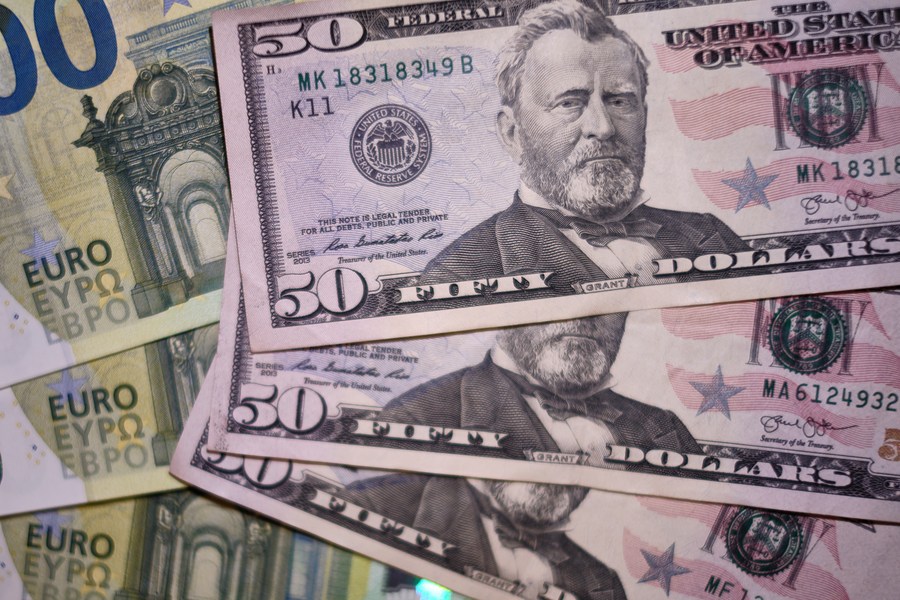
This is the euro and dollar notes that were shot in Madrid, Spain on August 23rd. (Photo by Xinhua News Agency reporter Meng Dingbo)
Since March this year, the Federal Reserve has raised interest rates six times in a row and 75 basis points four times in a row, with a cumulative increase of 375 basis points. At the same time, it has signaled to the market that it will raise interest rates again this year. Since the beginning of this year, the European Central Bank has raised interest rates by 200 basis points.
Dalio believes that countries in the euro zone have different financial conditions and need to balance the interests of creditors and debtors. However, unclear policies and poor economic conditions have made the market lack confidence. The monetary tightening policy also makes it difficult for countries with huge debts to pay their debts.
"This puts the European Central Bank and fiscal policy makers in a dilemma: on the one hand, raising interest rates may cause stagflation, on the other hand, financial support will aggravate the deficit, and the government has to borrow. This is bad for European bonds and the euro, and it also has a negative impact on the European stock market and economy. "
In addition, Dalio believes that some developing economies have suffered the most in the tight monetary environment, and the dollar debt burden of these countries has been increasing.
Dario predicted that in the future, due to the fear of the weaponization of the US dollar, the attractiveness of the US dollar as a means of wealth storage will become very low.