Xinhua News Agency, Damascus, May 4 (Reporter Wang Jian) The Syrian issue has recently ushered in positive changes. The diplomatic interaction between the Syrian government and several major countries in the Middle East has increased, and their mutual relations have tended to ease. On May 1, the foreign ministers of Syria, Jordan, Saudi Arabia, Iraq and Egypt held talks in Amman, Jordan, to discuss a political solution to the Syrian issue. According to reports, the foreign ministers also discussed measures to normalize relations between Arab countries and Syria.
Analysts pointed out that the warming of relations between Syria and Arab countries is not only due to their respective needs, but also due to the changes in the overall environment in the Middle East.Saudi Arabia and Iran, the Middle East powers, resumed diplomatic relations under the mediation of China, which set off a "wave of reconciliation" in the region. China’s Middle East policy and China’s concept have been widely recognized by regional countries.
Relations between Syria and the Arab world are getting warmer.
After the Syrian crisis broke out in 2011, the Arab League suspended Syria’s membership, Saudi Arabia and many other Arab countries closed their embassies in Syria, and Syria’s diplomacy entered a relatively isolated state. With the evolution of the domestic and regional situation in Syria in recent years, the relationship between the Syrian government and the Arab world has gradually thawed. Many Arab countries have called on the Arab League to restore Syria’s membership, and many countries have reopened their embassies in Syria or border ports bordering Syria.
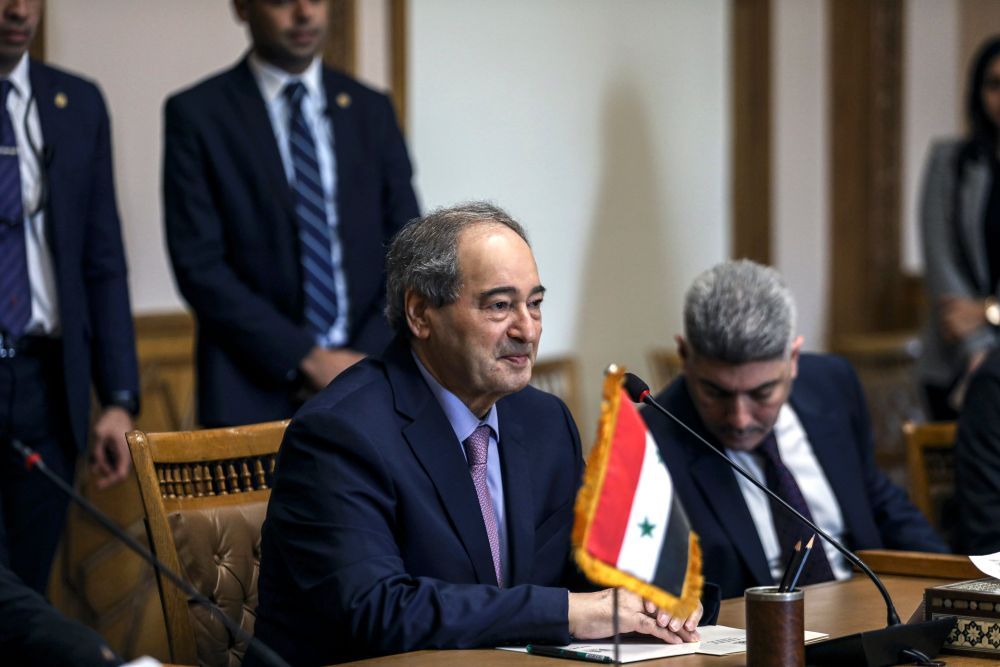
On April 1st, Syrian Foreign Minister Mekdad (centre) held talks with Egyptian Foreign Minister Choucairy (not pictured) in Cairo, Egypt. This is the first time that the Syrian Foreign Minister has visited Egypt after more than ten years. Xinhua News Agency (photo by Ahmed Goma)
Last March, Syrian President Bashar al-Assad visited the United Arab Emirates, which was his first visit to an Arab country since the outbreak of the Syrian crisis. Since the beginning of this year, the interaction between Syria and Arab countries has become more frequent. After a strong earthquake struck the border areas of Syria and Turkey in early February, several Arab countries quickly launched humanitarian assistance to Syria. Recently, Bashar has visited Oman and the United Arab Emirates successively, and foreign ministers of Syria, Saudi Arabia and Egypt have also exchanged visits.
On April 14th, the foreign ministers of the six members of the Cooperation Council for the Arab States of the Gulf and Egypt, Iraq and Jordan met in Jeddah, a port city in western Saudi Arabia, calling on Syria to achieve internal unity and return to the "Arab embrace" as soon as possible. Half a month later, foreign ministers of Syria and four other Arab countries will meet in Amman.
Analysts believe that Arab countries and Syria have their own interests to consider in improving relations. Syrian political expert Husam Chouaib said,The Syrian government urgently needs to improve the economy and promote national reconstruction. In the face of Western sanctions, strengthening regional economic cooperation has become one of the options..At the same time, strengthening interaction with Arab countries can further gain political support and get rid of diplomatic difficulties that have lasted for many years..
Syrian political analyst imad Salim pointed out that the Syrian government has taken the initiative in the domestic battlefield, and other Arab countries need to adjust their policies according to the reality. At the same time, for Lebanon, Jordan and other Arab countries with close geographical relations with Syria, cooperation with Syria will help improve their economies.
Syria’s return to the Arab League ushers in new opportunities
In addition to their respective interests and demands, changes in the regional situation have also brought opportunities for Syria to improve relations with Arab countries, the most important of which is the resumption of diplomatic relations between Saudi Arabia and Iran. Assistant Foreign Minister Ayman Susan of Syria pointed out in an interview with Xinhua News Agency that,Saudi Arabia and Iran are two active countries in the Middle East, and the improvement of relations between Saudi Arabia and Iran will be reflected in most issues in the region, including the Syrian issue.
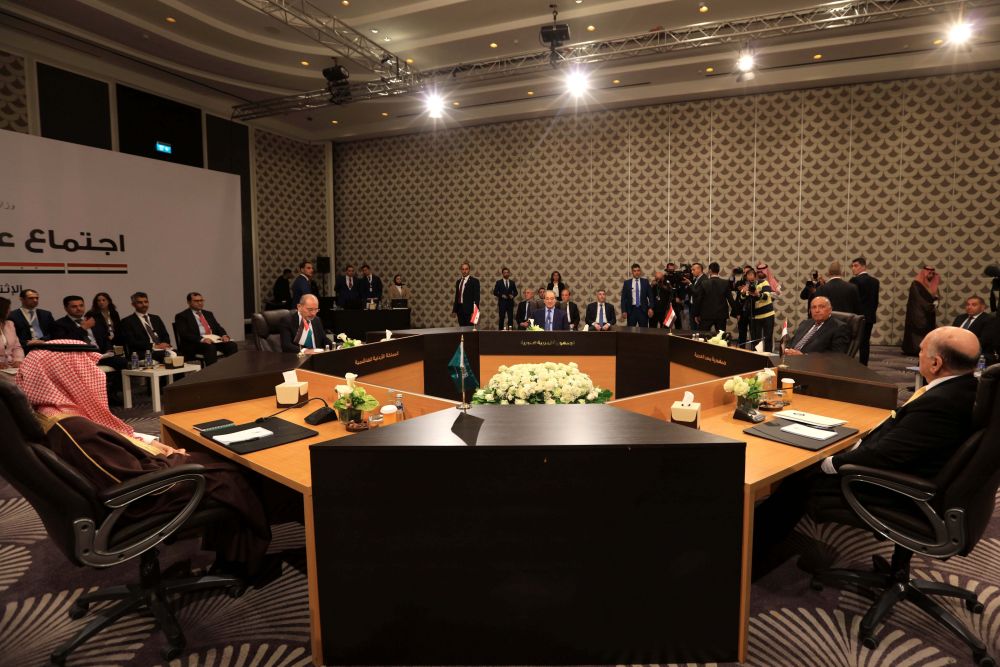
On May 1, the foreign ministers of Jordan, Saudi Arabia, Iraq, Egypt and Syria held talks in Amman, the capital of Jordan, to discuss a political solution to the Syrian issue, and stressed that resolving the Syrian crisis was a priority. Xinhua News Agency (photo by mohammed abu Gushi)
At the beginning of the Syrian crisis, Saudi Arabia was once considered as one of the main supporters of the Syrian opposition armed forces, so the "breaking the ice" between Saudi Arabia and Syria is particularly critical. On April 12th, Syrian Foreign Minister Mekdad visited Saudi Arabia and met with Saudi Foreign Minister Faisal. On April 18th, Faisal visited Syria. During the meeting between Bashar and Faisal, both sides expressed positive views on the normalization of future relations.
Maher ihsan, a Syrian political analyst, believes that Saudi Arabia, as one of the major Arab countries, will make a formal turn in its relations with Syria, which will push other Arab countries to evaluate their policies, reduce their worries and temptations on improving relations with Syria, and further promote the normalization of relations with Syria, thus making Syria’s return to the Arab League promising.
According to reports, Saudi Arabia plans to invite Bashar to attend the Arab League summit hosted by Saudi Arabia in May. Ahmed ali abul gheit, Secretary-General of the Arab League, previously revealed that,Most members of the Arab League hope to confirm the restoration of Syria’s membership at the summit.
Vivid practice of global security initiative
The Middle East is one of the most complex geopolitical regions in the world. All along, China has always supported the people in the Middle East to explore the development path independently, and supported the countries in the Middle East to unite and cooperate to solve regional security problems. Middle East countries and the international community generally appreciate China’s success in promoting the resumption of diplomatic relations between Saudi Arabia and Iran.That "this fully demonstrates China’s important position and positive influence as a global power" is "a vivid practice of global security initiatives".
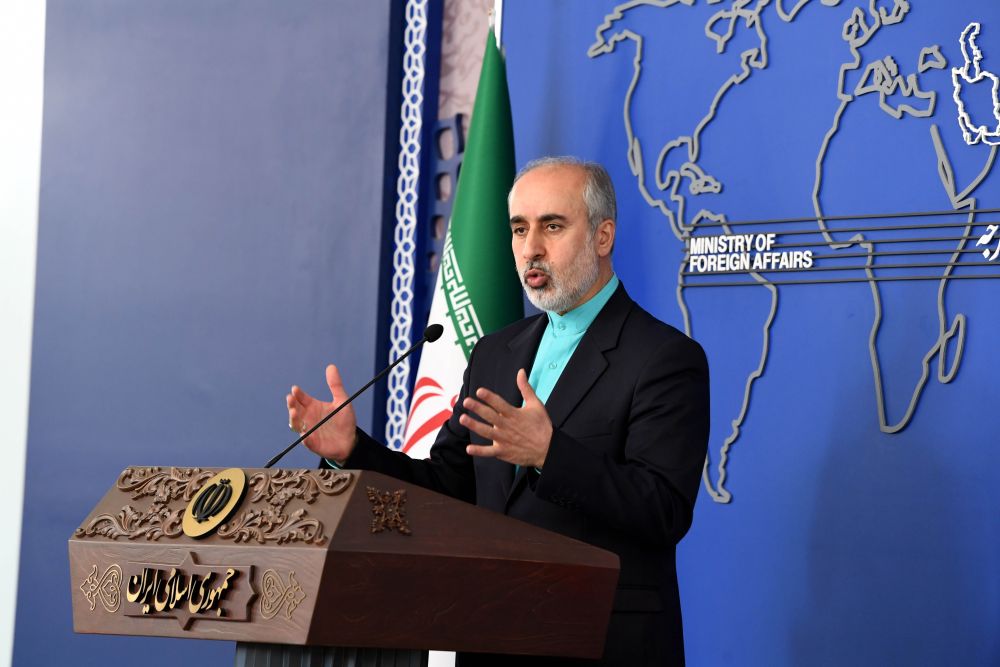
On April 17th, in Tehran, Iranian Foreign Ministry spokeswoman Canani said at a regular press conference that Iranian President Leahy and Saudi King Salman had invited each other to visit their respective countries. Xinhua News Agency reporter Shadati photo
Susan said,China respects international law and national sovereignty, opposes hegemonism and hopes that all countries will share security and prosperity.China’s mediation to promote the resumption of diplomatic relations between Shay is to achieve regional peace and stability.
Analysts believe that China’s successful mediation promoted the reconciliation between Saudi Arabia and Syria, and then Saudi Arabia and Syria achieved "breaking the ice", indicating that China’s international role in persuading peace and promoting talks is highly recognized by all parties. China advocates the establishment of a common, comprehensive, cooperative and sustainable security architecture in the Middle East from the height of building a community of human destiny, which conforms to the strong desire of Middle East countries to pursue peace, stability and development, and provides China wisdom and China plan for maintaining peace, reducing conflicts and achieving long-term stability in the region.
Liu Xin Lu, dean of the School of Arabic Studies at Beijing Foreign Studies University, said that at present, people from all walks of life in the Middle East are deeply thinking about whether the Middle East countries can turn their enemies into friends and jump out of the conflict trap that has been circulating in modern times. And the solution is becoming increasingly clear, and it has increasingly become the consensus of the Middle East countries, that is — — Change the traditional concept of order and security based on western geopolitical logic, abandon zero-sum thinking, and resolve differences and disputes between countries peacefully through dialogue and consultation.China’s concept of security, order, development and civilization has been widely recognized by the Middle East countries, which is conducive to achieving peace and focusing on development in the Middle East.