Developing countries are not "garbage dumps" of rich countries. Southeast Asian countries have refused to accept "foreign garbage" one after another.
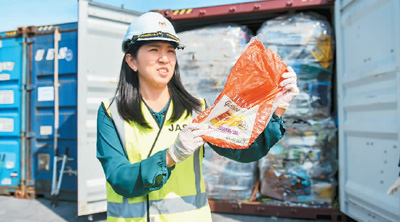
  In May, in Port Klang, Malaysia, a container carrying garbage stinks. Malaysia’s environment minister, Yang Meiying, said that she would return the maggot-bearing garbage to … …

  Recently, a reporter from Bloomberg wrote this scene into a news report, saying that Yang Meiying’s words represented a concern that spread throughout Southeast Asia. A lot of rubbish from Europe and America is weighing on Southeast Asian countries and losing patience. As foreign media said, for developed countries that export garbage, a message should be clear: their own garbage should be handled by themselves.

  Southeast Asia refuses to become a garbage dump

  Recently, the voice of rejecting "foreign garbage" has continued to rise in Southeast Asian countries.

  Indonesia’s Jakarta Times reported on July 9th that Indonesian customs had once again seized a large number of harmful waste from Australia in the country’s ports and would "send the garbage back to their hometown". The week before, the Indonesian government just announced that it would return 49 containers filled with "foreign garbage" to many developed countries including France.

  For a long time in the past, developed countries such as the United States, Britain, Germany, Canada, Australia, and Japan exported an amazing amount of "foreign garbage" to many developing countries in Asia, such as China, Malaysia, and the Philippines. Since last year, the "foreign garbage burden" faced by Southeast Asian countries has become heavier.

  In January 2018, China officially implemented the "foreign garbage" ban, totally banning the import of 24 kinds of solid wastes in 4 categories. Since then, garbage collectors in Europe and America have turned their attention to other Asian markets, especially Southeast Asian countries such as Thailand, Malaysia and Indonesia.

  Take Germany as an example. According to the data provided by German media, in 2017, the country exported 600 tons of plastic waste to Indonesia, and in the first 10 months of 2018, this figure increased to 49,500 tons. According to another data, in the first six months of 2018, the amount of garbage exported to Malaysia increased from 168,500 tons in 2016 to 456,000 tons.

  The increasing "foreign garbage" has brought serious harm to the ecological environment and people’s health in Southeast Asian countries. Under the heavy pressure, countries have successively introduced restrictive measures and related laws to prohibit the import of garbage, saying "no" to "foreign garbage".

  In June, the Philippines insisted on sending 69 containers containing illegally imported garbage back to Canada at the expense of "diplomatic war". In May, Malaysia also announced that it would send 450 tons of imported garbage back to Australia, Canada, Japan, the United States and other places.

  In addition, since last year, some Southeast Asian countries have legislated one after another to put a legal yoke on "foreign garbage". The Thai government announced that the import of plastic waste will be banned by 2021. The Vietnamese government also said that it would stop issuing new garbage import licenses, and "the country cannot become a garbage dump".

  "At present, Indonesia, the Philippines and other countries are interested in importing ‘ Foreign garbage ’ Take severe crackdown measures, mainly including strengthening customs supervision and inspection, and further strengthening the formulation and improvement of relevant laws in China. " Xu Liping, a researcher at the Asia-Pacific and Global Strategy Institute of China Academy of Social Sciences, said in an interview with this reporter.

  The ban forced the industrial chain to update.

  "Due to the development gap between developing countries and developed countries in terms of economy, technology and national legal system construction, waste producers in developed countries choose irresponsible export methods in order to reduce the cost of waste disposal as much as possible, but they cannot effectively supervise waste trade in developing countries in terms of environmental law enforcement and technology, which leads to developing countries becoming developed countries ‘ Garbage dump ’ 。” Tan Quanyin, assistant researcher of Tsinghua University Institute of Environment and director of the comprehensive office of Basel Convention Asia-Pacific Regional Center, pointed out in an interview with this reporter that this is the main reason why China and Southeast Asian countries are generally faced with the problem of "foreign garbage".

  According to the statistics of the World Bank, the population of developed countries only accounts for 16% of the world’s population, but they produce 34% of the world’s garbage. Exporting solid waste to developing countries for treatment, recovery and reuse, which is a common practice in many developed countries, can bring certain economic benefits, but it makes developing countries bear huge social and environmental costs.

  Water pollution, crops withering and people getting sick … … "Deutsche Welle" recently pointed out that these "foreign garbage" have brought great environmental and social harm to Southeast Asian countries after paying attention to the environmental damage caused by garbage disposal in a small town in Kuala Lumpur, Malaysia.

  "processing ‘ Foreign garbage ’ In addition to incineration and burial, sorting and some technical means are needed, and Southeast Asian countries do not have the ability to handle a large number of ‘ Foreign garbage ’ The ability. In addition, the ecological environment of some Southeast Asian countries is relatively fragile, and they are already facing challenges such as marine garbage and sewage. ‘ Foreign garbage ’ The massive influx will cause fatal damage to the local ecological environment and even devastating effects, which is extremely unfavorable to the development of these countries. " Xu Liping said.

  Nowadays, with the multiple hazards caused by "foreign garbage" becoming increasingly prominent and the overall environmental awareness of Southeast Asian countries increasing, more and more countries choose "zero tolerance" for "foreign garbage". The "foreign garbage" ban issued by China last year has set an example for developing countries facing similar troubles to follow.

  据新加坡《海峡时报》报道,6月20日,在第34届东盟峰会举行之前,一群抗议者出现在泰国曼谷的一座政府大楼前,呼吁东盟国家禁止“从世界任何地方”向该地区出口废物。

  对此,英国回收协会负责人认为,中国的“洋垃圾”禁令是一件好事,既可以倒逼更多资金投入垃圾处理技术的研发,也可以倒逼从商品制造到垃圾处理的整个产业链进行更新。

  “自己的垃圾应自己解决”

  根据世界银行的数据,2050年,人类制造的固体垃圾将上升到34亿吨。随着越来越多东南亚国家拒绝“接盘”,发达国家又将如何安置它们的垃圾?

  有分析称,也许非洲将成为发达国家的下一个目标。然而,寻找“下家”只是不负责任的应急之举。发达国家真正该思考的,不是如何将垃圾压力转嫁他国,而是如何从源头根治问题。

  彭博社称,解决办法可能在于新科技和社会行为的改变,从而减少甚至消除对垃圾填埋场和焚化炉的需求。而对发达国家来说,尤为迫切的是应学会自己处理垃圾。

  5月10日,在瑞士日内瓦,包括中国在内的186个国家共同通过了一项决定,不再允许发达国家将其塑料垃圾随便丢给发展中国家处理。有日媒称,这对国际间的垃圾进出口施加了更进一步的严格限制。

  “‘ Foreign garbage ’ The problem has a long history. It is both a developing problem and a global governance problem. It involves many countries and needs to raise awareness from the global level, and introduce relevant international laws to carry out comprehensive governance. " Xu Liping pointed out that relevant countries, especially developed countries, as the main producers of most "foreign garbage", should bear the responsibility to dispose of garbage at home, instead of dumping it in developing countries and shirking their responsibilities. "In addition, developing countries should also strengthen their relevant legislation and law enforcement to further block ‘ Foreign garbage ’ Import channels. "

  Tan Quanyin also believes that solving the problem of "foreign garbage" requires a comprehensive plan to treat both the symptoms and the root causes. On the one hand, developed countries should adopt more responsible garbage disposal methods, strengthen the capacity building of domestic facilities, realize environmentally sound management of waste in China, and strengthen law enforcement to prevent illegal export of waste; On the other hand, countries should make joint efforts, while advocating and practicing sustainable production and consumption, and improving the level of cleaner production technology, strengthen cooperation, earnestly assume the responsibility of harmless management of their own waste, and promote the inclusion of the life-cycle responsibility system of waste in the framework of international law, fulfill relevant obligations, and perform their respective duties. (Our reporter Yan Yu)

The maximum discount for changing cars is 100,000 yuan! Guangdong enlarged the move, and many listed companies such as Gree, GAC and BYD participated.

For a new car, the comprehensive discount is as high as 100,000 yuan, the wardrobe product is over 100,000 yuan, 40,000 yuan, and each set of air-conditioning cabinets is highly subsidized by 1000 yuan … For consumers, a big wave of "wool" is already on the way.

The Securities Times reporter learned from the Guangdong Provincial Department of Commerce that on April 28th, the 2024 Guangdong Consumer Goods Trade-in Campaign and the "Home 520" shopping season (promoting consumption in summer) were officially launched. According to the relevant person in charge of the Guangdong Provincial Department of Commerce, the theme of this activity is "’old’ needs to be replaced by new ones to enjoy consumption", focusing on key areas such as automobiles, home appliances, home improvement and kitchen and bathroom. Trade-in of consumer goods will run through the whole year, and the "Home 520" shopping season (promoting consumption in summer) will last until the end of June.

Since the beginning of this year, policies and measures on the trade-in of consumer goods at the national level have been continuously introduced. On April 26th, the People’s Bank of China, the National Development and Reform Commission, the Ministry of Finance and the General Administration of Financial Supervision jointly held a promotion meeting on large-scale equipment renewal and trade-in of consumer goods. At the same time, the trade-in activities in various places are in full swing, and the trade-in boom of consumer goods is set off with real money. Trade-in of consumer goods will create a trillion-dollar market space. As the main line running through the current and future period, it is expected to bring benefits to related industries and enhance the profitability of listed companies.

Focus on three major areas: automobiles, home appliances and home improvement kitchen and bathroom.

According to the "Action Plan for Promoting Trade-in of Consumer Goods in Guangdong Province" released in early April, Guangdong will mainly carry out trade-in in three areas: automobiles, household appliances, home improvement and kitchen and bathroom. The reporter found out that in this trade-in activity of consumer goods, a number of listed companies in more than three fields issued preferential policies with great strength and high amount.

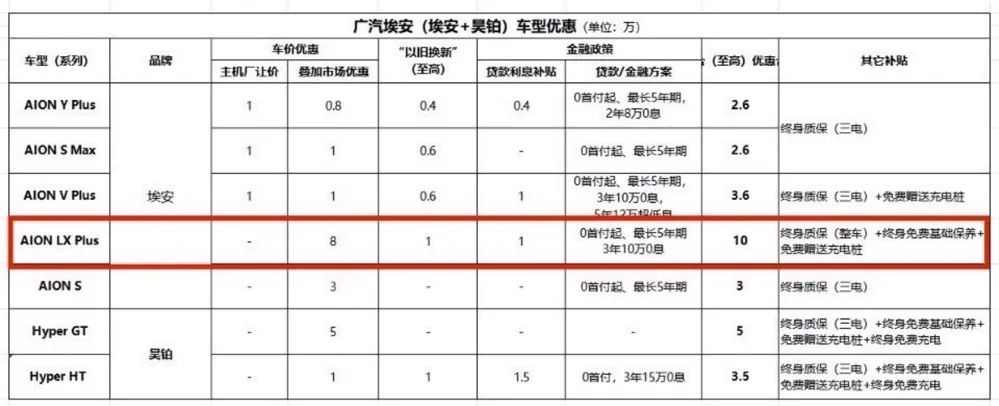
In the automobile field, many models of Ai ‘an and Haobo, which are owned by GAC, have preferential conditions with different amounts, ranging from 26,000 yuan to 100,000 yuan under the market concessions and loan interest subsidies of the OEM. Among them, the comprehensive discount of AION LX PLUS can reach as high as 100,000 yuan, and you can enjoy lifetime warranty (complete vehicle), lifetime free basic maintenance and free charging piles. This is also the model with the highest comprehensive preferential amount in this trade-in activity.

In terms of other car companies, BYD has introduced different redemption rights for series of cars such as Dynasty Net, Ocean Net, Tengshi, Equation Leopard and Wangwang. Weilai announced the introduction of a subsidy of up to 1 billion yuan for oil vehicle replacement, and the maximum benefit for oil vehicle users to replace Weilai is up to 30,000 yuan; Xpeng Motors has issued a policy of 15,000 yuan for the replacement of this product and 10,000 yuan for the replacement of other products; Ideal launch "May Day Ideal Car Festival", from April 22nd to May 5th, order brand-new ideal L6, 2024 models of ideal L7/ ideal L8/ ideal L9, ideal MEGA, and enjoy the right to buy a car for a limited time of up to 20,000 yuan.

In the field of home appliances, Gree Electric said that during the event, the highest discount for air conditioners is 400 yuan/set, and the highest discount for cabinets is 1000 yuan/set. It will also provide consumers with one-stop service for exchanging old ones; Midea Group introduced a replacement subsidy, and purchased green appliances to enjoy an additional replacement subsidy ranging from 50 to 1000 yuan; Hisense home appliances carry out trade-in activities for about 300 models in five categories: TV, refrigerator, air conditioner, washing machine and kitchen appliances, among which the first-class energy efficiency accounts for more than 80%, and the maximum subsidy for a single unit is 2,000 yuan.

It is worth noting that a number of home appliance listed companies have invested heavily in trade-in activities, and the total amount of investment has been clearly defined. Gree Electric announced on April 28th that in response to the State Council’s "Action Plan for Promoting Large-scale Equipment Renewal and Trade-in of Consumer Goods", it will invest 3 billion yuan to start the trade-in of household appliances from now on. Hisense Home Appliances said that the company plans to invest a total of 800 million yuan in trade-in subsidies nationwide in 2024.

In the field of home improvement kitchen and bathroom, Sophia has made great profits on solid wood boards, dusting, wooden doors, wardrobes, cabinets and other products, and has made great discounts. At the same time, she has also upgraded the old renovation service, provided free on-site room measurement and design services, and launched a new package service of 7,999 yuan for five major spaces, allowing consumers to realize a big renovation with a small budget.

Government subsidy+financial empowerment+e-commerce platform assistance

In addition to the large profits of enterprises, the government, financial institutions, e-commerce platforms and other entities will participate together to form a joint force and bring greater benefits to consumers.

It is reported that in order to promote the trade-in of automobiles, household appliances and home-improvement kitchens and bathrooms, Guangdong Provincial Finance will arrange special funds to issue subsidies for scrapping and updating automobiles, and coupons for replacing and updating automobiles and exchanging household appliances.

Taking automobile "replacement and renewal" coupons as an example, individual consumers who transfer their own vehicles in Guangdong and buy new energy vehicles and fuel vehicles that meet the national six emission standards in Guangdong are given a one-time subsidy for car purchase coupons. The subsidy standard is divided into three grades: if the car purchase price is 70,000 yuan (inclusive) to 150,000 yuan (exclusive), the subsidy for purchasing new energy vehicles is 3,000 yuan/vehicle, and the subsidy for fuel vehicles is 2,000 yuan/vehicle; If the car purchase price is 150,000 yuan (inclusive) to 250,000 yuan (exclusive), the subsidy for new energy vehicles is 5,000 yuan/vehicle, and the subsidy for fuel vehicles is 4,000 yuan/vehicle; If the car purchase price is more than 250,000 yuan (inclusive), the subsidy for new energy vehicles is 8,000 yuan/vehicle, and the subsidy for fuel vehicles is 7,000 yuan/vehicle.

In terms of financial institutions, Guangdong ICBC supports the trade-in activities by launching preferential financial products, improving the convenience of financial services and launching rich promotional investment. For example, the product of "trade-in by installment" has been launched in a targeted manner. For automobile products, according to customer qualifications and loan demand, the "zero" down payment can be supported at the highest, and loan support can be provided at 100% of the automobile price, with a maximum loan of 1.5 million yuan. Guangdong UnionPay will cooperate with banks to provide relevant rights and interests, such as "200 yuan discount for car purchase with credit card over 10,000 yuan", "80 yuan discount for home appliances with digital credit card over 1000 yuan" and "200 yuan discount for home decoration with credit card over 10,000 yuan". Guangdong Construction Bank introduced subsidies for the sale of old household appliances and the purchase of new ones with "trade-in". At the same time, it also offered profit-making sales to the enterprises participating in the activities.

In terms of e-commerce platform, Meituan Platform said that it plans to invest more than 5 billion yuan in marketing and subsidy resources in the next three years, relying on offline instant distribution capabilities to provide support for trade-in; Tmall launched the theme marketing campaign of "Guangdong Home Appliances Trade-in", and set up online special marketing and live broadcast activities in daily marketing and major marketing nodes such as 618, double 11 and Home Improvement Festival; In JD.COM, the subsidy benefits of "trade-in subsidies for old goods, with a maximum reduction of 2,000 yuan" are provided, covering more than 200 sub-categories of consumer goods such as household appliances and household appliances.

The potential of the trillion-dollar market has gradually opened up.

Since the beginning of this year, the national policy on trade-in of consumer goods has been continuously introduced, and various measures have been implemented intensively. In March, the State Council issued the Action Plan for Promoting Large-scale Equipment Renewal and Trade-in of Consumer Goods. In April, the Ministry of Commerce and other 14 departments jointly issued the Action Plan for Promoting Trade-in of Consumer Goods, proposing to promote the replacement of automobiles with "energy", home appliances with "intelligence" and home improvement and kitchen and bathroom with "rejuvenation" on the basis of respecting consumers’ wishes.

According to the National Development and Reform Commission, by the end of 2023, the number of domestic civil automobiles reached 336 million, and the number of household appliances such as refrigerators, washing machines and air conditioners exceeded 3 billion. The upgrading of automobiles and household appliances will create a market space of one trillion yuan. Zhang Yi, CEO and chief analyst of Ai Media Consulting, said that the fields of automobiles, home appliances, home improvement, kitchen and bathroom are closely related to consumers’ daily life, which has penetrated into almost every family in China, and the consumption space brought by the whole market is huge.

In the face of the trillion-dollar consumer market, the reporter found that in addition to Guangdong, many places in the country have also taken action, including Zhejiang, Hunan, Shandong, Shanxi, Chongqing and other provinces and regions have introduced relevant action plans, and some places have clearly defined the scope of support for trade-in and specific subsidy rules. For example, in 2024, Shanghai formulated the detailed rules for the implementation of the "trade-in" subsidy for old cars in Shanghai, and made it clear that individual users would purchase new fuel passenger cars with the national emission standard of six B, and eligible ones would be given a one-time subsidy of 2,800 yuan.

Trade-in of consumer goods is being carried out in full swing everywhere, and listed companies have also ushered in a broad new market and development opportunities. The reporter combed and found that many listed companies have recently responded to investors’ questions on the interactive platform, clearly indicating that trade-in will bring benefits to the company’s development.

For example, Yum! Smart said that the company can provide corresponding access control and management equipment updates, such as gates, access doors and access control systems, and provide overall solutions in the process of urban renewal and renovation of old residential areas. Hefei Department Store said that the company’s top 100 electrical appliances are cooperating with a number of home appliance companies to carry out the "Trade-in Brand Festival" and will strive for more trade-in policy support in the future. Gemei said that the country has introduced a large-scale equipment renewal and consumer goods replacement action plan. This policy is unprecedented in strength, breadth and depth, which is conducive to the growth of the company’s electronic waste recycling, scrapped car recycling and power battery recycling.

However, at present, there are also some enterprises and residents who are not willing to take the initiative to update equipment and trade in old ones. Luo Zhiheng, chief economist of Yuekai Securities and dean of the research institute, believes that this is mainly due to two reasons: one is that the equipment can still be used normally, and the other is that the replacement needs to pay extra fees. In this regard, Luo Zhiheng believes that policies such as finance and currency need coordinated support to fully mobilize the enthusiasm of enterprises and residents through incentive measures. When it comes to the elimination of backward equipment, local governments and relevant departments should formulate scientific standards and implement them in an orderly manner to prevent the expectation and confidence of micro-subjects from being dampened by eagerness for success.

Editor: Wan Jianwei

Proofreading: Zhao Yan