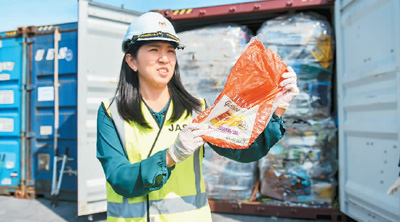
Developing countries are not "garbage dumps" of rich countries. Southeast Asian countries have refused to accept "foreign garbage" one after another.

  In May, in Port Klang, Malaysia, a container carrying garbage stinks. Malaysia’s environment minister, Yang Meiying, said that she would return the maggot-bearing garbage to … …

  Recently, a reporter from Bloomberg wrote this scene into a news report, saying that Yang Meiying’s words represented a concern that spread throughout Southeast Asia. A lot of rubbish from Europe and America is weighing on Southeast Asian countries and losing patience. As foreign media said, for developed countries that export garbage, a message should be clear: their own garbage should be handled by themselves.

  Southeast Asia refuses to become a garbage dump

  Recently, the voice of rejecting "foreign garbage" has continued to rise in Southeast Asian countries.

  Indonesia’s Jakarta Times reported on July 9th that Indonesian customs had once again seized a large number of harmful waste from Australia in the country’s ports and would "send the garbage back to their hometown". The week before, the Indonesian government just announced that it would return 49 containers filled with "foreign garbage" to many developed countries including France.

  For a long time in the past, developed countries such as the United States, Britain, Germany, Canada, Australia, and Japan exported an amazing amount of "foreign garbage" to many developing countries in Asia, such as China, Malaysia, and the Philippines. Since last year, the "foreign garbage burden" faced by Southeast Asian countries has become heavier.

  In January 2018, China officially implemented the "foreign garbage" ban, totally banning the import of 24 kinds of solid wastes in 4 categories. Since then, garbage collectors in Europe and America have turned their attention to other Asian markets, especially Southeast Asian countries such as Thailand, Malaysia and Indonesia.

  Take Germany as an example. According to the data provided by German media, in 2017, the country exported 600 tons of plastic waste to Indonesia, and in the first 10 months of 2018, this figure increased to 49,500 tons. According to another data, in the first six months of 2018, the amount of garbage exported to Malaysia increased from 168,500 tons in 2016 to 456,000 tons.

  The increasing "foreign garbage" has brought serious harm to the ecological environment and people’s health in Southeast Asian countries. Under the heavy pressure, countries have successively introduced restrictive measures and related laws to prohibit the import of garbage, saying "no" to "foreign garbage".

  In June, the Philippines insisted on sending 69 containers containing illegally imported garbage back to Canada at the expense of "diplomatic war". In May, Malaysia also announced that it would send 450 tons of imported garbage back to Australia, Canada, Japan, the United States and other places.

  In addition, since last year, some Southeast Asian countries have legislated one after another to put a legal yoke on "foreign garbage". The Thai government announced that the import of plastic waste will be banned by 2021. The Vietnamese government also said that it would stop issuing new garbage import licenses, and "the country cannot become a garbage dump".

  "At present, Indonesia, the Philippines and other countries are interested in importing ‘ Foreign garbage ’ Take severe crackdown measures, mainly including strengthening customs supervision and inspection, and further strengthening the formulation and improvement of relevant laws in China. " Xu Liping, a researcher at the Asia-Pacific and Global Strategy Institute of China Academy of Social Sciences, said in an interview with this reporter.

  The ban forced the industrial chain to update.

  "Due to the development gap between developing countries and developed countries in terms of economy, technology and national legal system construction, waste producers in developed countries choose irresponsible export methods in order to reduce the cost of waste disposal as much as possible, but they cannot effectively supervise waste trade in developing countries in terms of environmental law enforcement and technology, which leads to developing countries becoming developed countries ‘ Garbage dump ’ 。” Tan Quanyin, assistant researcher of Tsinghua University Institute of Environment and director of the comprehensive office of Basel Convention Asia-Pacific Regional Center, pointed out in an interview with this reporter that this is the main reason why China and Southeast Asian countries are generally faced with the problem of "foreign garbage".

  According to the statistics of the World Bank, the population of developed countries only accounts for 16% of the world’s population, but they produce 34% of the world’s garbage. Exporting solid waste to developing countries for treatment, recovery and reuse, which is a common practice in many developed countries, can bring certain economic benefits, but it makes developing countries bear huge social and environmental costs.

  Water pollution, crops withering and people getting sick … … "Deutsche Welle" recently pointed out that these "foreign garbage" have brought great environmental and social harm to Southeast Asian countries after paying attention to the environmental damage caused by garbage disposal in a small town in Kuala Lumpur, Malaysia.

  "processing ‘ Foreign garbage ’ In addition to incineration and burial, sorting and some technical means are needed, and Southeast Asian countries do not have the ability to handle a large number of ‘ Foreign garbage ’ The ability. In addition, the ecological environment of some Southeast Asian countries is relatively fragile, and they are already facing challenges such as marine garbage and sewage. ‘ Foreign garbage ’ The massive influx will cause fatal damage to the local ecological environment and even devastating effects, which is extremely unfavorable to the development of these countries. " Xu Liping said.

  Nowadays, with the multiple hazards caused by "foreign garbage" becoming increasingly prominent and the overall environmental awareness of Southeast Asian countries increasing, more and more countries choose "zero tolerance" for "foreign garbage". The "foreign garbage" ban issued by China last year has set an example for developing countries facing similar troubles to follow.

  据新加坡《海峡时报》报道,6月20日,在第34届东盟峰会举行之前,一群抗议者出现在泰国曼谷的一座政府大楼前,呼吁东盟国家禁止“从世界任何地方”向该地区出口废物。

  对此,英国回收协会负责人认为,中国的“洋垃圾”禁令是一件好事,既可以倒逼更多资金投入垃圾处理技术的研发,也可以倒逼从商品制造到垃圾处理的整个产业链进行更新。

  “自己的垃圾应自己解决”

  根据世界银行的数据,2050年,人类制造的固体垃圾将上升到34亿吨。随着越来越多东南亚国家拒绝“接盘”,发达国家又将如何安置它们的垃圾?

  有分析称,也许非洲将成为发达国家的下一个目标。然而,寻找“下家”只是不负责任的应急之举。发达国家真正该思考的,不是如何将垃圾压力转嫁他国,而是如何从源头根治问题。

  彭博社称,解决办法可能在于新科技和社会行为的改变,从而减少甚至消除对垃圾填埋场和焚化炉的需求。而对发达国家来说,尤为迫切的是应学会自己处理垃圾。

  5月10日,在瑞士日内瓦,包括中国在内的186个国家共同通过了一项决定,不再允许发达国家将其塑料垃圾随便丢给发展中国家处理。有日媒称,这对国际间的垃圾进出口施加了更进一步的严格限制。

  “‘ Foreign garbage ’ The problem has a long history. It is both a developing problem and a global governance problem. It involves many countries and needs to raise awareness from the global level, and introduce relevant international laws to carry out comprehensive governance. " Xu Liping pointed out that relevant countries, especially developed countries, as the main producers of most "foreign garbage", should bear the responsibility to dispose of garbage at home, instead of dumping it in developing countries and shirking their responsibilities. "In addition, developing countries should also strengthen their relevant legislation and law enforcement to further block ‘ Foreign garbage ’ Import channels. "

  Tan Quanyin also believes that solving the problem of "foreign garbage" requires a comprehensive plan to treat both the symptoms and the root causes. On the one hand, developed countries should adopt more responsible garbage disposal methods, strengthen the capacity building of domestic facilities, realize environmentally sound management of waste in China, and strengthen law enforcement to prevent illegal export of waste; On the other hand, countries should make joint efforts, while advocating and practicing sustainable production and consumption, and improving the level of cleaner production technology, strengthen cooperation, earnestly assume the responsibility of harmless management of their own waste, and promote the inclusion of the life-cycle responsibility system of waste in the framework of international law, fulfill relevant obligations, and perform their respective duties. (Our reporter Yan Yu)

Measures for the Administration of Restaurant Wastes and Waste Edible Oils in Guangzhou (for Trial Implementation) (Invalid)

Measures for the Administration of Food Waste and Waste Edible Oils in Guangzhou (for Trial Implementation) (Invalid) Guangzhou Municipal People’s Government Decree No.117 No.117 "Measures for the Administration of Food Waste and Waste Edible Oils in Guangzhou (for Trial Implementation)" was discussed and passed at the 149th executive meeting of the 14th session of the municipal government on January 12, 2015, and is hereby promulgated and shall come into force as of May 1, 2015. Mayor Chen Jianhua February 3, 2015 Measures of Guangzhou Municipality on the Management of Catering Waste and Waste Edible Oils (for Trial Implementation) Chapter I General Provisions Article 1 In order to standardize the management of catering waste and waste edible oils, promote source reduction and resource recycling, maintain urban environmental sanitation, and safeguard people’s health, in accordance with the Law of People’s Republic of China (PRC) on the Prevention and Control of Environmental Pollution by Solid Waste, the Regulations of municipal waste management Province of Guangdong Province, the Provisions of Guangzhou Municipality on the Administration of City Appearance and Environmental Sanitation and other relevant laws and regulations, combined with the actual situation of this Municipality, Article 2 The term "food waste" as mentioned in these Measures refers to food waste, food residue, expired food and other wastes generated by food processing, food service and unit feeding. The term "waste edible oil" as mentioned in these Measures refers to animal and vegetable oils and fats that do not meet the food safety standards produced by catering operators and canteen feeding units in the course of food business, oils and fats extracted from catering wastes, and oils and fats from oily wastewater that are separated by oil-water separators or grease traps. Article 3 These Measures shall apply to the discharge, collection, transportation, disposal and management activities of catering garbage and waste edible oils and fats within the administrative area of this Municipality.The discharge, collection, transportation, disposal and related management activities of kitchen waste generated by families and organic perishable waste generated by bazaars shall be implemented in accordance with the relevant provisions of the classification of urban domestic waste in this Municipality. Article 4 Catering wastes and waste edible oils and fats shall be implemented step by step according to the construction progress of disposal facilities, following the management principles of government leading, market operation, professional supervision and social supervision, and implementing standardized discharge, unified collection and transportation and centralized disposal. Article 5 The municipal administrative department of urban management shall be responsible for the supervision and management of the discharge, collection, transportation and disposal of catering garbage and waste edible oil in this Municipality and organize the implementation of these measures. The district urban management administrative department is responsible for the daily management of catering waste and waste edible oil within its jurisdiction. Environmental protection, food and drug supervision, industry and commerce, public security, quality supervision, agriculture, price and other relevant administrative departments and urban management comprehensive law enforcement organs shall, in accordance with their respective responsibilities, implement supervision and management and assist in the implementation of these measures. Article 6 The planning and construction of catering garbage and waste edible oil disposal facilities shall conform to the special environmental sanitation plan, and the land for facilities shall be included in the scope of urban yellow line protection, and no unit or individual may occupy or change its use without authorization. Seventh to encourage and promote the resource utilization of food waste and waste edible oil, and promote the use of resource utilization products that meet the product quality requirements. Article 8 The municipal and district people’s governments shall implement the relevant funds according to the financial evaluation results of the collection and transportation services of catering garbage and waste edible oils and their disposal enterprises’ operating conditions. Article 9 Units that produce catering waste,Domestic garbage disposal fees shall be paid in accordance with the prescribed charging standards. The municipal administrative department of urban management can put forward a plan for the charging standards and methods according to the actual situation, and the price department will organize a hearing and audit according to the hearing procedure, and then report it to the Municipal People’s Government for approval before implementation. Chapter II Management of Discharge, Collection, Transportation and Disposal Article 10 The collection, transportation and disposal of catering wastes and waste edible oils and fats in this Municipality shall be integrated. The Municipal People’s Government shall, according to the overall planning of city appearance and environmental sanitation and the layout scheme of environmental sanitation treatment facilities, combine the output of catering waste and waste edible oil in each district, and divide the whole city into several service areas based on the administrative divisions of each district. The pilot projects determined by government bidding before the effective date of these Measures can be treated according to the existing contract, or the integration of collection, transportation and disposal of catering wastes and waste edible oils and fats can be implemented in Yuexiu District, Tianhe District, Huangpu District and Xiaoguwei Street in Panyu District within 3 months from the effective date of these Measures through supplementary agreements. Food waste and waste edible oil in other areas shall be treated in accordance with the existing management regulations before the completion of the treatment facilities. After the completion of the treatment facilities, the integration of collection, transportation and disposal shall be implemented in accordance with the provisions of these measures, and the specific implementation time shall be announced separately by the Municipal People’s Government. Eleventh district urban management administrative departments shall, according to the service area designated by the Municipal People’s government, determine the collection, transportation and disposal units of catering garbage and waste edible oil within their respective administrative areas through fair competition such as bidding; The designated service area involves cross-administrative areas,The municipal administrative department of urban management shall determine the collection, transportation and disposal unit of catering garbage and waste edible oil through fair competition such as bidding. The administrative department of urban management shall sign a service agreement with the collection, transportation and disposal unit of catering garbage and waste edible oil, and stipulate the service scope, service standard, service period, market introduction mechanism and liability for breach of contract. The collection, transportation and disposal unit of catering garbage and waste edible oil shall carry out unified collection, transportation and centralized fixed-point disposal of catering garbage and waste edible oil within the designated service area. Article 12 The collection, transportation and disposal unit of catering garbage and waste edible oils and fats shall apply to the municipal environmental protection administrative department for the Permit for Strictly Controlling Waste Disposal in Guangdong Province, and to the urban management administrative department for the Permit for Operating Cleaning, Collection and Transportation of Urban Domestic Waste and the Permit for Operating Disposal of Urban Domestic Waste. Thirteenth food waste and waste edible oil producing units shall sign a collection, transportation and disposal contract with the collection, transportation and disposal unit that has obtained the right to operate food waste and waste edible oil. The collection, transportation and disposal contract shall specify the time, frequency and quantity of collection and transportation, and the recovery price of waste edible oils and fats. Food waste and waste edible oils and fats producing units handle food waste by themselves. When signing a collection, transportation and disposal contract with the collection, transportation and disposal unit, they can only stipulate the contents of collection, transportation and disposal of waste edible oils and fats, but they should file with the local urban management administrative department in accordance with the regulations.Article 14 Units that produce food waste and waste edible oils and fats shall abide by the following provisions: (1) Food waste and waste edible oils and fats shall be collected separately and stored in a sealed manner in a specified place, and shall not be mixed with other types of domestic garbage; (two) responsible for the storage of food waste and waste edible oil collection containers, and keep the collection containers intact and clean; (three) in accordance with the relevant provisions of environmental protection management, the separation of residue and water from catering garbage produces oily sewage, and an efficient oil-water separation device should be set up; (four) the catering garbage and waste edible oils and fats to the collection, transportation and disposal units that have signed a collection, transportation and disposal contract with them. Article 15 The collection, transportation and disposal units of catering wastes and waste edible oils and fats shall abide by the following provisions in the process of collection, transportation and service: (1) Provide the generating units with special collection containers for catering wastes and waste edible oils and fats with corresponding quantity and up to standard; (two) equipped with a corresponding number of catering garbage and waste edible oil collection and transportation vehicles, and in accordance with the provisions of the installation of driving recorder, loading and unloading metering system and video monitoring equipment; (3) Food waste shall be removed every day, waste edible oil shall be removed regularly according to the agreement, the oil-water separation device shall be cleaned in time, and the environment of collection vehicles, collection containers and working areas shall be kept clean and tidy; (four) the implementation of closed transportation, transportation equipment and collection containers should have a unified logo, clean and in good condition, no leakage during transportation, sudden leakage caused by environmental pollution, it should be immediately removed; (five) according to the prescribed route and time to transport food waste and waste edible oil to the designated disposal sites,Shall not change the disposal site without authorization. Article 16 The collection, transportation and disposal units of catering garbage and waste edible oils and fats shall abide by the following provisions in the process of disposal services: (1) Provide facilities and equipment for the disposal of catering garbage and waste edible oils and fats as required, and ensure their good operation and clean environment. If it is really necessary to stop production for maintenance, it shall inform the administrative department of urban management 15 days in advance; (two) improve the safety management system, equipped with safety facilities, formulate safety emergency plans to ensure the safe and stable operation of disposal facilities; (three) strictly abide by the relevant provisions of environmental protection, and take measures to prevent secondary pollution caused by waste water, waste gas, waste residue, dust and noise generated in the disposal process. Waste residue, waste water and other wastes generated in the process of disposal shall be recorded and included in the ledger; (four) the products formed by resource utilization shall meet the quality standards stipulated by the state, and the products shall have product quality inspection reports, factory sales flow records and be included in the ledger; (five) according to the requirements of environmental impact testing, regular testing and evaluation of the performance and indicators of disposal facilities, testing and evaluation results should be included in the ledger; (six) disposal facilities shall be installed and used in accordance with the requirements of online measurement, monitoring, testing and other systems and equipment. Seventeenth restaurant garbage and waste edible oil discharge, collection, transportation and disposal of the implementation of the single management system, and gradually implement the electronic single information management. The joint receipt shall be collected by the collection, transportation and disposal unit from the district urban management administrative department where the service is located and returned to the joint receipt on a regular basis for future reference. During the collection and transportation process,Should carry a single; The staff of the production unit of catering garbage and waste edible oil and fat and the collection, transportation and disposal unit shall check the items specified in the joint list on site to ensure that the contents of the joint list are consistent with the actual situation of catering garbage and waste edible oil and fat. Article 18 Units that produce food waste and waste edible oil shall establish a ledger management system for food waste and waste edible oil, and truly and completely record the signing of collection, transportation and disposal contracts and the categories, quantities and whereabouts of food waste and waste edible oil, etc., for the urban management administrative department to make regular reference. The collection, transportation and disposal unit of food waste and waste edible oil shall establish a ledger for the collection, transportation and disposal of food waste and waste edible oil, truly and completely record the signing of the collection, transportation and disposal contract, the category, quantity, source, flow record and facility operation data of food waste and waste edible oil, and submit a monthly collection, transportation and disposal ledger to the administrative department of urban management before the 10th of each month. Nineteenth catering waste and waste edible oil collection, transportation and disposal units shall not suspend business without approval; If it is really necessary to suspend business, a written report shall be submitted to the municipal administrative department of urban management six months in advance, and the business can be suspended only after approval. Article 20 It is forbidden for any unit or individual to commit the following acts in the discharge, collection, transportation and disposal of food waste and waste edible oil: (1) Directly discharge food waste and waste edible oil into public waters, public toilets, drainage pipes or dump, throw and pile food waste and waste edible oil at will in other ways; (2)Mixing catering garbage and waste edible oil with other types of domestic garbage for storage, collection, transportation and disposal; (three) the catering waste and waste edible oil to units and individuals that have not obtained the franchise service license for collection, transportation and disposal; (four) collecting, transporting and disposing of food waste and waste edible oil without franchise; (five) in violation of the provisions of the use of food waste and waste edible oil to raise livestock, aquatic products and other animals; (six) in violation of the provisions of the use of food waste and waste edible oil production, processing of food and feed; (seven) other acts prohibited by laws, regulations and rules. Chapter III Safeguards Article 21 The catering industry organizations shall give full play to the role of industry self-discipline, bring food safety, the treatment of catering waste and waste edible oil into the scope of rating and credit management of catering units, and urge catering service units to do a good job in reducing the amount of catering waste and waste edible oil, regulating its discharge, and disposing it harmlessly. Article 22 The municipal administrative department of urban management shall establish and improve the comprehensive evaluation system of the integrity of the collection, transportation and disposal units of catering garbage and waste edible oil, and implement the market exit mechanism for enterprises that collect, transport and dispose of catering garbage and waste edible oil in violation of regulations. Article 23 The administrative department in charge of urban management shall supervise and inspect the following situations of the collection, transportation and disposal of catering garbage and waste edible oil within its jurisdiction through written inspection, spot check, on-site verification or entrusted supervision by qualified units, and publish them regularly, and accept social supervision: (1) The signing of the contract for the collection, transportation and disposal of catering garbage and waste edible oil producing units and the record of accounts;(two) the implementation of the collection and transportation of food waste and waste edible oil; (three) the accounting records and submission of the collection, transportation and disposal units of catering garbage and waste edible oil; (four) the operation and use of facilities and equipment for the collection, transportation and disposal of catering garbage and waste edible oils and fats; (five) the classified collection, sealed storage and harmless disposal of food waste and waste edible oil. The administrative departments of urban management, quality supervision, industry and commerce, food and drug supervision, agriculture and environmental protection shall establish an information sharing system, share the food and beverage service license and strictly control the waste disposal license, the account of the resource utilization products of food and beverage waste and waste edible oil disposal units, and supervise and manage the quality, flow and use of the resource utilization products of food and beverage waste and waste edible oil according to their respective functions and duties. Article 24 The municipal administrative department of urban management shall formulate an emergency plan for the collection, transportation and disposal of catering garbage and waste edible oils and fats, and establish an emergency mechanism. The collection, transportation and disposal unit of food waste and waste edible oil shall, according to the provisions of the emergency plan, prepare the emergency plan of food waste and waste edible oil of the unit and report it to the administrative department of urban management for the record. In the event of unexpected events, it is impossible to collect, transport and dispose of food waste and waste edible oils and fats normally, and the administrative department in charge of urban management shall immediately start the emergency plan and timely organize relevant units to collect, transport and dispose of food waste and waste edible oils and fats. Twenty-fifth any unit or individual has the right to complain and report violations of these measures.After receiving complaints and reports, the relevant departments shall promptly investigate and deal with them according to law, and shall reply to the signed reports. The administrative department in charge of urban management shall announce to the public once every six months the list of units that produce food waste and waste edible oil and fat in violation of regulations and the collection, transportation and disposal units, and incorporate them into the credit record. Twenty-sixth urban management departments should establish a law enforcement information sharing mechanism with public security, environmental protection, food and drug supervision, quality supervision, industry and commerce, agriculture and other relevant administrative departments and urban management comprehensive law enforcement agencies, and carry out joint law enforcement on a regular basis. The District People’s Government shall regularly organize relevant functional departments to carry out joint law enforcement according to the actual needs of the management of catering waste and waste edible oil within its jurisdiction. Twenty-seventh municipal and District People’s governments and relevant functional departments shall establish an index system for supervision and inspection, supervision and management evaluation of the management of food waste and waste edible oil, and incorporate it into the evaluation system for comprehensive improvement of urban management. Article 28 The municipal and district people’s governments and relevant functional departments shall publicize the management of food waste and waste edible oils and fats through radio stations, television stations, newspapers, periodicals, internet and other media, so as to improve the food safety awareness of catering service units and citizens, advocate rational consumption of citizens, and promote the reduction of sources. Chapter IV Legal Liability Article 29 If a unit producing catering garbage and waste edible oil violates these measures, it shall be punished by the comprehensive law enforcement organ of urban management in accordance with the following provisions: (1) If it violates the provisions of Article 13 and fails to sign a collection, transportation and disposal contract with the collection, transportation and disposal unit in accordance with the provisions, it shall be ordered to make corrections within a time limit;Overdue reform, a fine of 10 thousand yuan and 30 thousand yuan; (two) in violation of the provisions of the fourteenth paragraph (a), not in accordance with the provisions of the separate collection or classification of food waste and waste edible oil in the specified place, shall be ordered to make corrections within a time limit, and impose a fine of more than 5,000 yuan in 1000 yuan; (three) in violation of the provisions of the fourteenth paragraph (three), not in accordance with the provisions of the installation of oil-water separation device, shall be ordered to make corrections within a time limit; Overdue reform, a fine of 5000 yuan and 30 thousand yuan. Article 30 If a collection, transportation and disposal unit of catering garbage and waste edible oil violates these measures in the process of collection and transportation service, it shall be punished by the comprehensive law enforcement organ of urban management in accordance with the following provisions: (1) If it violates the provisions of Item (1) of Article 15 and fails to provide the collection container of catering garbage and waste edible oil for the generating unit in accordance with the provisions, it shall be ordered to make corrections within a time limit; Overdue reform, a fine of 5000 yuan and 20 thousand yuan; (II) Whoever, in violation of the provisions of Item (2) of Article 15, fails to equip special collection and transportation vehicles for catering wastes and waste edible oils in accordance with the provisions, or fails to install driving recorders, loading and unloading metering systems and video monitoring equipment in accordance with the provisions, shall be ordered to make corrections within a time limit; Overdue reform, a fine of 10 thousand yuan and 30 thousand yuan; (III) Whoever, in violation of the provisions of Item (3) of Article 15, fails to clear the oil-water separation device on time in accordance with the provisions, and keeps the collection and transportation vehicles, collection containers and working areas clean and tidy, shall be ordered to make corrections within a time limit and be fined not less than 3,000 yuan in 1000 yuan; (4)In violation of the provisions of Item (4) of Article 15, in the process of transportation, food waste and waste edible oil are leaked, which causes pollution to the road, and shall be ordered to clean up immediately, and a fine of not less than 3,000 yuan per 1000 yuan shall be imposed; (5) Whoever, in violation of the provisions of Item (5) of Article 15, fails to transport catering garbage and waste edible oils and fats to the designated disposal site according to the prescribed route and time, or arbitrarily changes the disposal site, shall be ordered to make corrections within a time limit and be imposed with a fine of not less than 20,000 yuan but not more than 100,000 yuan. Article 31 If the collection, transportation and disposal unit of catering garbage and waste edible oil violates these measures in the process of disposal, it shall be punished by the comprehensive law enforcement organ of urban management in accordance with the following provisions: (1) If it violates the provisions of Item (1) of Article 16, it fails to equip the disposal facilities and equipment in accordance with the provisions and ensure their good operation and clean environment, or fails to report the suspension of production and maintenance within the specified time, it shall be ordered to make corrections within a time limit and be fined not less than 5,000 yuan but not more than 30,000 yuan per day; (two) in violation of the provisions of article sixteenth (two), not in accordance with the provisions of the safety management system, equipped with safety facilities, the development of safety emergency plan, shall be ordered to make rectification within a time limit, and impose a fine of 5000 yuan and 20 thousand yuan; (3) In violation of the provisions of Item (3), Item (4) and Item (5) of Article 16, failing to include the disposal of food waste and waste edible oil in the ledger in accordance with the provisions, it shall be ordered to make corrections within a time limit; If no correction is made within the time limit, a fine of not less than 5,000 yuan but not more than 20,000 yuan shall be imposed; (four) in violation of the provisions of article sixteenth (six),Failing to install or leave idle, dismantle, refit, damage or block online metering, monitoring, testing and other systems and equipment in accordance with the regulations, it shall be ordered to make corrections within a time limit and be fined between 5,000 yuan and 30,000 yuan. In violation of the provisions of Item (3) of Article 16, if environmental protection measures are not taken in accordance with the provisions, resulting in secondary pollution accidents, the administrative department of environmental protection shall be punished according to the provisions of Article 82 of the Law of People’s Republic of China (PRC) on the Prevention and Control of Environmental Pollution by Solid Wastes. Article 32 If, in violation of the provisions of Article 17, the catering garbage and waste edible oils and fats producing units and the collection, transportation and disposal units fail to implement the joint management, the urban management comprehensive law enforcement organ shall order them to make corrections within a time limit and impose a fine of not less than 5,000 yuan per 1000 yuan. Article 33 If, in violation of the provisions of Article 18, catering garbage and waste edible oils and fats producing units and collection, transportation and disposal service units fail to establish ledgers in accordance with the provisions, falsify ledgers or fail to declare them in accordance with the provisions, the urban management comprehensive law enforcement organ shall order them to make corrections within a time limit; Overdue reform, a fine of 5000 yuan and 30 thousand yuan. Article 34 If, in violation of the provisions of Article 19, the collection, transportation and disposal unit of catering garbage and waste edible oil suspends its business without approval, the comprehensive law enforcement organ of urban management shall order it to make corrections within a time limit and impose a fine of not less than 50,000 yuan but not more than 100,000 yuan. If losses are caused, they shall be liable for compensation according to law. Article 35 Whoever violates the provisions of Item (1), Item (2), Item (3) and Item (4) of Article 20 shall be punished by the comprehensive law enforcement organ of urban management in accordance with the following provisions: (1)Food waste and waste edible oil are directly discharged into public waters, public toilets, drainage pipes or dumped, spilled or piled up at will in other ways, and shall be ordered to immediately remove pollution, and the unit shall be fined between 5,000 yuan and 50,000 yuan, and the individual who commits the above acts shall be fined below 1000 yuan; (II) mixing catering garbage and waste edible oil with other types of domestic garbage for storage, collection, transportation and disposal, and imposing a fine of not less than 5,000 yuan but not more than 20,000 yuan on the unit, and imposing a fine of not more than 1000 yuan on the individual who commits the above acts; (3) If the catering garbage and waste edible oil are handed over to units and individuals that have not obtained the franchise service license for collection, transportation and disposal, the unit shall be fined between 2,000 yuan and 10,000 yuan, and the individual who commits the above acts shall be fined below 1000 yuan; (IV) Unauthorized collection, transportation and disposal of catering garbage and waste edible oils and fats shall be ordered to stop the illegal acts, the removal tools shall be confiscated according to law, and the unit shall be fined between 5,000 yuan and 50,000 yuan, and the individual who commits the above acts shall be fined below 1000 yuan. In violation of the provisions of Item (5) and Item (6) of Article 20, the administrative departments of agriculture, food and drug supervision and quality supervision shall investigate and deal with those who use food waste and waste edible oil to raise livestock, aquatic products or produce and process food and feed. Thirty-sixth administrative organs, institutions, state-owned enterprises and other internal canteens, restaurants in violation of these measures, in addition to punishment in accordance with these measures, the main leaders and directly responsible personnel shall be investigated for administrative responsibility according to law.Article 37 If the relevant administrative departments of urban management, environmental protection, public security, agriculture, food and drug supervision, and the comprehensive law enforcement organs of urban management and their staff neglect their duties and abuse their powers in the supervision and management of catering garbage and waste edible oils and fats, causing heavy losses or adverse effects, the appointment and removal organ or the supervisory organ shall give sanctions according to the management authority; Anyone suspected of committing a crime shall be transferred to judicial organs for handling according to law. Chapter V Supplementary Provisions Article 38 These Measures shall be implemented as of May 1, 2015. Issued by the Secretariat of the General Office of Guangzhou Municipal People’s Government on February 11, 2015