The symposium on the 10th anniversary of the establishment of the National Space Weather Monitoring and Early Warning Center was held. Zheng Guoguang called for strengthening capacity building and ope
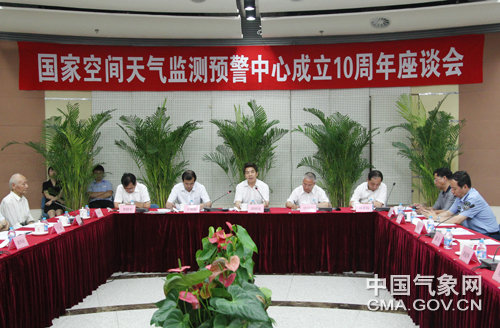
The picture shows the forum site. Zhuangbaiyu photography
China Meteorological News reporter Liu Zhao Hu Ya Zhuang Baiyu reports. On July 19th, a symposium on the 10th anniversary of the establishment of the National Space Weather Monitoring and Early Warning Center was held in Beijing. The meeting systematically summarized the work of the National Space Weather Monitoring and Early Warning Center in the past ten years, exchanged experience in space weather monitoring, forecasting and early warning services, and planned the future development of space weather services. Zheng Guoguang, director of China Meteorological Bureau, attended and delivered a speech, and Yu Rucong, deputy director, presided over the meeting.
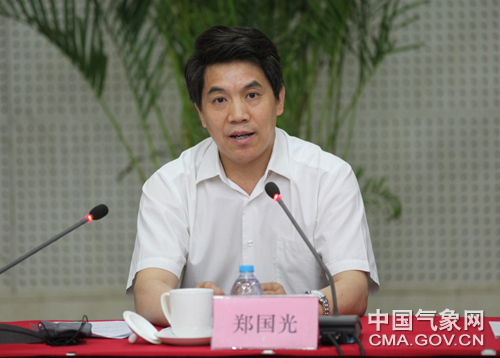
Zheng Guoguang, director of China Meteorological Bureau, spoke at the forum.
Zheng Guoguang stressed that it is necessary to fully understand the significance of developing space weather monitoring and early warning services to safeguard economic and social development and national security. Developing space weather service is not only the need to ensure economic construction and national security, but also the trend of atmospheric science development and the inevitable requirement of modern meteorological service development. Monitoring space weather and early warning of sudden space weather events have become a new task of meteorological service for economic and social development and national security.
Zheng Guoguang reviewed the development of National Space Weather Monitoring and Early Warning Center, and summarized the achievements and experiences of China’s space weather service. In particular, he pointed out that it was the academicians and experts present who promoted the establishment of the National Space Weather Monitoring and Early Warning Center, helped the construction of the center and guided its development.
Zheng Guoguang pointed out that in the past ten years, the National Space Weather Monitoring and Early Warning Center has basically formed a space weather operational system combining monitoring, forecasting and service, and co-chaired the coordination group of the World Meteorological Organization’s space weather plan with the American Space Weather Forecasting Center to coordinate international space weather operational activities. After ten years of development, the space weather service has achieved remarkable results, and successfully completed the space weather support tasks of important activities such as the prediction of the Shenzhou VII astronauts’ departure time, which has been highly praised by the majority of users.
Zheng Guoguang said that the construction and development of the National Space Weather Monitoring and Early Warning Center fully embodies the characteristics of China, its departmental advantages and its team. It can be said that national demand is the fundamental driving force for the development of China’s space weather business, paying attention to overall design and project promotion is an important guarantee for the development of space weather business, making full use of various resources is an effective way for the development of space weather business, scientific and technological innovation is the only way for the development of space weather business, open cooperation is the correct choice for the development of space weather business, and the silent dedication and solid work of talent team are the hope for the development of space weather business.
Zheng Guoguang especially thanked the center staff who worked hard for the development of the National Space Weather Monitoring and Early Warning Center. They thought that they were down-to-earth, did not pursue fame or profit, were not overwhelmed by incomprehension, and did not give up because of low technical level. They took the development of space weather business as their own responsibility, devoted themselves to study and practice, humbly consulted, strengthened cooperation, and worked hard for their career, persisted in actively doing various services, and persisted for ten years without giving up.
Zheng Guoguang requires that we should clearly see the gap between the space weather business capacity and the national demand, redouble our efforts, increase investment, speed up the improvement of the space weather business system, and constantly create a new situation for the development of China’s space weather business. First, according to the national demand and the development trend of disciplines, we should further improve the development plan of China’s space weather business and accelerate the development of space weather business; Second, we must strengthen capacity building including infrastructure, team, business platform and service means; Third, we should improve the open platform, further strengthen cooperation and promote resource sharing; Fourth, we should rely on scientific and technological progress, increase investment in space weather scientific research, and apply more space weather scientific and technological achievements to space weather business service platforms; Fifth, we should increase the propaganda of space weather science.
Zhuang Guojing, chief engineer of China Aerospace Science and Technology Corporation, Lin Longfu, deputy director of the Meteorological and Hydrological Bureau of the General Staff Department, Li Guoping, deputy director of the First Department of Systems Engineering of the National Defense Science and Technology Bureau, academicians of the two academies, Liu Zhenxing, Feng-Si Wei, Wang Shui, Tu Chuanzhi, Wan Weixing, Li Zechun, Ding Yihui, Xu Jianmin and representatives and experts from relevant departments attended the forum and spoke, affirming the achievements of the National Space Weather Monitoring and Early Warning Center in the past 10 years and putting forward ardent expectations for its future development.
Zhuang Guojing believes that since the establishment of the National Center for Space Weather Monitoring and Early Warning, it has made important contributions to the aerospace industry, and space weather monitoring and early warning has become an indispensable force in the fields of aerospace and national economy. Space weather monitoring and early warning will become an important part of people’s lives, just like weather forecast.
Lin Longfu expressed his gratitude to the National Space Weather Monitoring and Early Warning Center for its support to military-related business construction and space weather support in major national defense scientific research activities. He believed that the establishment of a space weather service support business system was an important strategic move, and there was great potential for the development of integration of defense and civilian technologies in the space weather field.
Li Guoping said that the National Space Weather Monitoring and Early Warning Center has made indelible contributions to the development of China’s space industry in the ten years since its establishment, and hopes to join hands and make greater contributions to the development of space weather.
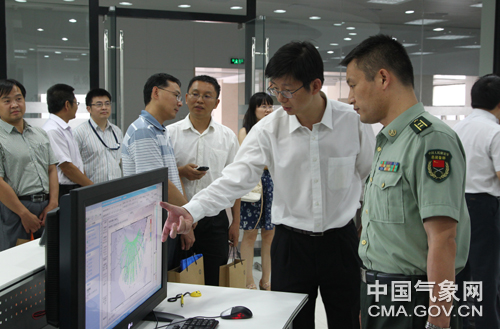
After the symposium, the participants visited the National Space Weather Monitoring and Early Warning Center.
On June 1st, 2002, the Central Organizing Committee approved the establishment of the National Space Weather Monitoring and Early Warning Center by China Meteorological Bureau, which was responsible for China’s space weather monitoring and early warning, forecast release and application services. After ten years of construction and development, China’s space weather business system has begun to take shape, and the monitoring pattern based on Fengyun series meteorological satellites and ground-based space weather professional monitoring network has basically taken shape. A distinctive forecasting business system with data flow based on space weather causal chain and technical flow based on brand-new forecasting norms has been basically established.
(Editor: Li Wenqin)