Principal’s advice! The correct "opening way" of family version’s young connection
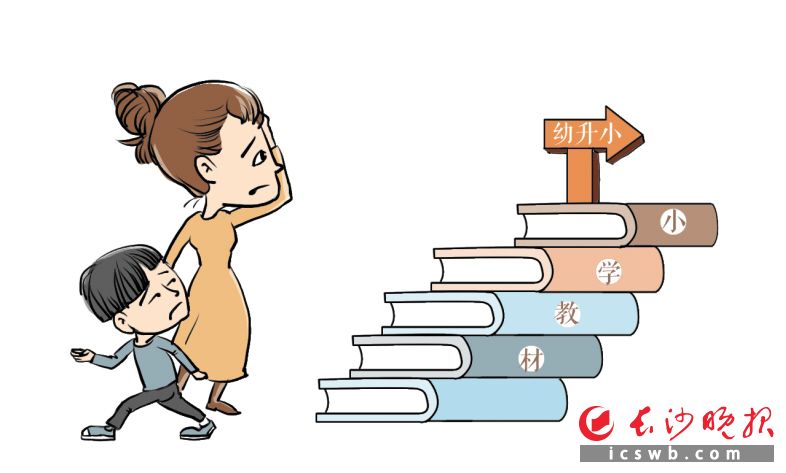
Comics/He Zhaoxia

  Comics/He Zhaoxia

  Changsha Evening News All-Media Reporter Shu Wen

  Not long ago, the official announcement of Changsha Education Bureau that "starting from April 25th, Changsha Primary School will resume classes at the wrong peak" made many parents of primary school students relieved. In sharp contrast to the joy of parents of primary school students, it seems difficult for parents of kindergarten students who have started school irregularly to calm down: their children will go to primary school in the second half of the year, and now they will enter May, and they will stay at home and watch TV and play games. Will it affect the connection between young and old? The time of children in large classes in the park is shortened, and the training institutions are not yet open. How can parents help their children to make a good connection at home? The reporter interviewed many senior kindergarten directors and well-known primary school principals in Changsha to give advice to parents.

  Stories alleviate the anxiety of young children’s connection, and parents buy textbooks to learn first.

  Although the Ministry of Education explicitly proposed "zero starting point" enrollment, at this time last year, many parents transferred their children to a young connecting institution to learn some primary school knowledge in advance to adapt to the schedule of primary schools because they were worried that their children would lose at the starting line. However, this year, affected by the epidemic, not only the start time of kindergarten has not been clear, but also the training institutions listed in the final approval list are waiting. Undeniably, the lack of home cooperation and training institutions to help, the pressure of young convergence naturally falls more on parents.

  In such a special period, the days passed quietly while waiting, which made the heart of Ms. Shen, the parents of large kindergarten students, more and more tight. She originally planned to send her children to a training class when the school started in the spring to make up for the young connection. However, the school start time has not been fixed, and she and her husband have to work during the day, so the children can only be taken care of by the elderly, resulting in the children being in a state of stocking almost all day. "I’m really worried that the child will suddenly switch from playing now to studying after school. Can he adapt?"

  Like Ms. Shen, Ms. Chen has her troubles. In the second half of this year, her children will become first-grade primary school students, which makes her happy and worried. Happily, children will enter a new stage of life; Worryingly, the kindergarten starts late, and the young connection pressure on her and her husband is not small. "This semester’s kindergarten study is basically abandoned, and how to prepare for the child’s young connection" tests Ms. Chen and her husband. In order to relieve anxiety, she bought a textbook for the first grade and last semester, and studied it with her husband first.

  "We can’t be ignorant of his learning content." After some research, Ms. Chen is confident that her children can master this knowledge. She told reporters that from the end of February to the present, in accordance with the principle of combining work and rest, in addition to arranging Chinese, mathematics and English knowledge study for children, she also interspersed poetry reading, picture book reading, calligraphy practice, skipping rope, roller skating and other sports. "It is only tentative to let children do some knowledge reserves in advance, without any assessment." Ms. Chen said that studying in advance may make children more confident about going to primary school, but after entering primary school, children may not listen carefully because they understand.

  The survey is worried that children can’t keep up with their studies, and over 60% of parents will report to the young bridging course.

  At present, how to do a good job of connecting young children is not only an urgent problem for parents of kindergarten students in large classes, but also the focus of education departments. In order to understand parents’ understanding and confusion about the connection between young and old children and their adaptability in primary schools, so as to grasp the future direction of parents’ education, not long ago, under the guidance of Yuelu District Education Bureau, Bocai Education Group distributed questionnaires to 2,102 kindergarten parents in the form of online questionnaires. The survey shows that many parents have different puzzles about the connection between young and young.

  Many parents are worried about whether their children can smoothly adapt to the study and life of primary schools after attending primary schools, such as whether they can concentrate on lectures, whether they can adapt to the teaching methods of primary school teachers, whether they can take good care of themselves, and whether they can get along well with their classmates. There are also parents who worry from themselves, such as not being able to pick up their children too early after school; There are also a few parents’ worries from schools, such as campus safety and campus violence.

  When answering the question "You will enroll your child in the young bridging course", over 60% of parents said "Yes". Among them, 58.75% parents think it is "very necessary" because they are worried that their children can’t keep up with their studies; 6.47% of parents think that other children have gone to school and their children can’t fall behind. Another 20.08% of parents said that they would not report, on the grounds that they would teach.

  In addition, many parents who participated in the survey have doubts about what should be prepared and done in the early childhood bridging education, so that children can smoothly transition from kindergarten to primary school, and how to cultivate their various habits and skills.

  "Through the feedback of literature and questionnaires, we can know that parents’ understanding of young convergence has made great progress compared with previous years. They no longer simply think that young convergence is only to teach children to read and count, but more importantly, to cultivate children’s good study habits and living habits. However, parents still have doubts about specific measures." The relevant person in charge of Bocai Primary School said in the investigation report.

  Young convergence of views ≠ Parents should be patient and wait for the children who have just entered the school.

  So, what can parents do to help their children make a good connection? Well-known primary school principals and senior public kindergarten directors in Yuelu District expressed their views.

  Peng Qingqing, director of the Eighth Kindergarten of Yuelu Preschool Education Group, believes that when parents help their children to make young connections, they should first correctly define young connections. She said, "Young convergence ≠ Learning primary school content, learning quality training is far more important than learning knowledge and skills preparation. " She said, "From the perspective of the turn of education in the world today, it is from knowledge-based education to the cultivation of learning quality. Among them, learning quality refers to the positive attitude and good behavior tendency of children in the process of activities, including learning interest, learning habits, learning attitude and learning ability. "

  Peng Qingqing suggested that parents should not only pay attention to the cultivation of their children’s learning quality, but also make their children well prepared for psychology, life, material, knowledge and sports. For example, help children prepare psychologically and stimulate their yearning for primary school life. When preparing for sports, you can help your child practice skipping, playing ball, running and other sports. "When entering primary school, it is necessary to carry out a sports compliance test, and the child’s physique, physical fitness and athletic ability must keep up. Studies have proved that skipping rope and racqueting can also cultivate children’s concentration. "

  Long Sheng, the principal of Bocai Boarding Primary School, said that children in the young convergence stage have some characteristics and needs, and if parents understand them, they can be more patient. "6-year-old children’s cognitive ability and development level are not consistent. It is normal to have differences before and after. There is no right or wrong, and temporary backwardness should be allowed. In the face of many changes, the first psychological nutrition that children need in the young transition period is: a sense of security. " Longsheng said that the second demand of children at this stage is role model demand. They need to learn how to learn, how to manage their emotions and how to deal with problems in life, and this learning comes from an example, and parents are the best models.

  "The basis of all learning abilities in the future is determined by whether you get enough psychological nutrition before the age of 7. Safety, example and recognition … … These are all psychological nutrition that children need. If you get it, children will naturally have the vitality to explore and learn new things; If he doesn’t get it, he will spend a lot of life energy to find unsatisfied psychological needs. Therefore, in the key steps of children’s growth, parents should be slower. Slow means feeding the child well first and giving him physiological and psychological nutrition; Slowness means creating high-quality parent-child relationship and teacher-student relationship first; Slow means waiting for a child to let his nature grow well. "

  While advocating "slow education" and advising parents to be patient, Longsheng also put forward the view of "critical period", that is, growth is more important than children’s grades. "In such a critical period, what is the most critical, to cultivate? Years of educational work have made us realize that children should be cultivated when entering primary schools ‘ Freedom in rules ’ … … The process of helping children establish rules and habits is not simple and rude ‘ Pull weeds ’ , but should be ‘ Planting crops by throwing seedlings ’ The process. On the basis of rules, give them freedom of mind and thought. " Long Sheng said.

  Worried that children can’t adapt to primary school? Try these six tricks.

  What should parents do to help their children adapt to primary school study and life? Li Hui, the principal of the first primary school in Yuelu District, combined with 30 years of primary education practice, summed up the experience of six tricks to make children adapt to primary school life quickly.

  These six tricks are: playing "family drama of primary school life" with children; One-day tour of primary school campus with children; Adjust your child’s schedule one month in advance; Adapt to not taking a nap; Develop three exclusive chores for children and cultivate their awareness of completing tasks on their own initiative; Establish a special study area for children and cultivate their concentration.

  Taking the "Family Drama of Primary School Life" as an example, Li Hui suggested that parents can use 10 minutes to open a small family class every day, and family members can play the role of teachers and students in class, play games and make friends, so that children can learn to listen, learn to express and make friends on their own initiative. In terms of cultivating children’s awareness of actively completing tasks, she said that parents can arrange some tasks for their children every day, such as sweeping the floor, watering flowers, folding quilts and taking out garbage. After practicing for a month, children will build up the consciousness of actively completing tasks, so they don’t have to worry about their procrastination in doing homework and doing things, so as to avoid the trouble of parents nagging their children to do homework every day and urging them to "hurry up" in the future.

The maximum discount for changing cars is 100,000 yuan! Guangdong enlarged the move, and many listed companies such as Gree, GAC and BYD participated.

For a new car, the comprehensive discount is as high as 100,000 yuan, the wardrobe product is over 100,000 yuan, 40,000 yuan, and each set of air-conditioning cabinets is highly subsidized by 1000 yuan … For consumers, a big wave of "wool" is already on the way.

The Securities Times reporter learned from the Guangdong Provincial Department of Commerce that on April 28th, the 2024 Guangdong Consumer Goods Trade-in Campaign and the "Home 520" shopping season (promoting consumption in summer) were officially launched. According to the relevant person in charge of the Guangdong Provincial Department of Commerce, the theme of this activity is "’old’ needs to be replaced by new ones to enjoy consumption", focusing on key areas such as automobiles, home appliances, home improvement and kitchen and bathroom. Trade-in of consumer goods will run through the whole year, and the "Home 520" shopping season (promoting consumption in summer) will last until the end of June.

Since the beginning of this year, policies and measures on the trade-in of consumer goods at the national level have been continuously introduced. On April 26th, the People’s Bank of China, the National Development and Reform Commission, the Ministry of Finance and the General Administration of Financial Supervision jointly held a promotion meeting on large-scale equipment renewal and trade-in of consumer goods. At the same time, the trade-in activities in various places are in full swing, and the trade-in boom of consumer goods is set off with real money. Trade-in of consumer goods will create a trillion-dollar market space. As the main line running through the current and future period, it is expected to bring benefits to related industries and enhance the profitability of listed companies.

Focus on three major areas: automobiles, home appliances and home improvement kitchen and bathroom.

According to the "Action Plan for Promoting Trade-in of Consumer Goods in Guangdong Province" released in early April, Guangdong will mainly carry out trade-in in three areas: automobiles, household appliances, home improvement and kitchen and bathroom. The reporter found out that in this trade-in activity of consumer goods, a number of listed companies in more than three fields issued preferential policies with great strength and high amount.

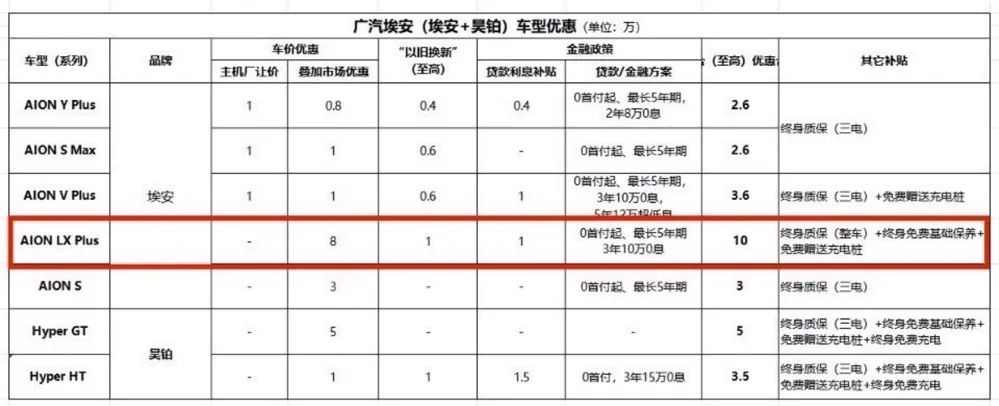
In the automobile field, many models of Ai ‘an and Haobo, which are owned by GAC, have preferential conditions with different amounts, ranging from 26,000 yuan to 100,000 yuan under the market concessions and loan interest subsidies of the OEM. Among them, the comprehensive discount of AION LX PLUS can reach as high as 100,000 yuan, and you can enjoy lifetime warranty (complete vehicle), lifetime free basic maintenance and free charging piles. This is also the model with the highest comprehensive preferential amount in this trade-in activity.

In terms of other car companies, BYD has introduced different redemption rights for series of cars such as Dynasty Net, Ocean Net, Tengshi, Equation Leopard and Wangwang. Weilai announced the introduction of a subsidy of up to 1 billion yuan for oil vehicle replacement, and the maximum benefit for oil vehicle users to replace Weilai is up to 30,000 yuan; Xpeng Motors has issued a policy of 15,000 yuan for the replacement of this product and 10,000 yuan for the replacement of other products; Ideal launch "May Day Ideal Car Festival", from April 22nd to May 5th, order brand-new ideal L6, 2024 models of ideal L7/ ideal L8/ ideal L9, ideal MEGA, and enjoy the right to buy a car for a limited time of up to 20,000 yuan.

In the field of home appliances, Gree Electric said that during the event, the highest discount for air conditioners is 400 yuan/set, and the highest discount for cabinets is 1000 yuan/set. It will also provide consumers with one-stop service for exchanging old ones; Midea Group introduced a replacement subsidy, and purchased green appliances to enjoy an additional replacement subsidy ranging from 50 to 1000 yuan; Hisense home appliances carry out trade-in activities for about 300 models in five categories: TV, refrigerator, air conditioner, washing machine and kitchen appliances, among which the first-class energy efficiency accounts for more than 80%, and the maximum subsidy for a single unit is 2,000 yuan.

It is worth noting that a number of home appliance listed companies have invested heavily in trade-in activities, and the total amount of investment has been clearly defined. Gree Electric announced on April 28th that in response to the State Council’s "Action Plan for Promoting Large-scale Equipment Renewal and Trade-in of Consumer Goods", it will invest 3 billion yuan to start the trade-in of household appliances from now on. Hisense Home Appliances said that the company plans to invest a total of 800 million yuan in trade-in subsidies nationwide in 2024.

In the field of home improvement kitchen and bathroom, Sophia has made great profits on solid wood boards, dusting, wooden doors, wardrobes, cabinets and other products, and has made great discounts. At the same time, she has also upgraded the old renovation service, provided free on-site room measurement and design services, and launched a new package service of 7,999 yuan for five major spaces, allowing consumers to realize a big renovation with a small budget.

Government subsidy+financial empowerment+e-commerce platform assistance

In addition to the large profits of enterprises, the government, financial institutions, e-commerce platforms and other entities will participate together to form a joint force and bring greater benefits to consumers.

It is reported that in order to promote the trade-in of automobiles, household appliances and home-improvement kitchens and bathrooms, Guangdong Provincial Finance will arrange special funds to issue subsidies for scrapping and updating automobiles, and coupons for replacing and updating automobiles and exchanging household appliances.

Taking automobile "replacement and renewal" coupons as an example, individual consumers who transfer their own vehicles in Guangdong and buy new energy vehicles and fuel vehicles that meet the national six emission standards in Guangdong are given a one-time subsidy for car purchase coupons. The subsidy standard is divided into three grades: if the car purchase price is 70,000 yuan (inclusive) to 150,000 yuan (exclusive), the subsidy for purchasing new energy vehicles is 3,000 yuan/vehicle, and the subsidy for fuel vehicles is 2,000 yuan/vehicle; If the car purchase price is 150,000 yuan (inclusive) to 250,000 yuan (exclusive), the subsidy for new energy vehicles is 5,000 yuan/vehicle, and the subsidy for fuel vehicles is 4,000 yuan/vehicle; If the car purchase price is more than 250,000 yuan (inclusive), the subsidy for new energy vehicles is 8,000 yuan/vehicle, and the subsidy for fuel vehicles is 7,000 yuan/vehicle.

In terms of financial institutions, Guangdong ICBC supports the trade-in activities by launching preferential financial products, improving the convenience of financial services and launching rich promotional investment. For example, the product of "trade-in by installment" has been launched in a targeted manner. For automobile products, according to customer qualifications and loan demand, the "zero" down payment can be supported at the highest, and loan support can be provided at 100% of the automobile price, with a maximum loan of 1.5 million yuan. Guangdong UnionPay will cooperate with banks to provide relevant rights and interests, such as "200 yuan discount for car purchase with credit card over 10,000 yuan", "80 yuan discount for home appliances with digital credit card over 1000 yuan" and "200 yuan discount for home decoration with credit card over 10,000 yuan". Guangdong Construction Bank introduced subsidies for the sale of old household appliances and the purchase of new ones with "trade-in". At the same time, it also offered profit-making sales to the enterprises participating in the activities.

In terms of e-commerce platform, Meituan Platform said that it plans to invest more than 5 billion yuan in marketing and subsidy resources in the next three years, relying on offline instant distribution capabilities to provide support for trade-in; Tmall launched the theme marketing campaign of "Guangdong Home Appliances Trade-in", and set up online special marketing and live broadcast activities in daily marketing and major marketing nodes such as 618, double 11 and Home Improvement Festival; In JD.COM, the subsidy benefits of "trade-in subsidies for old goods, with a maximum reduction of 2,000 yuan" are provided, covering more than 200 sub-categories of consumer goods such as household appliances and household appliances.

The potential of the trillion-dollar market has gradually opened up.

Since the beginning of this year, the national policy on trade-in of consumer goods has been continuously introduced, and various measures have been implemented intensively. In March, the State Council issued the Action Plan for Promoting Large-scale Equipment Renewal and Trade-in of Consumer Goods. In April, the Ministry of Commerce and other 14 departments jointly issued the Action Plan for Promoting Trade-in of Consumer Goods, proposing to promote the replacement of automobiles with "energy", home appliances with "intelligence" and home improvement and kitchen and bathroom with "rejuvenation" on the basis of respecting consumers’ wishes.

According to the National Development and Reform Commission, by the end of 2023, the number of domestic civil automobiles reached 336 million, and the number of household appliances such as refrigerators, washing machines and air conditioners exceeded 3 billion. The upgrading of automobiles and household appliances will create a market space of one trillion yuan. Zhang Yi, CEO and chief analyst of Ai Media Consulting, said that the fields of automobiles, home appliances, home improvement, kitchen and bathroom are closely related to consumers’ daily life, which has penetrated into almost every family in China, and the consumption space brought by the whole market is huge.

In the face of the trillion-dollar consumer market, the reporter found that in addition to Guangdong, many places in the country have also taken action, including Zhejiang, Hunan, Shandong, Shanxi, Chongqing and other provinces and regions have introduced relevant action plans, and some places have clearly defined the scope of support for trade-in and specific subsidy rules. For example, in 2024, Shanghai formulated the detailed rules for the implementation of the "trade-in" subsidy for old cars in Shanghai, and made it clear that individual users would purchase new fuel passenger cars with the national emission standard of six B, and eligible ones would be given a one-time subsidy of 2,800 yuan.

Trade-in of consumer goods is being carried out in full swing everywhere, and listed companies have also ushered in a broad new market and development opportunities. The reporter combed and found that many listed companies have recently responded to investors’ questions on the interactive platform, clearly indicating that trade-in will bring benefits to the company’s development.

For example, Yum! Smart said that the company can provide corresponding access control and management equipment updates, such as gates, access doors and access control systems, and provide overall solutions in the process of urban renewal and renovation of old residential areas. Hefei Department Store said that the company’s top 100 electrical appliances are cooperating with a number of home appliance companies to carry out the "Trade-in Brand Festival" and will strive for more trade-in policy support in the future. Gemei said that the country has introduced a large-scale equipment renewal and consumer goods replacement action plan. This policy is unprecedented in strength, breadth and depth, which is conducive to the growth of the company’s electronic waste recycling, scrapped car recycling and power battery recycling.

However, at present, there are also some enterprises and residents who are not willing to take the initiative to update equipment and trade in old ones. Luo Zhiheng, chief economist of Yuekai Securities and dean of the research institute, believes that this is mainly due to two reasons: one is that the equipment can still be used normally, and the other is that the replacement needs to pay extra fees. In this regard, Luo Zhiheng believes that policies such as finance and currency need coordinated support to fully mobilize the enthusiasm of enterprises and residents through incentive measures. When it comes to the elimination of backward equipment, local governments and relevant departments should formulate scientific standards and implement them in an orderly manner to prevent the expectation and confidence of micro-subjects from being dampened by eagerness for success.

Editor: Wan Jianwei

Proofreading: Zhao Yan

China-Japan-ROK cooperation is pragmatic, and the three countries benefit greatly —— An interview with the Secretary-General of the China-Japan-ROK Cooperation Secretariat

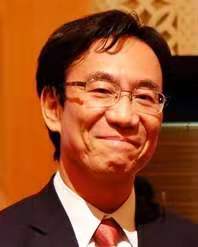
  The picture shows the Secretary-General of the China-Japan-ROK Cooperation Secretariat.

  [Editor’s Note] On December 24th, the China-Japan-ROK Leaders’ Meeting will be held in Chengdu, China. This year coincides with the 20th anniversary of China-Japan-ROK cooperation. Over the past 20 years, with the joint efforts of the governments and people of the three countries, the cooperation among the three countries has gradually deepened and expanded, with remarkable results. A few days ago, Shang Shi Dao, Secretary-General of the trilateral cooperation secretariat of China, Japan and South Korea, accepted an exclusive interview with People’s Daily and introduced the cooperation between China, Japan and South Korea.

  People’s Daily Online: The 8th China-Japan-ROK Leaders’ Meeting will be held on December 24th. This year coincides with the 20th anniversary of China-Japan-ROK cooperation. How do you evaluate the important achievements and experiences of China-Japan-ROK cooperation?

  Respect history on the road: China, Japan and South Korea have made great progress in cooperation between the government and the private sector. Intergovernmental cooperation is very active. Besides the upcoming leaders’ summit, there are 21 ministerial meetings. From the end of November to the end of the year, there will be six ministerial meetings (environment, patents, disaster management, health care, science and technology) and many practical communication meetings in five weeks. Every time I attend the meeting, I really feel that the pragmatic needs of cooperation among the three countries in various fields are quite large and beneficial to all three countries.

  Non-governmental cooperation and exchanges in culture, education, media, universities, local governments and other fields are also increasing. I think the increase of these personnel exchanges has greatly promoted the mutual understanding and understanding between the nationals of the three countries. As the secretariat of trilateral cooperation, we not only promote intergovernmental cooperation, but also actively help promote non-governmental cooperation in different fields. We also feel that it is meaningful to do so.

  People’s Daily Online: China, Japan and South Korea are major economies in Asia. In the current international situation where unilateralism and trade protectionism are on the rise, how do you evaluate the significance of strengthening cooperation between China, Japan and South Korea?

  History on the Road: It was repeatedly mentioned in the statement of the last leaders’ meeting that China, Japan and South Korea reached a consensus on strengthening the importance of a free and open multilateral trading system. The three countries have always indicated that they will make joint efforts in building an open world economic system in response to the current rise of protectionism. However, this is not a problem that can be solved by East Asian cooperation alone, but requires full consultation with other regions such as North America and Europe, so that trade and investment can develop in the right direction.

  People’s Daily Online: The "China, Japan and Korea +X" model gathers the experience and wisdom of the three countries, gives full play to their respective advantages, and actively promotes regional development. According to your observation, what early gains have been made by this model? How to effectively promote the further implementation of this model?

  The discussion on "China, Japan and South Korea +X" cooperation model is still in the initial stage, but there are several examples. As one of the results of the "+X" cooperation model, the secretariat proposed to hold the "Northeast Asia Forum on Developing Disaster Reduction Technology". The participants in the forum are not only China, South Korea and Japan, but also Mongolia, the Philippines and Indonesia. China has also put forward projects such as joint research on sandstorms and prevention of tropical diseases.

  I attended the 22nd ASEAN +3 Leaders Summit held on November 4th last year. The leaders of ASEAN countries have made many demands on China, Japan and South Korea for cooperation in environment, disaster prevention, economy and trade, small and medium-sized enterprises and other fields, which is impressive. Promoting cooperation among the three countries is our priority. Although it should be promoted on the basis of the wishes of the three countries, I think cooperation at the "+X" level is also feasible in the future.

  People’s Daily Online: As far as you are concerned, what do you want to do to further promote the cooperation process among China, Japan and South Korea?

  History on the Road: I personally have working experience in South Korea and China, and know many scholars, entrepreneurs and media people. Using this network, we can develop exchange and cooperation projects and hold activities in many fields in the future, and I also want to improve the visibility of our secretariat. At the same time, I have done a lot of writing and speaking during my stay in Korea and China, and I will take an active part in this time if I have the chance.